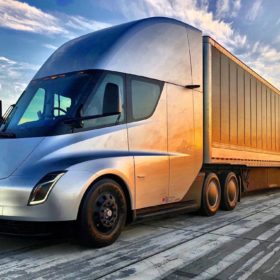
Australian Trucking Association pushing for shift to electric
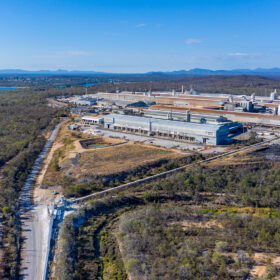
With the spotlight shining bright on the nation’s transport industry as the Covid pandemic causes widespread disruptions to supply chains, the Australian Trucking Association has been quick to make the most of the attention, calling for urgent reform to deliver a new era of electric trucks in Australia.
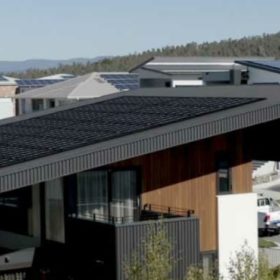
LG launches new Australian solar module range
South Korean electronics and solar PV module manufacturer LG Electronics has announced its new range of solar panels featuring half-cut cell technology and gap-free design for the Australian rooftop market.
Full solar value chain relief is on the way, says ROTH Capital
Philip Shen, managing director of ROTH Capital Partners, hosted top analysts from PV InfoLink to discuss their outlook on pricing, supply and demand at each step in the solar value chain.
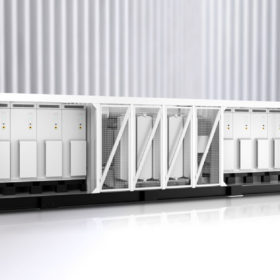
Sungrow presents new central inverter
Called the 1+X modular inverter, the new product can be deployed, by combining eight units, to reach a power of 8.8MW. It also features a DC/ESS interface for the connection of storage energy systems.
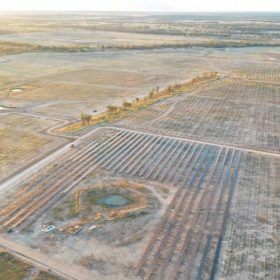
X-Elio reaches financial close on 200 MW solar farm as CEFC commits $37 million
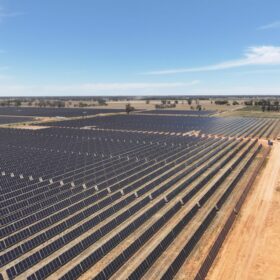
Spanish renewables developer X-Elio expects its 200 MW Blue Grass Solar Farm will achieve full commercial operations early this year after it reached financial close for the $215 million project being developed near Chinchilla in Queensland’s Western Downs region.
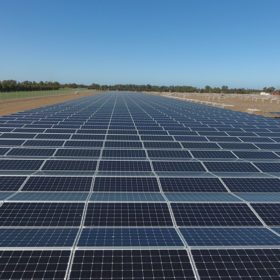
ICG snaps up majority stake in ~300 MW solar PV and storage portfolio
Australian investment manager Infrastructure Capital Group has stepped into the solar energy sector with the acquisition of a majority stake in a ~300 MW solar PV and energy storage portfolio from clean technology developer and investment firm Providence Asset Group.
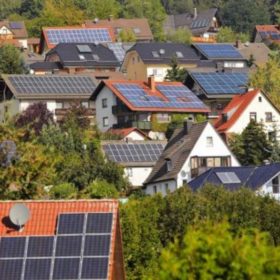
Four ways to stop Australia’s surge in rooftop solar from destabilising electricity prices
Last year saw Australians install rooftop solar like never before, with 40% more installed in 2021 than in 2020. Solar system installations now make up 7% of the energy going into the national electricity grid.
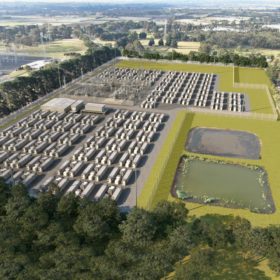
Maoneng gets green light for $190 million Mornington Peninsula big battery
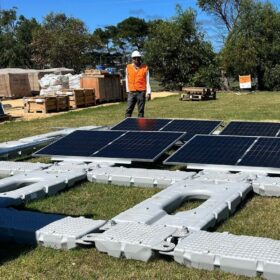
Australian renewable energy developer Maoneng’s 240 MWp/480 MWh big battery project proposed for Victoria’s Mornington Peninsula is a step closer to realisation after it secured development approval from the state government.
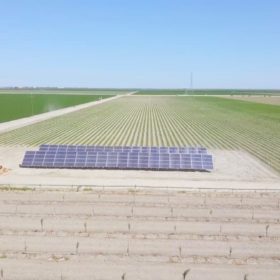
Pulling fertiliser out of thin air with PV
Nitricity has developed an experimental plasma reactor that uses PV electricity to produce competitively priced, environmentally clean, nitrogen fertiliser. Its onsite fertiliser production eliminates emissions from transport, and provides a viable alternative to fossil-based nitrogen fixation methods like the Haber-Bosch process.
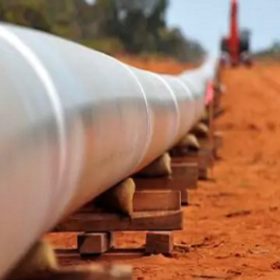
Studies show Dampier Bunbury Pipeline capable of 9% hydrogen blending, but underground storage less promising
Two Western Australian government funded studies into the transmission and storage of hydrogen have shown that the state’s main gas pipeline is, for large sections, ready for 9% hydrogen blending. However, in less promising news, another study found that the state’s underground storage capacity, including depleted oil and gas fields, are not proximate to the proposed 50GW Western Green Energy Hub or the 23GW Asian Renewable Energy Hub.