AGL Energy pushes ahead with plans to split
Australian energy utility AGL Energy is pushing ahead with plans to demerge, confirming its intention to split the company into two businesses as it looks to navigate the continuing transition to renewables.
AusNet reveals preferred route for proposed $300 transmission line
Victorian network operator AusNet has revealed the preferred route for a proposed $300 million electricity transmission line which is expected to unlock thousands of megawatts of new solar and wind resources in the state’s western region.
Sulphur-based redox flow battery with 15 consecutive hours of runtime
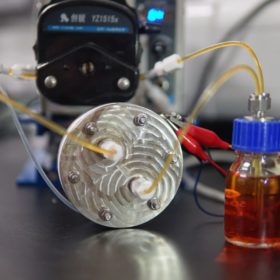
Researchers from Hong Kong have applied a novel charge-reinforced, ion-selective (CRIS) membrane to a polysulfide-iodide redox flow battery they had built in 2016. The redox flow battery showed a capacity decay rate of just 0.005% per day for 1,200 cycles, and a lifetime with over 2,000 hours’ cycling, which the academics said corresponds to approximately three months.
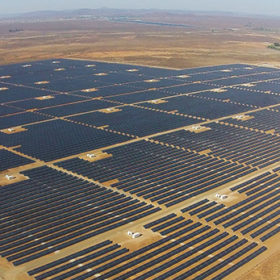
Sterling and Wilson Solar’s order book grew 72% in FY2021, despite Australian subcontractor’s bankruptcy
Despite the growth, one-off exceptional events in the fourth quarter hit the solar EPC’s overall fiscal performance. These included a prime subcontractor going bankrupt in Australia, rising module prices, and increased freight costs.
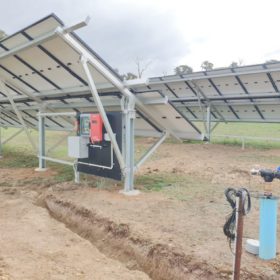
Solar water pumps: cheaper, easier but routinely underestimated
Victorian company Commodore Australia has evaluated how much customers save by using solar water pumps compared to diesel or mains-connected pumps. Based on its calculations, the smallest solar water pumps save customers between $480 to $610 per year, with that figure growing to a staggering $35,117 to $44,837 for the largest pumps.
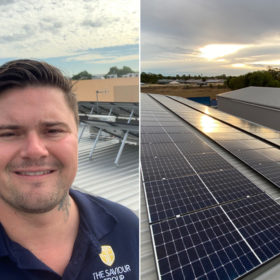
Solar broking startup with unconventional growth strategy targets regional Australia
Australia’s second ‘solar broker’ has entered the market, essentially aiming to link customers with reputable solar installers. With a keen focus on regional Australia, the Solar Saviour startup is looking to grow by engaging country communities and building after-care based referrals schemes, a method its Head of Partnerships, David Cobb, told pv magazine Australia Australia’s solar industry has under-utilised.
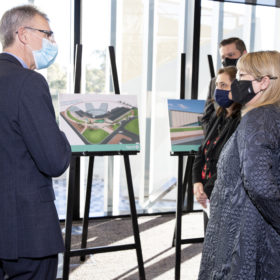
Advanced battery and hydrogen research facilities to be built by Victoria’s Deakin University, backed by government funds
Deakin University has received funding for two multi-million dollar facilities, one devoted to advanced battery research and the second for the development of hydrogen technology. The projects’ aims will be to overcome hydrogen’s hurdles and, for batteries, to improve existing technologies while also investigating sustainable alternatives like sodium batteries.

Using the oceans’ depths to store renewables, compress hydrogen
Underwater gravity energy storage has been proposed as an ideal solution for weekly energy storage, by an international group of scientists. The novel technology is considered an alternative to pumped-hydro storage for coasts and islands without mountains that are located close to deep waters, and may also be interesting for PV if used to store green hydrogen.
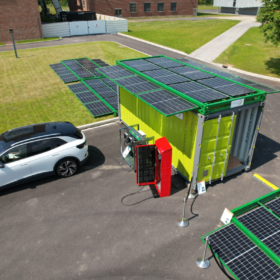
Solar+storage kits for construction sites, one-off events
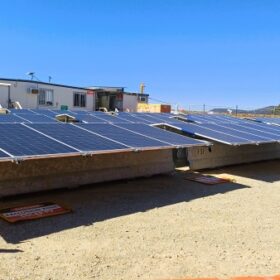
France’s Revolt Energy Green has developed a flexible solar+storage solution for one-off events, construction sites, and different kinds of off-grid applications. It has also developed a mobile hydrogen solution.

Evergen selected for Queensland’s 100% solar + battery neighbourhood
Smart energy software company Evergen will provide an energy management platform as part of a net-zero energy emission terrace homes pilot at Carseldine Village, north of Brisbane.