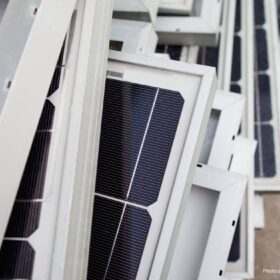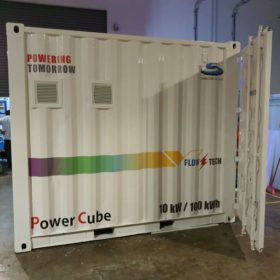
Interest grows in going with the vanadium flow
The choice of battery storage technologies in support of solar energy supply is broadening to suit a variety of emerging applications. VSUN has just made its first power play for vanadium-redox-flow batteries in the off-grid residential market.
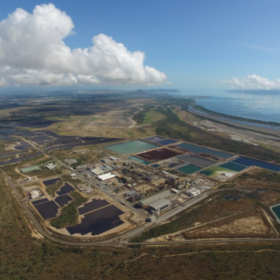
Green Zinc! Sun Metals joins RE100
For a company that has its own big sunny solar farm and is developing a companion green-hydrogen production plant, the next step must be to formalise its commitment to go 100% renewable.

What’s NUW in energy? An alliance of three NSW universities concentrates clean-energy expertise
Recognising that the major problems facing the world can’t be solved by any one organisation, three New South Wales universities at the peak of renewable-energy research have rewritten the rules of collaboration to influence policymakers and accelerate solutions to market.
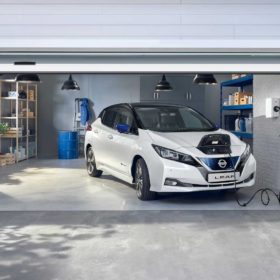
How to throw EV uptake into reverse!
Some Australian states are choosing this moment to ensure that electric vehicle drivers are paying their fair share of funds needed to maintain road infrastructure — given that they don’t contribute via fuel excise. The moves are expected to throw a spanner in the works of drivers deciding in favour of zero-emissions motoring.

Weekend read: Energy supply in an archipelagic nation
Mobile electricity storage systems (MESS) – batteries that are charged and then transported – could offer one of the best scenarios for electrification across the vast Indonesian archipelago, which spans more than 17,000 islands. A team at the University of Indonesia is working with multiple government agencies to bring the idea to scale and provide affordable electricity to rural Indonesians.
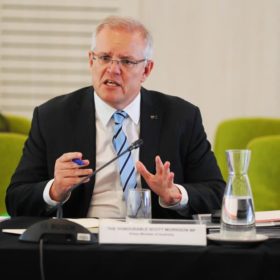
Morrison to feel the heat as U.S. turns to clean energy future
The election of Joe Biden as U.S. president is set to heap further pressure on Australian Prime Minister Scott Morrison to lay out a clear and firm strategy charting the nation’s transition to a clean energy future.
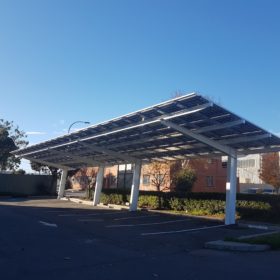
Dynamic design delivers new player in solar canopy market
South Australian design and manufacturing company PVDymanics has unveiled a unique ‘slide in’ solar canopy system which it believes can revolutionise the micro-grid market.
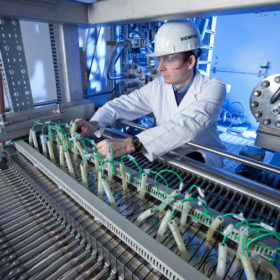
UNSW to lead Australian-German green hydrogen trade feasibility consortium
The University of New South Wales will lead a consortium of Australian and German researchers and industrial partners in a feasibility study to tease out and provide solutions for the obstacles for the trade of green hydrogen from Australia to Germany.

Long-term assessment of PV panel degradation under hot, humid tropical climates
A Dutch-Hungarian research team has measured, for 12 years, the degradation rates of PV modules installed in an off-grid system located in Ghana. It found that the panels had an average annual decline in power yield of 3.19%.
Canadian Solar flags up polysilicon, glass and EVA shortages
The solar manufacturer’s impressive third-quarter gross margin is set to fall back in the current three-month window because global shortages have seen some material costs double since the world came out of Covid-19 shock.