Swedish developer pushes into Australian solar with Esco Pacific purchase
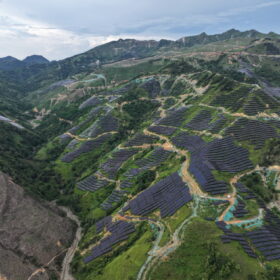
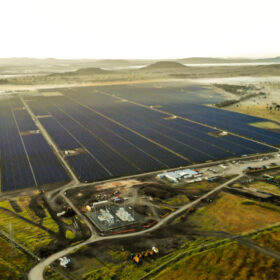
European renewables giant OX2 has announced its entry into the Australian market with the acquisition of Esco Pacific, one of the country’s biggest utility-scale solar developers in a deal valued at $126 million (USD 84.2 million).
IKEA does 195 MW Australian solar deal with German developer
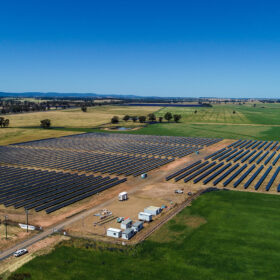
The investment arm of Ikea franchisee owner Ingka Group has added to its utility scale renewable energy assets in Australia with the acquisition of a 195 MWp solar farm portfolio from the regional division of German renewables developer Enerparc.
Missing investments jeopardise energy transition, says IRENA
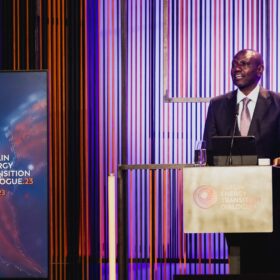
The International Renewable Energy Agency (IRENA) told Berlin Energy Transition Dialogue participants this week that USD 5.4 trillion ($8 trillion) of annual investment is needed to support the global shift to renewables. Kenyan President William Ruto, meanwhile, called for a fair energy partnership between Europe and Africa.
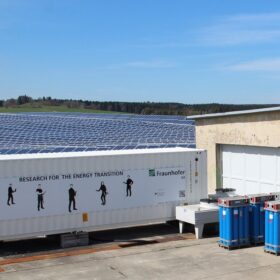
Investigating load scenarios for grid-forming inverters
A consortium led by the Fraunhofer Institute for Solar Energy Systems (ISE) will test grid-forming inverters at a large-scale PV facility in southern Germany. The aim of the first tests is to examine the performance of the devices under real operating conditions, stress factors, and typical stress profiles.
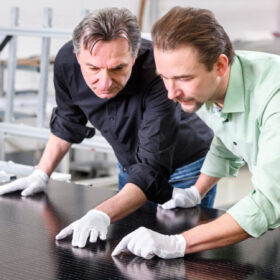
German manufacturer achieves 80% overall efficiency with new PVT solar module
Sunmaxx says Fraunhofer ISE has confirmed the 80% efficiency of its new photovoltaic-thermal (PVT) module. It consists of 108 PERC half-cells in M10 format, with 400 W of electrical output and 1,200 W of thermal output.
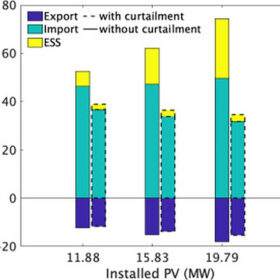
Solar curtailment vs. storage
Swiss researchers have looked at whether storage could be cheaper than curtailment in medium-voltage distribution networks with significant amounts of PV capacity. They considered storage costs, operational costs, grid constraints, electricity costs, PV generation models, and loads.
Strong interest in hydrogen certification, Bureau Veritas reports
Bureau Veritas tells pv magazine that there is a great deal of interest in hydrogen certification schemes in Australia, Europe, the United States, and the Middle East.
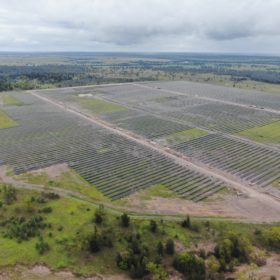
Developer X-Elio sells to Brookfield extending fund’s position in Australia
Canadian investment giant Brookfield will acquire the remaining 50% stake in Spain-based renewables developer X-Elio from its joint venture partner, investment firm KKR. X-Elio has more than 500 MW of projects in development in Australia and the move from Brookfield, which is also currently looking to takeover Origin Energy, a major Australian “gentailer,” extends the ambitious company’s hold in Australia.
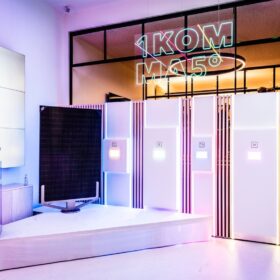
German outfit brings own solar panel brand to Australia
German startup 1Komma5 has started production on its own solar modules, which are expected to hit Australian shores “imminently,” Chris Williams, CEO of its APAC arm, told pv magazine Australia. The company has just signed a polysilicon contract with fellow German company Wacker, a step towards addressing issues around unethical labour and embedded emissions in solar’s supply chain.
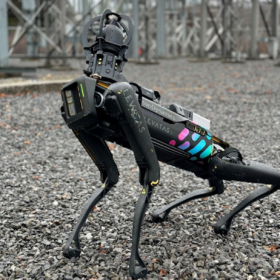
Iberdrola using dogs, robots to monitor solar plants
Iberdrola is using a springer spaniel in a solar park to smell electrical problems that could lead to power cuts. It is also using a robotic dog to detect and analyse faults in substations.