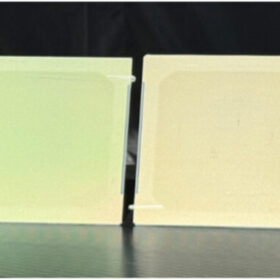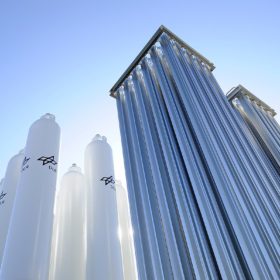
Utilities and financial investors are investing in renewables, especially hydrogen, like never before
A new Ernst & Young power and utilities overview report shows that utilities and other deep-pocketed investors are putting financial support behind their environmental, social and governance initiatives.
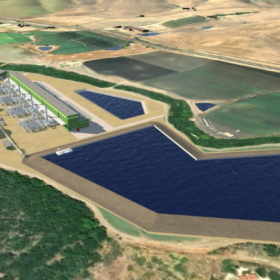
California plans 400 MW / 3200 MWh compressed air energy storage project
Hydrostor’s plant would be able to deliver 400 MW of electricity for 8 hours, and would be comparable in size to some of California’s largest fossil fuel power plants.
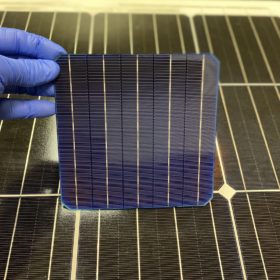
Novel solar cell architecture to reduce silver costs, improve voltage
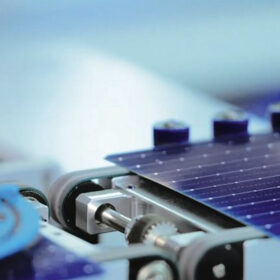
Developed by a U.S.-based start-up, the new manufacturing process is claimed to reduce silver consumption and improve solar module performance by up to 3 watts. It consists of connecting sub-cells in series within a single cell in order to increase the device voltage and without requiring cells to be physically broken and rewired.
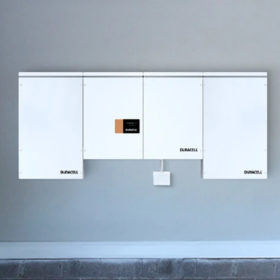
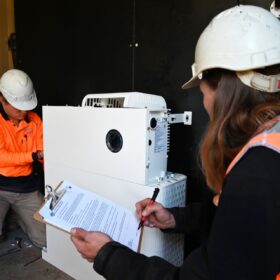
Duracell launches 14 kWh battery for residential PV
The US battery manufacturer entered the stationary storage business with a new product for residential customers. The lithium iron phosphate (LFP) battery is compatible with new or existing PV systems.

Aussie company claims its hydrogen plane is just 18 months away as Fortescue too moves on aviation
Aviation H2 today it announced it has appointed a team of engineers to fast-track its ambitions of building Australia’s first hydrogen-fuelled aeroplane. The company is, however, rather enigmatic, without a website and wholly owned by Liberty Energy Capital, which itself falls into rabbit hole of ownerships. The plan comes on the same day one of Australia’s biggest renewable hydrogen players, Fortescue Future Industries, announced it’s joined forced with Los Angeles-based Universal Hydrogen to enter the aviation space.

Storing hydrogen with aluminium hydrides
A U.S. research team has sought to improve the way aluminium hydride is used for hydrogen storage. The material was nanoconfined in a framework that is claimed to be able to overcome the challenge represented by the thermodynamic limitation of hydrides in storing the clean fuel.
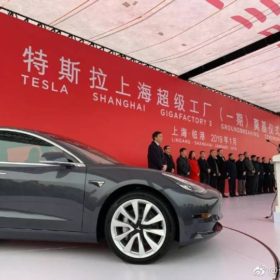
Tesla orders 45 GWh of EV batteries from CATL
Reports calculated that the single order would be enough to support production of 800,000 vehicles.

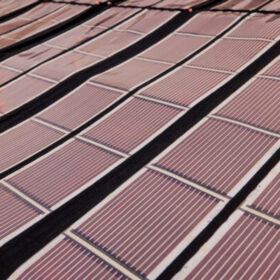
Dragonscale solar tiles installed on Google buildings
Some 90,000 individual solar panels will generate enough electricity to cover around 40% of the electricity used in two buildings for Google.

Plastic for solar panels?
Three companies are swapping out aluminium and glass in favour of plastic to save weight and add flexibility. We look at the pros and cons.
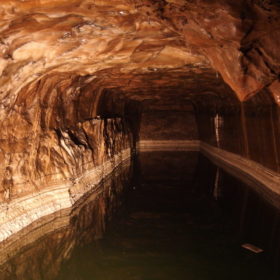
Weekend read: Australia’s “massive” hydrogen storage potential
Underground hydrogen storage seems to be coming up a lot lately, and with the burgeoning hydrogen industry needing somewhere to store itself, it’s not hard to understand why. One of the countries with the best credentials for the future hydrogen economy is Australia. A newly published report has quantified the country’s “massive opportunity” for underground hydrogen storage.