US scientists explore how to compensate battery owners for grid value
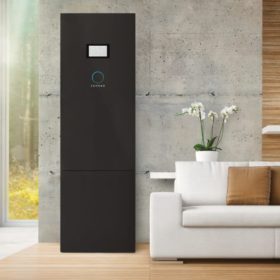
Current price signals to distributed battery owners “do not align with grid value,” says a study from the Lawrence Berkeley Laboratory.
Utility scale ocean battery, a bedfellow for floating PV
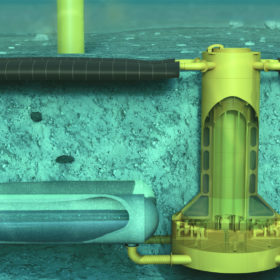
A new underwater battery storage technology is coming from Netherlands-based Ocean Grazer to address the issue of offshore long-duration storage. The company’s Ocean Battery is touted as innovative yet simple, based on existing technology, and capable of enhancing marine life along the way.
Goldman Sachs invests $250 million in Hydrostor to advance compressed air energy storage projects
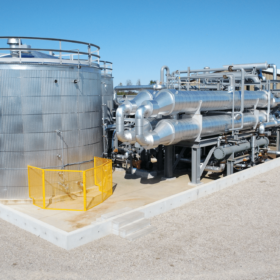
The investment is planned to support development and construction of Hydrostor’s 1.1GW, 8.7GWh of Advanced Compressed Air Energy Storage projects that are well underway in California and Australia, and help expand Hydrostor’s project development pipeline globally.
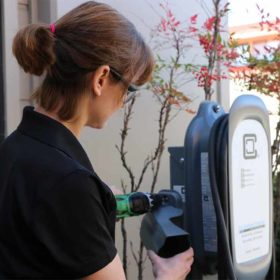
Enphase acquires ClipperCreek to enter the EV charging market
The completed acquisition of ClipperCreek launches Enphase Energy into the fast-growing market for electric vehicle charging systems.
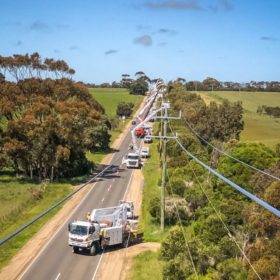
Cash for Christmas – Spark Infrastructure sale finalised in $5.2b all-cash transaction
Following approval from the Foreign Investment Review Board in November, the long-awaited sale of grid-operator Spark Infrastructure to a North American consortium led by private equity giant Kohlberg Kravis Roberts has been completed via a $5.2 billion “all-cash transaction”.
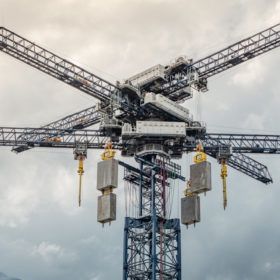
BHP looks to use 35-tonne blocks to store renewable energy for its WA operations
An agreement with Energy Vault may see resource company BHP stack 35-tonne blocks to store wind and solar energy in the Pilbara, northern Western Australia.
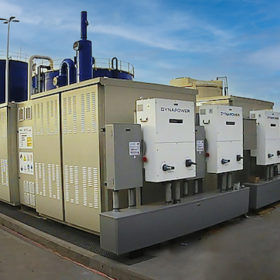
Aussie flow battery company completes ‘milestone’ installation
Brisbane-based flow battery company Redflow has completed its single biggest installation to date, a 2 MWh storage system in California for biowaste technology firm Anaergia.
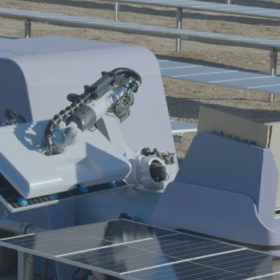
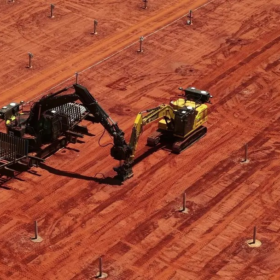
New robot for solar plant construction
The AI-enabled robot is claimed to ensure faster and more efficient deployment of solar modules in utility scale projects.

Shell buys solar and storage company Savion from Australia’s Macquarie Green Investment Group
The transaction, for which Shell did not reveal the purchase price, will see the energy company pick up a U.S. project development pipeline which reportedly runs to more than 18 GW of solar generation and energy storage capacity across 26 states.
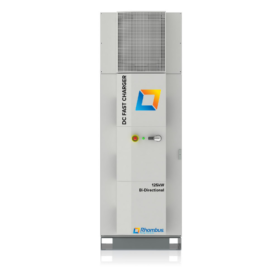
Ever heard of synchroinverters? Grid-stabilising devices connecting renewables to distributed energy resources
A U.S.-Israeli consortium is developing synchroinverters – inverters that mimic a synchronous generator and are able to actively respond to the grid’s frequency changes while stabilising the voltage. The new devices are expected to do this simultaneously and provide grid stability services in less than 16.67 milliseconds.