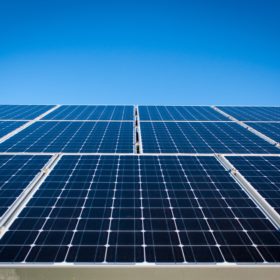
Australia’s clean power growth tops global leaderboard: World Energy Outlook
Australia tops the leaderboard for reducing its use of unabated fossil fuels and increase in clean power through sources like solar energy, and faster than electricity demand, according to the International Energy Agency’s World Energy Outlook 2024 report.
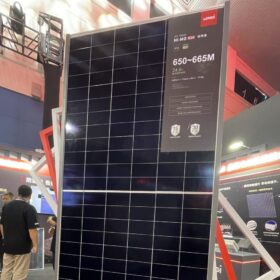
Longi introduces 665 W HPBC photovoltaic modules
The Chinese PV manufacturer said its new module series has a power conversion efficiency of up to 24.8% and temperature coefficient is -0.26% per C.
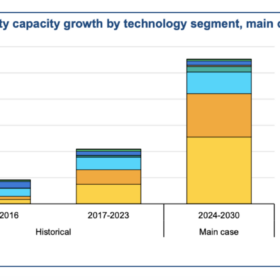
IEA forecasts over 4,000 GW of new solar by 2030
The International Energy Agency says renewables are on course to meet almost half of global electricity demand by 2030, with solar accounting for 80% of the growth in capacity.
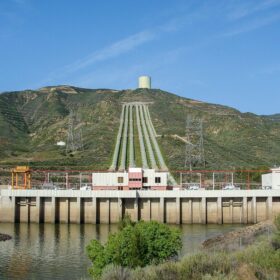
Energy storage is a solved problem
There are thousands of extraordinarily good pumped hydro energy storage sites around the world with extraordinarily low capital cost. When coupled with batteries, the resulting hybrid system has large energy storage, low cost for both energy and power, and rapid response. Storage is a solved problem.
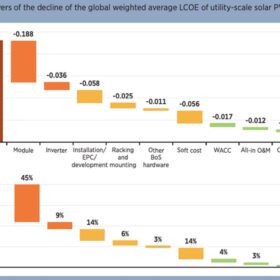
Global average solar LCOE stood at $0.064/kWh in 2023, says IRENA
The weighted average levelised cost of electricity of utility-scale solar PV in Australia was 22% lower than the global average according to a new report published by the International Renewable Energy Agency.

The shifting sands of PV module supply
Chinese solar manufacturing capacity faces a downturn that is unlikely to translate into growth in other regions, writes S&P’s Edurne Zoco.
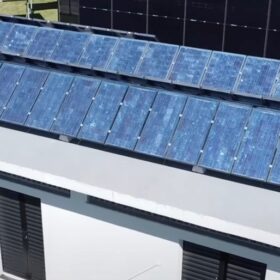
Circular economy and solar photovoltaics: is there a case for second-life PV modules?
What happens to a solar PV module after its expected 25-year operational life? With about 2 TW of rooftop and utility-scale PV already deployed worldwide, and a large number of them being retired before operating for 15 years, the amount of PV modules being discarded is growing every year.
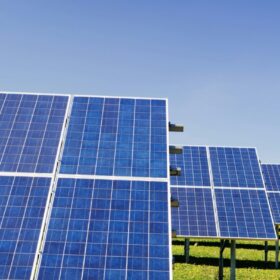
IEA calls for stronger solar, wind integration measures
The International Energy Agency’s latest report warns that failing to support integration at the point of deployment could jeopardise up to 15% of solar and wind projects by 2030. This shortfall would reduce their combined share of the global electricity mix by 5%.
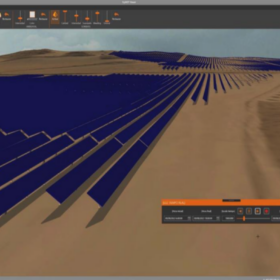
New tool optimises ground works, PV tracker planning
Spanish PV company Soltec and Aplitop have partnered to develop a computer-aided design plug-in application aimed at simplifying the planning process and reducing earth-moving operations, measurements, and the relocation of solar trackers in ground-mounted PV projects.
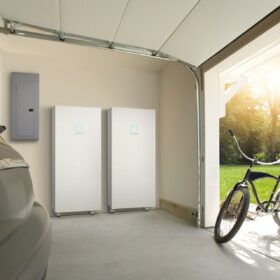
Most home battery storage systems meet warranty claims, new research finds
It took eight years of field measurements for researchers at the RWTH Aachen University in Germany to estimate the usable capacity of home battery energy storage systems and develop a dataset covering 106 system years and 14 billion datapoints. Their key finding was that home battery systems lose about two to three percentage points of usable capacity per year on average, meaning good news for the industry as most warranties in the market can be met with the implementation of capacity reserves.