France defines standards for agrivoltaics
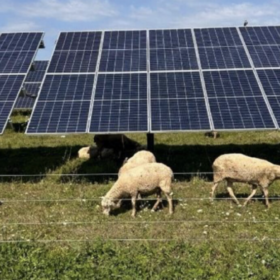
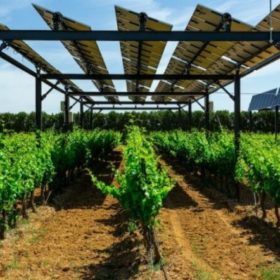
France’s environmental agency Ademe has released a set of new guidelines that clearly define “agrivoltaics.”
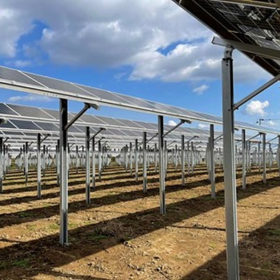
Mounting system for agrivoltaics
Designed by Chinese provider Mibet, the mounting structure can be used for different crop types. The system offers a tilt angle of up to 30 degrees and can host either framed or frameless solar modules.
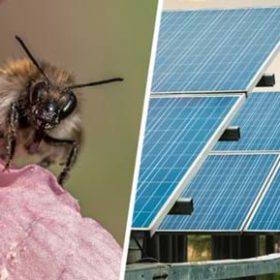
Solar farms prove to bee hives of economic activity
A new study from researchers at the universities of Lancaster and Reading in the UK has managed to quantify the economic boost provided by the symbiotic relationship between solar farms and honeybee hives.
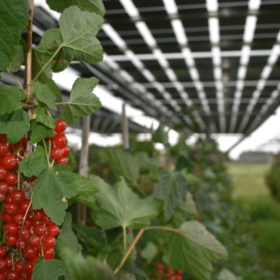
Baywa’s ‘fruitvoltaic’ project to bear fruit – 23 tons a year, in fact
A 1.2 MWp installation featuring more than 4,500 solar panels has sheltered a berry crop from high temperatures and damp to strengthen the claims made by agrivoltaics companies that their systems can offer climate change mitigation as well as clean energy.
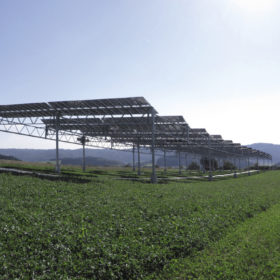
Saturday read: Solar’s flexibility can be agriculture’s gain
Both solar and the farming industry are beginning to see potential in the combined use of land for food production and energy generation. And as innovators begin to experiment with different forms, it’s becoming clear that in most cases it is solar that will have to bend to the needs of agriculture, and not the other way around, to ensure a positive outcome.
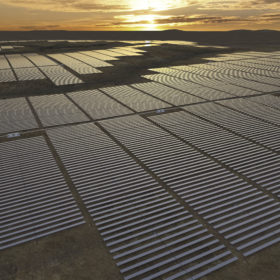
Renewables need land – and lots of it. That poses tricky questions for regional Australia
Renewable energy capacity in Australia is expected to double, or even triple, over the next 20 years. There is one oft-overlooked question in this transition: where will it all be built?
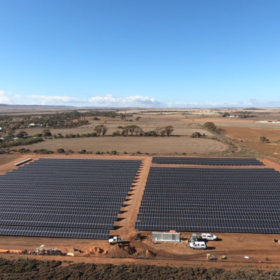
Solar project racks up 50 farms in South Australia
A renewable energy project that started as a way to provide extra income for grape and citrus growers has built its 50th small-scale solar farm in South Australia.
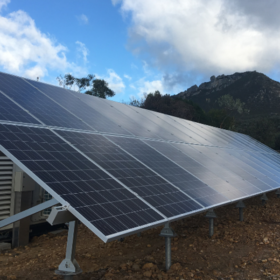
Rural power lines to be replaced with stand-alone solar and battery systems at WA farms
Western Australia’s government-owned regional utility Horizon Power is readying to roll out 13 solar and battery technology units at 14 far-flung farms in the Esperance region.