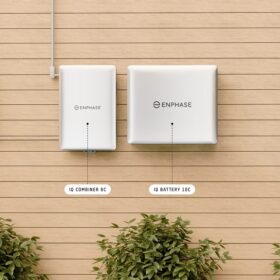
Enphase launches fourth-gen energy system with new 7.08 kW battery
Enphase Energy has introduced its fourth-generation energy system with the new 7.08 kW IQ Battery 10C, which offers 10 kWh of usable energy. The battery expands the company’s storage portfolio and is made with United States components by a contract manufacturer.
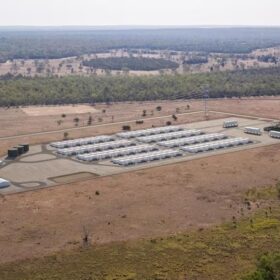
AGL reaches final investment decision on 2,000 MWh Tomago big battery
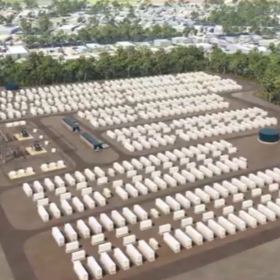
Australian energy major, AGL, has reached final investment decision on the 500 MW / 2,000 MWh Tomago battery energy storage system in the Hunter Region, New South Wales, and has appointed energy storage company Fluence to deliver the project’s build.
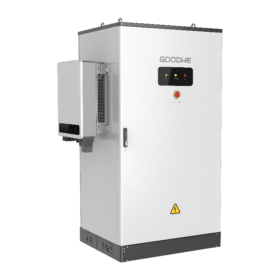
GoodWe launches scalable C&I battery system with 100 kWh+ capacity
GoodWe has released its BAT series battery cabinet for small to mid-scale commercial projects, with two capacities at launch at 102.4 kWh and 112.6 kWh, and outdoor use in mind.
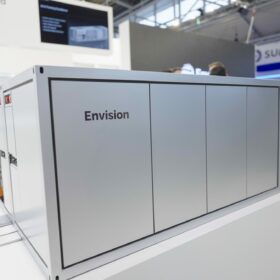
Envision Energy unlocks 1.5 GWh energy storage potential with new partnership
Envision Energy and FERA Australia have signed an agreement to collaborate on the delivery of large-scale hybrid renewable energy projects across Australia’s national electricity market (NEM), with the potential to deliver up to 1.5 GWh of battery energy storage.
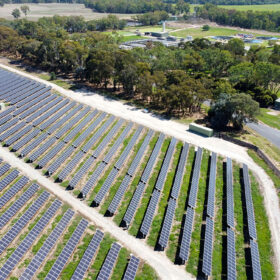
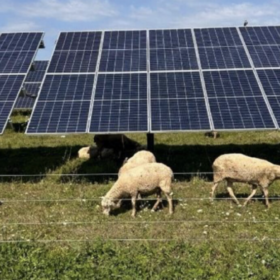
Victorian water company achieves 100% electricity from renewable sources
Victorian water and sewerage services provider Wodonga-headquartered North East Water is getting 100% of its electricity from renewable resources, including solar, battery storage, and wind.
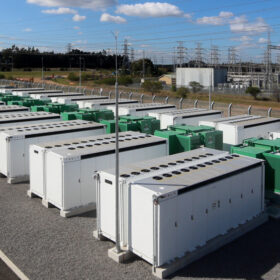
Grid-forming batteries and multiple SynCon to underpin NSW transition
Transgrid has chosen grid-forming batteries and synchronous condensors as its preferred system strength technologies, as coal generators retire over the next decade and renewable energy supplies the state.
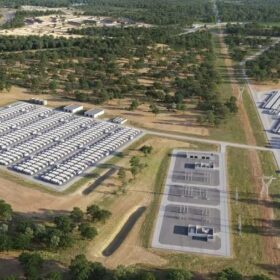
Bid Energy plans 4 GWh battery project for Central Coast
Another big battery project has been unveiled for New South Wales with the state and federal governments receiving a proposal for a 1 GW / 4 GWh battery energy storage facility to be developed at Kiar, on the Central Coast.
Edify seeks federal tick for 2.4 GWh solar and storage project
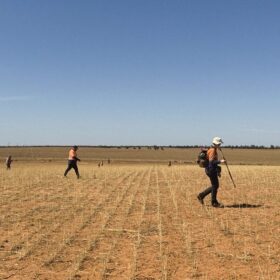
Australian renewables developer Edify Energy has unveiled plans for a major 2.4 GWh solar and integrated battery energy storage facility in northwest Victoria, adding to its growing portfolio of power generation and storage projects.
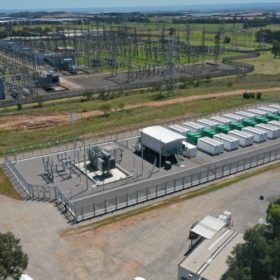
Seven Victorian battery storage projects first to connect to Powercor DERMS
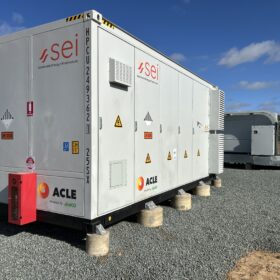
Seven regional Victoria battery storage projects, all at the commissioning phase, will be the first to connect to Victorian distributor Powercor’s high voltage distributed energy resource management system, adding stability to the grid.
‘Grid-forming technology is no longer experimental – it’s here and working’
In grids increasingly dominated by renewables, grid-forming technology is emerging as critical tool for maintaining stability and ensuring reliable power system operation. In this interview with ESS News, Rui Sun, Sungrow’s Deputy General Manager-Grid Technology Center, explains how grid-forming works, why it matters, and where the technology is already proving its value. He elaborates on technical challenges, regulatory gaps, and why grid-forming could soon become the new industry standard.