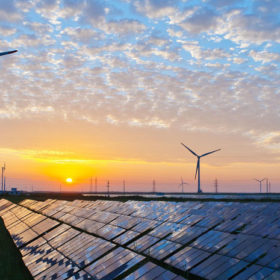
Australia’s pipeline of renewable energy projects swells over 130 GW
With 2019 already a record year for utility solar, wind and storage project proposals, Norwegian-based energy analyst Rystad Energy predicts Australia’s renewables boom could see coal-fired generation extinct by 2040. According to the Australian National University (ANU), the unprecedented growth in generation from wind and solar can slash Australia’s carbon emissions by 4% over the next few years, but the Clean Energy Council sees things differently.
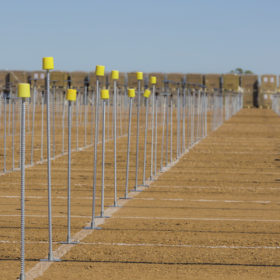
The race has only just begun
The Australian utility-scale PV and wind industries have just gone through a record two years of construction and commissioning. More specifically, writes Rystad Energy’s David Dixon, utility-scale PV has transformed from a megawatt-scale market to one measured in gigawatts. The resultant boom in utility-scale PV in the country has attracted developers, EPCs and OEMs, from at home and across the globe.
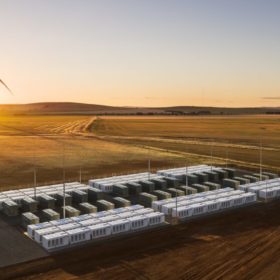
Long read: Is Neoen’s massive SA hybrid renewables plant feasible?
French renewable developer Neoen’s proposed hybrid power plant in South Australia is a monster, but is it a monster we can believe in? Along with industry experts we investigate the feasibility of Neoen’s Goyder South project.
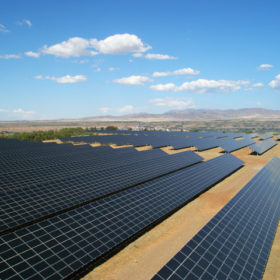
Debrief: The big-PV outlook for Australia and Vietnam after recent solar rushes
Despite what Rystad Energy analysts describe as “a few teething issues” caused by the rapid uptake of solar PV, and renewables in general, in Australia and Vietnam, the flow of proposed utility-scale solar projects in both countries looks set to continue over the coming few years.

Vietnam overtakes Australia in commissioned utility PV following June FiT rush
Norwegian consultancy Rystad Energy has placed Australian and Vietnamese solar markets side by side and found the Southeast Asian country has left Australia behind in terms of commissioned utility-scale PV capacity. A staggering 4,460 MW of connected PV capacity in Vietnam at the end of June came as a surprise to many.
Upstream majors to lead the charge in renewables investment
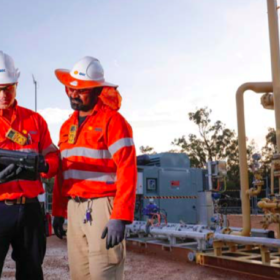
Renewable energy investment in the APAC region, excluding China, will overtake spending on oil and gas exploration and production spending by 2020, finds Norwegian consultancy Rystad Energy. And Australia is set to emerge as one of the leading investment destinations.

Connections, storage wars and the cost of doing business: Australia’s solar year ahead
Summer is notionally over and analysts at Rystad Energy have coolly assessed the coming year into 2020; in Sydney the Rystad team convened an experienced panel of market participants to give their take on what solar developers, EPCs, investors, equipment suppliers and skill seekers can expect in months to come.
Vietnam mulls multi-layered FIT scheme as it kicks energy transition into gear
With its feed-in tariff set to expire at the end of June, Vietnam is considering different levels of payment, classified across three irradiation regions and involving four solar technologies. Future payments would range from $0.0659-0.0985/kWh, with the cloudy north in line for the highest tariffs and with the government likely to revise tariffs for new projects every two years.
Module price declines could result in $60/MWh utility scale solar
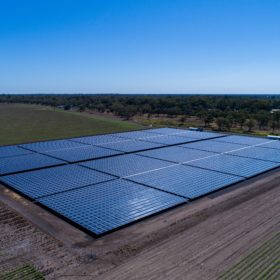
Falling module prices could very well dramatically enhance the competitiveness of large scale solar in Australia – pushing the price at which PV can be produced below the wholesale curve. Rystad Energy believes that with a 20-30% module price decline, as has been forecast, $60MWh utility scale solar could become the new reality.
Rystad: Fully-commissioned utility-scale PV capacity to double by July
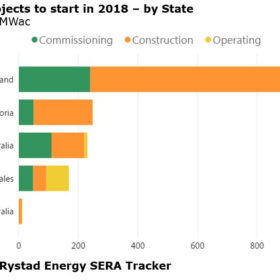
Australia is set to quadruple its utility-scale PV capacity in 2018, with a 2 GW pipeline. The effects of the expansion are now beginning to show, as projects come online. So far just 0.1 MW of the 2018 pipeline are fully operational, but as of July this is going to change.