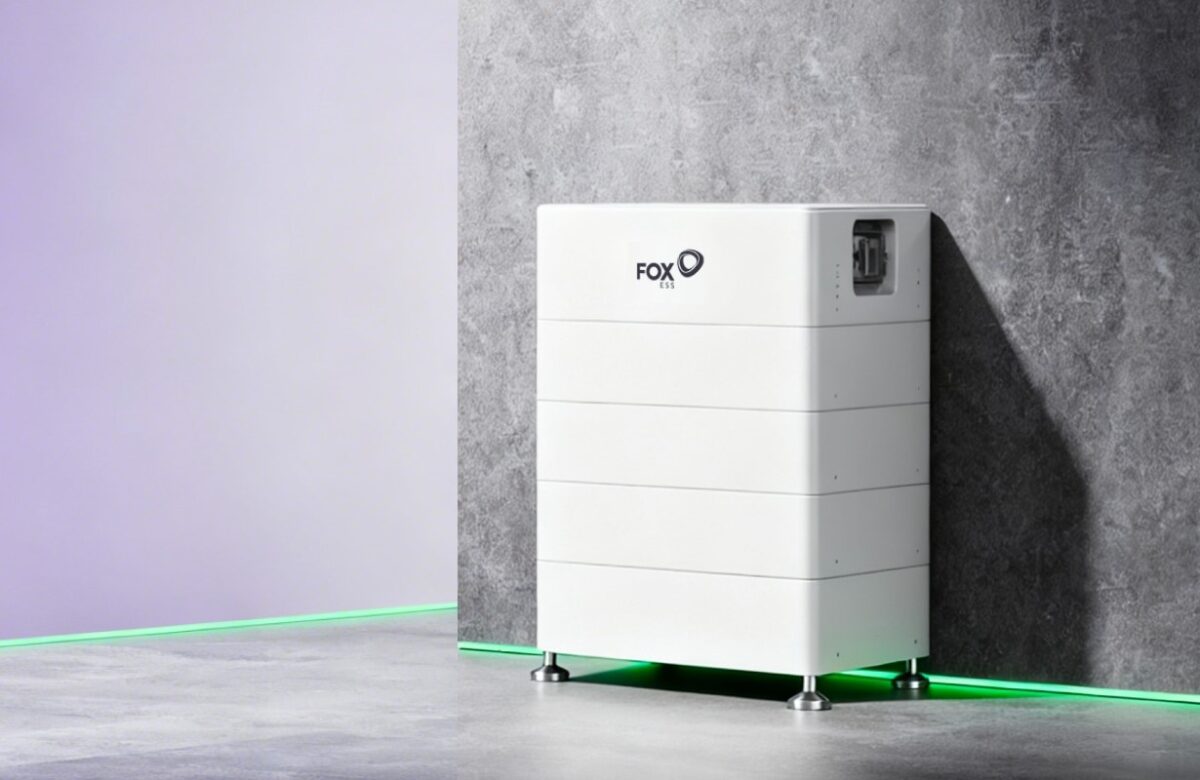





Energy technology manufacturer Fox ESS has released its CQ6 high-voltage battery energy storage system that it said offers a capacity of 5.99 kWh within a stackable design that makes it ideal for Australian homes and businesses.
“The battery is a high-performance, scalable battery storage system,” Fox ESS said. “This flexibility makes it suitable for various settings, whether on suburban rooftops, regional properties, or industrial facilities.”
The company also highlighted that the battery’s level of customisation and versatility means it is perfectly positioned to adapt to the recent changes in the Australian government’s Cheaper Home Batteries Program.
“This innovative battery is designed for higher energy density, offering an impressive capacity of 48 kWh with eight units in a single, compact stack, ideally suited to meet the upper limit for eligibility in the Cheaper Home Batteries Program,” it said. “Its streamlined design makes it an excellent choice for Australian homes and businesses seeking efficient and reliable energy storage.”
Fox ESS said the new battery can be configured with up to 14 units in series, allowing for a maximum storage capacity of 83.86 kWh per stack. It is compatible with the full range of Fox Ess inverters, including the H1-G2, KH/HA Series, and H3 Series. When paired with the H3 Plus inverter, the total capacity with three stacks can reach up to 251.58 kWh.
The CQ6 has an operating temperature range of -25℃ to 55℃, with a storage temperature range from -10℃ to 50℃. The battery has over 95% round-trip efficiency and a 100% depth of discharge. The individual unit measures 660 mm x 360 mm x 420 mm and is housed in an IP-65-rated enclosure.
Fox Ess said for installers, the CQ6 means fewer challenges on-site, with a plug and play solution that enables swift and straightforward installation.
Smart Energy Council Chief Executive Officer John Grimes described the new battery as a “game-changer for Australia’s clean energy transition.”
“Its high density and efficiency, along with modular scalability, make it perfect for homes and businesses aiming to maximise solar self-consumption and reduce reliance on the grid,” he said.
This content is protected by copyright and may not be reused. If you want to cooperate with us and would like to reuse some of our content, please contact: editors@pv-magazine.com.



By submitting this form you agree to pv magazine using your data for the purposes of publishing your comment.
Your personal data will only be disclosed or otherwise transmitted to third parties for the purposes of spam filtering or if this is necessary for technical maintenance of the website. Any other transfer to third parties will not take place unless this is justified on the basis of applicable data protection regulations or if pv magazine is legally obliged to do so.
You may revoke this consent at any time with effect for the future, in which case your personal data will be deleted immediately. Otherwise, your data will be deleted if pv magazine has processed your request or the purpose of data storage is fulfilled.
Further information on data privacy can be found in our Data Protection Policy.