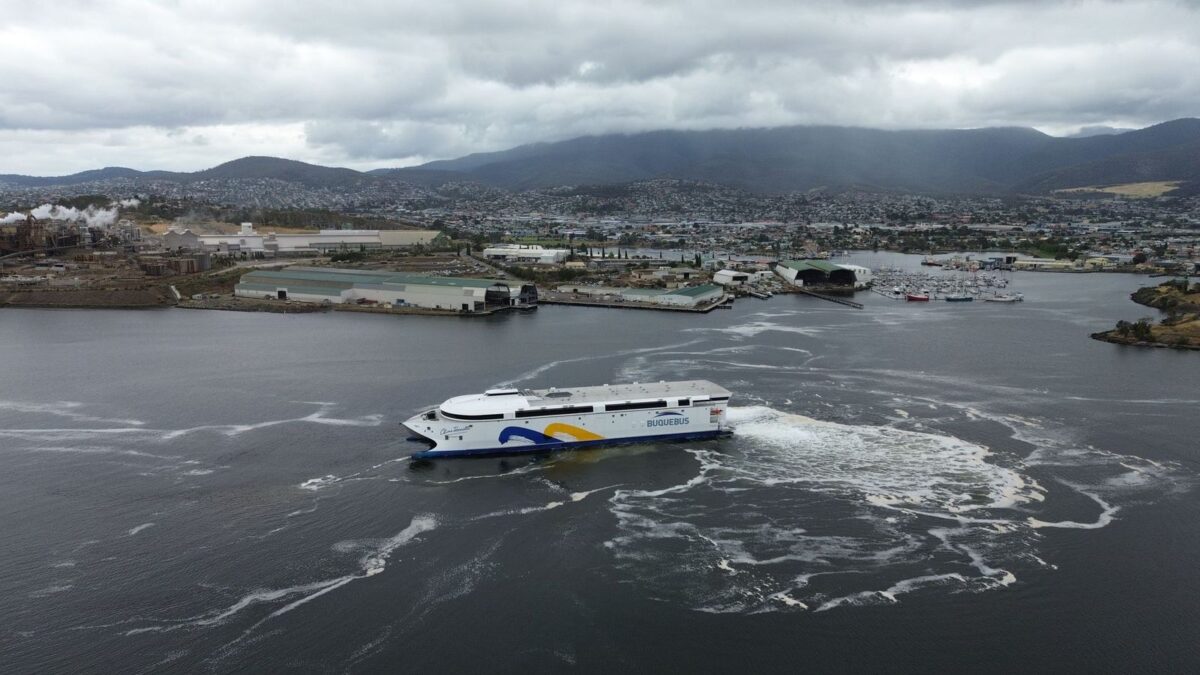





The world’s largest battery-electric ship has commenced harbour trials on the River Derwent in Hobart with Australian shipbuilder Incat Tasmania putting the 130-metre vessel through its paces on the River Derwent, signalling the transition from construction to operational testing.
Hull 096, which has been constructed for South American ferry operator Buquebus, is the largest aluminium ferry yet constructed and the largest electric vehicle of its kind built. The vessel is powered by more than 5,000 batteries with 40 MWh of installed capacity and when it enters service will be capable of transporting up to 2,100 passengers and 225 vehicles.
Hobart-headquartered Incat powered up the ship’s electric motors for the first time last month and said the launch of harbour trials is the first time a ship of this size has operated solely on battery power.
“Moving Hull 096 under its own battery-electric power is a world first at this scale and confirms that electric propulsion is viable for large commercial vessels,” Incat Chairman Robert Clifford said, noting that it marks “a major step forward for large-scale electric shipping.”
The harbour trials will involve a carefully managed series of movements on the Derwent, allowing crews to test the vessel’s propulsion, manoeuvrability, control systems, and onboard operational performance in real-world conditions.
Clifford said the trials form part of an extensive testing and commissioning program that will continue in the lead-up to the vessel’s delivery to South America.
“Harbour trials allow us to test how all systems perform together in the water,” he said. “It’s a significant step towards delivery and another major milestone in the evolution of sustainable shipbuilding.”
This content is protected by copyright and may not be reused. If you want to cooperate with us and would like to reuse some of our content, please contact: editors@pv-magazine.com.



By submitting this form you agree to pv magazine using your data for the purposes of publishing your comment.
Your personal data will only be disclosed or otherwise transmitted to third parties for the purposes of spam filtering or if this is necessary for technical maintenance of the website. Any other transfer to third parties will not take place unless this is justified on the basis of applicable data protection regulations or if pv magazine is legally obliged to do so.
You may revoke this consent at any time with effect for the future, in which case your personal data will be deleted immediately. Otherwise, your data will be deleted if pv magazine has processed your request or the purpose of data storage is fulfilled.
Further information on data privacy can be found in our Data Protection Policy.