




Sydney-headquartered renewable energy land acquisition brokerage Rok Solid is seeing data centre operators moving to regional sites to develop off-grid solutions using gas and solar in a bid to avoid grid constraints.
Rok Solid founder Daniel Moroko said across Australia 78 data centre projects are currently in development and 178 are already operating, resulting in grid access in major hubs becoming a major constraint.
Electricity demand from the sector is also growing faster than many local networks can accommodate putting data centre feasibility at risk with grid congestion, long connection lead times, and the cost of network upgrades in metropolitan hubs.
“Land is expensive, connection timelines are long, and power availability is limiting new projects,” Moroko said.
“We’re getting consistent enquiries from data centre operators looking for sites where power generation can be integrated from day one, and they’re prioritising access to gas and water over proximity to substations.”
Deeming the trend as a structural shift rather than a temporary workaround, Moroko said, the data centre sector is being driven toward renewable energy sources and regional locations.
“For large-scale data centres, access to power, not land, is becoming the primary constraint,” Moroko said.
As a result, regional locations are emerging with additional advantages, including larger land parcels, improved cooling potential, and access to supporting infrastructure such as gas pipelines and water resources.

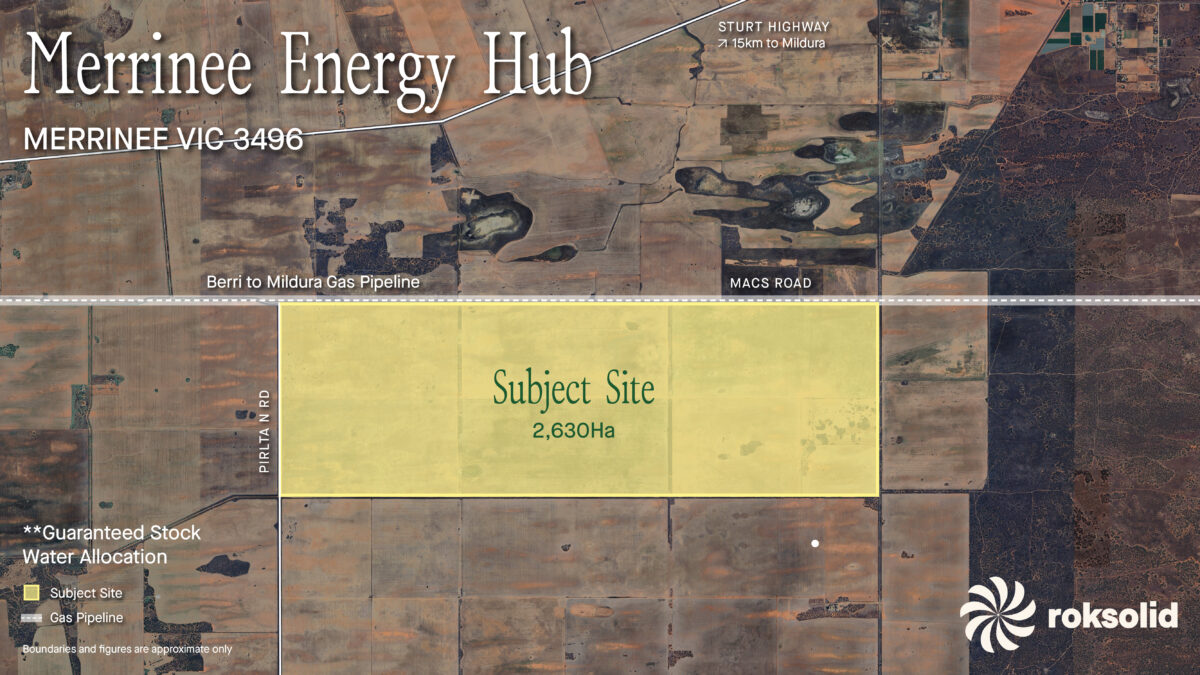
Image: Rok Solid
Off-grid and hybrid gas-fired generation, increasingly paired with large-scale solar, is emerging as a preferred solution for off-grid or semi-islanded data centre development.
Rok Solid is currently representing a 2,600-hectare site near Mildura with gas and water access, reflecting the scale required for next-generation, off-grid data centre developments.
For the energy sector, the rise of off-grid data centres may mark a significant evolution in how large electricity users engage with generation and storage solutions.
“For landholders with the right fundamentals, and for operators seeking certainty in an increasingly constrained market, the future of data centres may lie well beyond the grid,” Moroko said.
This content is protected by copyright and may not be reused. If you want to cooperate with us and would like to reuse some of our content, please contact: editors@pv-magazine.com.




By submitting this form you agree to pv magazine using your data for the purposes of publishing your comment.
Your personal data will only be disclosed or otherwise transmitted to third parties for the purposes of spam filtering or if this is necessary for technical maintenance of the website. Any other transfer to third parties will not take place unless this is justified on the basis of applicable data protection regulations or if pv magazine is legally obliged to do so.
You may revoke this consent at any time with effect for the future, in which case your personal data will be deleted immediately. Otherwise, your data will be deleted if pv magazine has processed your request or the purpose of data storage is fulfilled.
Further information on data privacy can be found in our Data Protection Policy.