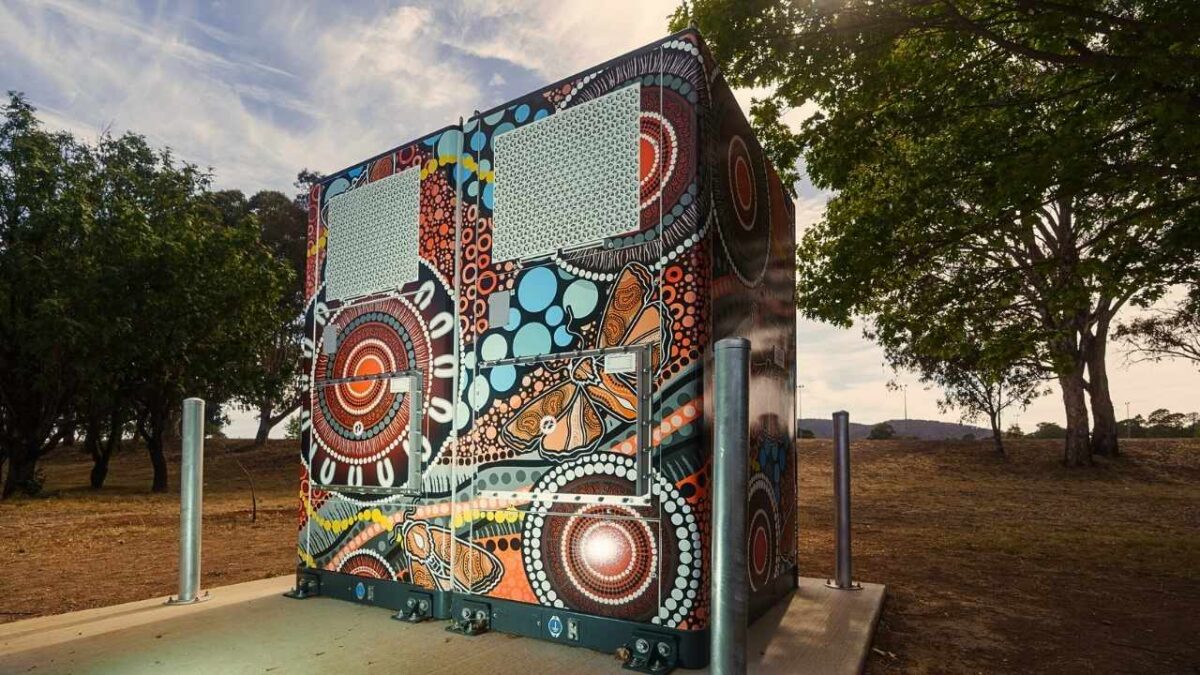





Evoenergy has switched on a 450 kWh network-connected battery energy storage system in the Canberra suburb of Dickson, marking the completion of the first set of neighbourhood batteries deployed as part of the Australian Capital Territory (ACT) government’s Big Canberra Battery project.
The Dickson battery joins other neighbourhood batteries already installed in the suburbs of Casey and Fadden, with the trio now delivering a combined power output of 550 kW and storage capacity of 1,125 kWh.
ACT Energy Minister Suzanne Orr said the network-connected systems will act as local energy buffers, capturing excess rooftop solar during the day, releasing it during the evening peak, and enabling more households to install solar without the need for expensive network upgrades.
“The ACT has been powered by 100% renewable electricity since 2020, but clean generation alone is not enough to meet the challenges ahead,” she said.
“Having batteries of all varieties, big, little and medium even, is really important to how we make sure we transition our grid to something that is sustainable but also viable and provides the energy that we need.”
The neighbourhood batteries, delivered with funding from the federal government’s Community Batteries for Household Solar Program, form part of the ACT government’s Big Canberra Battery project, an effort to build an “ecosystem of batteries across the ACT to ensure that our electricity grid remains stable.”
That ecosystem includes the 250 MW / 500 MWh Williamsdale battery energy storage system being built by Eku Energy in Canberra’s south and scheduled to commence operations later this year, and a fleet of smaller behind-the-meter batteries installed at ACT government sites.
The territory government said batteries installed under the project will help create a smarter, more resilient energy system, and make the best use of renewable energy.
“Having different types of batteries will help ensure Canberra’s electricity grid remains stable,” the government said. “This is increasingly important as our city grows.”
The territory government said it is now exploring more opportunities for neighbourhood-scale batteries with the first three systems expected to provide useful insights into how local energy storage can strengthen the grid and help meet renewable energy targets.
This content is protected by copyright and may not be reused. If you want to cooperate with us and would like to reuse some of our content, please contact: editors@pv-magazine.com.



By submitting this form you agree to pv magazine using your data for the purposes of publishing your comment.
Your personal data will only be disclosed or otherwise transmitted to third parties for the purposes of spam filtering or if this is necessary for technical maintenance of the website. Any other transfer to third parties will not take place unless this is justified on the basis of applicable data protection regulations or if pv magazine is legally obliged to do so.
You may revoke this consent at any time with effect for the future, in which case your personal data will be deleted immediately. Otherwise, your data will be deleted if pv magazine has processed your request or the purpose of data storage is fulfilled.
Further information on data privacy can be found in our Data Protection Policy.