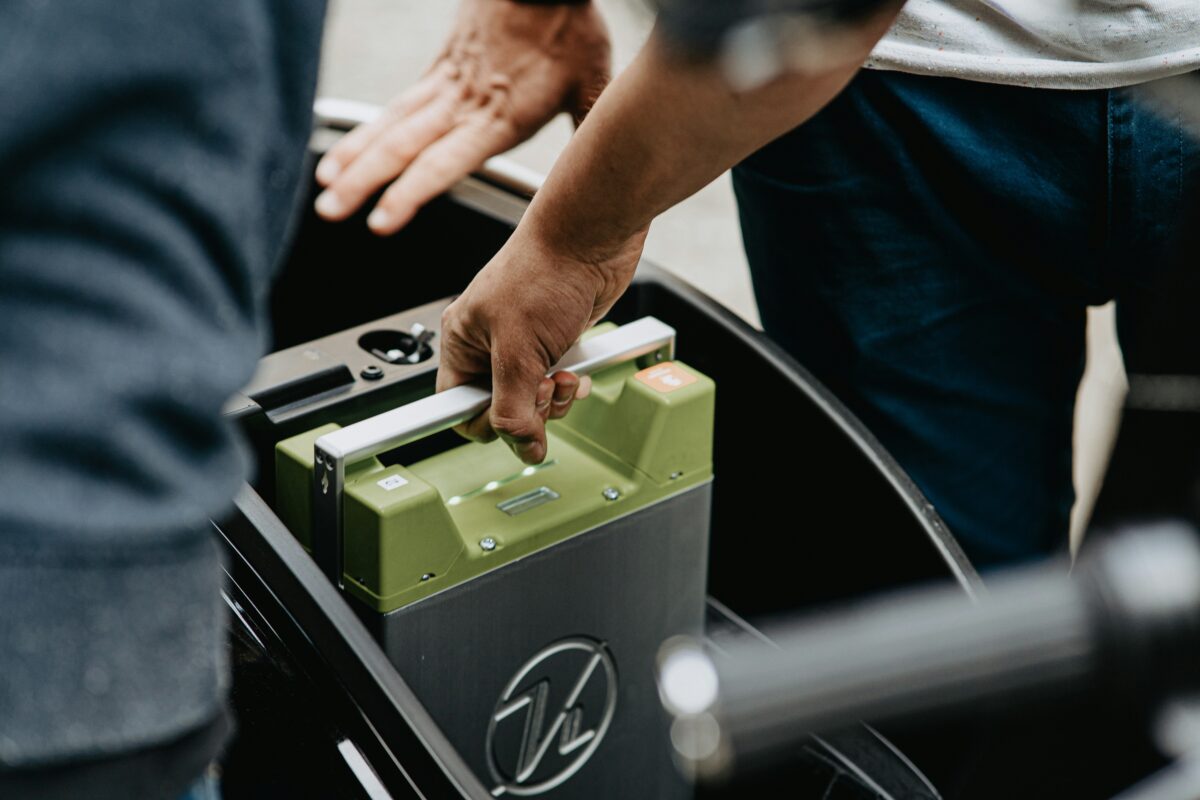





New analysis shows Australia’s rapidly growing battery materials recovery industry is already contributing $2.1 billion (USD 1.47 billion) to the economy and supporting 19,450 jobs, and that has the potential to grow to $6.9 billion and more than 34,600 jobs by 2050.
Commissioned by the Association for the Battery Recycling Industry (ABRI) and prepared by Positive Economics Advisory, the industry profile examines Australia’s battery circular economy and highlights the potential value of recovering critical minerals from end-of-life batteries.
Currently dominated by lead-acid battery types, used battery volumes are projected to triple by 2050 with the volume of lithium-ion batteries needing recycling expected to increase more than 36-fold by 2050.
David Williams-Chen, Managing Director of Positive Economics Advisory, said battery materials recovery is already an important part of Australia’s circular economy and the modelling shows strong long-term growth potential for the sector.
“As battery volumes increase over coming decades, the sector has the potential to expand significantly, supporting new investment, skilled jobs and domestic capability in recovering critical minerals,” he said.
“We are looking at a 36-fold surge in used lithium batteries, that is actually a massive economic gift. In an era of low economic growth and sluggish productivity, battery recycling offers Australia a new economic lever to pull on.”
Modelling shows the industry’s total annual contribution in Australia has the potential to contribute $6.9 billion to the national economy by 2050 and support 20,240 jobs directly, and 14,410 indirectly.
Chen said integrating ‘secondary mining’ into Australia’s industrial base will also support future security of critical minerals like cobalt, nickel and lithium, and complement traditional resource strengths.
Analysis shows that by 2050 cobalt and nickel recovery from batteries in Australia could exceed mine production by up to 245% and 53% respectively and the cumulative value of materials recovered between could be worth $67 billion.
Battery Stewardship Council Chief Executive Officer Libby Chaplin said the figures demonstrate why battery stewardship should be recognised as a strategic industrial priority, not simply a waste management issue.
“Used batteries are not just a disposal challenge, they are a strategic domestic resource stream that can help Australia build sovereign capability in critical minerals recovery, metals processing and circular manufacturing,” she said, adding that Australia has a potential advantage due to its resource base and existing industry capabilities.
“We have the mineral endowment, industrial capability, research expertise and national collection networks to recover more value onshore and strengthen our position in global battery supply chains,” Chaplin said.
Chaplin did however caution that challenges exist with the report highlighting the need for nationally aligned frameworks, not fragmented state-based systems, safe and scalable collection systems, and policy settings that support domestic processing capability.
“To unlock sovereign capability, industrial growth and energy security at scale, Australia now needs a nationally harmonised, mandatory battery stewardship framework that extends across all battery scopes,” she said.
“That is how we secure feedstock, address free-riders, improve safety, give industry the confidence to invest in onshore recovery and processing, and build the circular critical minerals and metals capability needed to capture more value from the energy transition here at home.”
This content is protected by copyright and may not be reused. If you want to cooperate with us and would like to reuse some of our content, please contact: editors@pv-magazine.com.





By submitting this form you agree to pv magazine using your data for the purposes of publishing your comment.
Your personal data will only be disclosed or otherwise transmitted to third parties for the purposes of spam filtering or if this is necessary for technical maintenance of the website. Any other transfer to third parties will not take place unless this is justified on the basis of applicable data protection regulations or if pv magazine is legally obliged to do so.
You may revoke this consent at any time with effect for the future, in which case your personal data will be deleted immediately. Otherwise, your data will be deleted if pv magazine has processed your request or the purpose of data storage is fulfilled.
Further information on data privacy can be found in our Data Protection Policy.