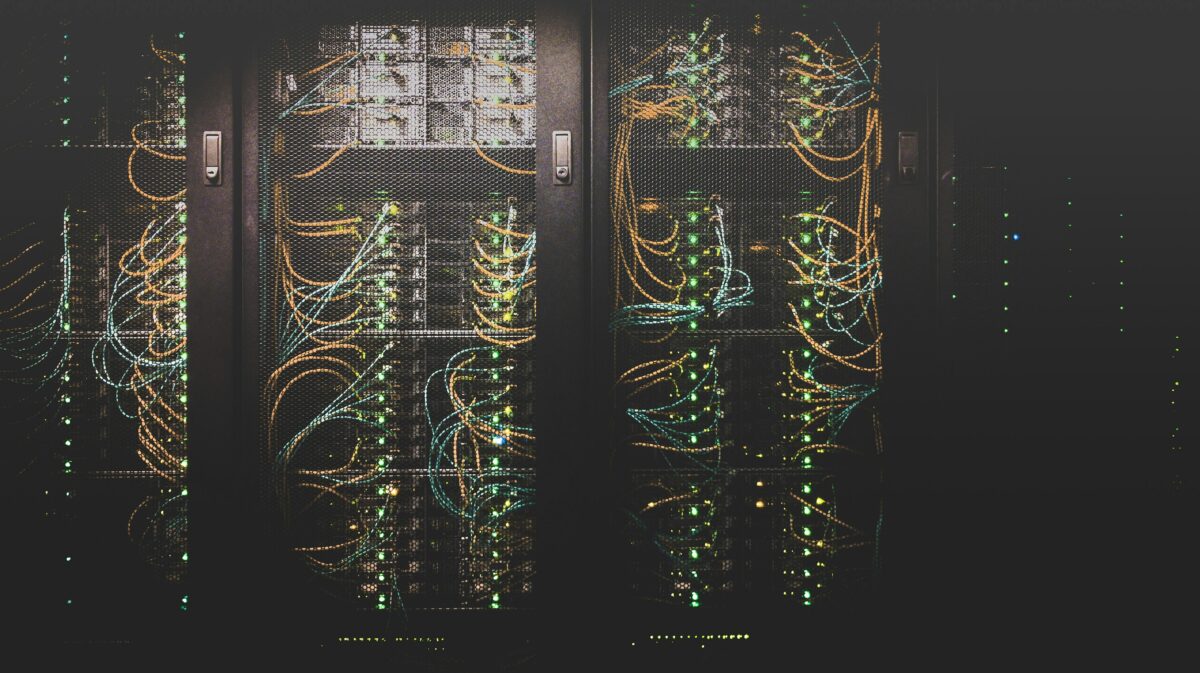





The data centre industry has progressed through waves of innovation, from virtualisation to cloud computing, and now artificial intelligence (AI). This latest phase brings unprecedented computational power alongside a significant rise in energy demand.
Bloomberg projects the generative AI market will reach $1.8 trillion (USD 1.3 trillion) by 2032, with AI workloads consuming around 36% of global data centre capacity, adding more than 150 GW of demand.
The relationship between AI and energy is now two-way: data centres must power AI, while AI can optimise energy use, support decarbonisation, and ensure digital growth remains sustainable.
Intelligent power: from energy-hungry to energy-aware
AI training racks can draw between 100 and 140 kW each, creating unpredictable, high-density loads. Increasing power supply alone is not a viable solution. Instead, energy management must become more intelligent.
Predictive algorithms now enable operators to forecast energy spikes, adjust dynamically, and smooth load variability to protect grid stability. Smart scheduling allows energy-intensive tasks to run when renewable supply is abundant, reducing emissions and operational costs. Flexible power management also allows workloads to scale according to demand, aligning performance with sustainability goals.
When guided by AI, data centres can evolve from energy-hungry to energy-aware ecosystems, balancing performance, resilience, and responsibility.
AI’s capacity to optimise energy systems, from microgrids to industrial processes, enables smarter, faster, and more precise decision-making, turning data centres into active contributors to energy efficiency and decarbonisation.
Cooling as an energy resource
Cooling has always been one of the most energy-intensive aspects of data centre operations, and AI’s high-density workloads have made it even more critical. As power densities rise, traditional air systems are reaching their limits, driving the shift toward liquid cooling, a method that removes heat directly at the chip level more efficiently than air.
Effective cooling design must balance efficiency, water stewardship, and circularity, turning a traditional energy cost into an opportunity for recovery. Waste heat can be repurposed for nearby industrial or agricultural use, while closed-loop systems help minimise water consumption and support continuity in resource-constrained environments.
As the industry moves toward next-generation workloads, this integrated approach will define how data centres maintain both performance and responsibility.
Resilience in the AI era
In the age of AI, resilience extends beyond uptime. It’s about adaptability to variable power profiles, evolving regulations, and changing customer expectations.
Through geo-shifting, AI workloads can pause in one region and resume in another where renewable energy is more abundant or affordable. AI-driven orchestration tools allow workloads to migrate across locations while maintaining performance.
Integrating grid supply with on-site renewable generation and battery storage strengthens resilience and reduces environmental impact. Close collaboration between data centres and utilities will be critical in addressing grid constraints and aligning new capacity with available infrastructure.
AI-ready by design: from grid to chip and chip to chiller
Meeting AI’s power and performance demands requires a unified architecture where power, cooling, and digital management operate in alignment.
Reference designs developed with industry partners illustrate this integrated approach, combining advanced cooling with power management to support high-density environments while maintaining efficiency and reliability.
By embedding intelligence across every layer, from grid to chip to chiller, data centres can scale for accelerated computing without letting energy consumption spiral. Research, including Schneider Electric’s White Paper 212: “Bending the Energy Curve”, shows that even modest improvements in efficiency can collectively reduce overall energy growth, helping to decouple digital expansion from rising demand.
The long view: data centres as energy ecosystems
The data centre of the future will not be defined only by computing capacity, but by how it contributes to broader energy systems. AI-ready facilities are positioned to act as partners to the grid, balancing demand through flexible operations and load shifting, while supporting decarbonisation through more efficient energy use.
Circular thinking, prioritising efficiency, reuse, and adaptability, will define the next generation of data centres. The leaders will be those who successfully align energy for AI with AI for energy, achieving competitiveness, sustainability, and resilience together.
Sustainable intelligence at scale
AI is reshaping the data centre landscape, driving energy demand while also providing the intelligence to manage it more effectively. Sustainability must be embedded across every dimension, from power distribution and cooling to grid collaboration and system design.
Through continued innovation and integration, AI-ready data centres can achieve sustainable intelligence at scale and support the growth of digital infrastructure, while ensuring progress aligns with long-term energy and climate goals.
Author: Farokh Ghadially, Vice President – Secure Power, Schneider Electric
The views and opinions expressed in this article are the author’s own, and do not necessarily reflect those held by pv magazine.
This content is protected by copyright and may not be reused. If you want to cooperate with us and would like to reuse some of our content, please contact: editors@pv-magazine.com.



By submitting this form you agree to pv magazine using your data for the purposes of publishing your comment.
Your personal data will only be disclosed or otherwise transmitted to third parties for the purposes of spam filtering or if this is necessary for technical maintenance of the website. Any other transfer to third parties will not take place unless this is justified on the basis of applicable data protection regulations or if pv magazine is legally obliged to do so.
You may revoke this consent at any time with effect for the future, in which case your personal data will be deleted immediately. Otherwise, your data will be deleted if pv magazine has processed your request or the purpose of data storage is fulfilled.
Further information on data privacy can be found in our Data Protection Policy.