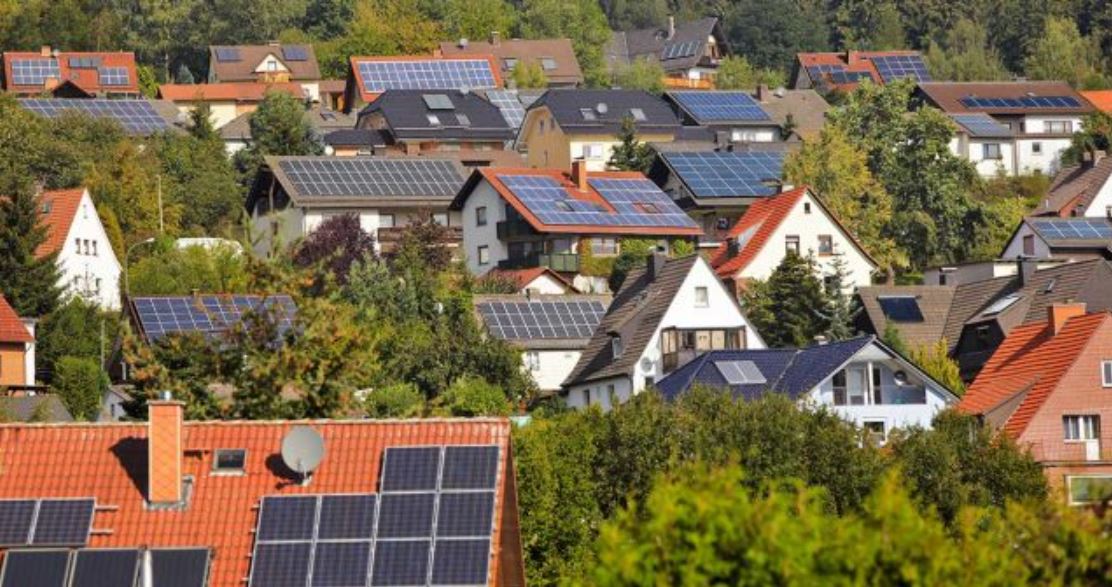





It’s sitting on our rooftops.
At a time when climate diplomacy is often dominated by large-scale infrastructure and complex negotiations, rooftop solar offers something different: speed, affordability and public support.
It is one of the few solutions that delivers climate action, cost-of-living relief, energy and national security all at once.
More than one in three Australian homes now generate their own electricity. With 4.3 million households and small businesses using rooftop solar, Australia has the highest uptake per capita in the world.
Collectively, these systems now function as the nation’s largest power station — a citizen-led energy transformation that has strengthened our energy resilience and reduced exposure to global shocks.
This is not just a domestic success story. It is a globally relevant model—and one Australia should urgently take to the world. And the global need is enormous. The United Nations Development Program reports that 1.18 billion people still live in energy poverty.
At the same time, current projections by the Global Solar Council suggest the world will reach only about 150 million solar homes by 2030—this is far short of what is needed to simultaneously end energy poverty, meet climate targets, and build affordable, resilient energy systems.
Doubling that to 300 million homes could add 2.5 TW of new clean energy capacity and avoid hundreds of millions of tonnes of greenhouse emissions each year.
Australia has already shown that rapidly scaling rooftop solar is achievable. This rapid growth of rooftop solar didn’t happen by accident. It was driven by clear policy settings—feed-in tariffs, the Small-scale Renewable Energy Scheme, and targeted rebates—that reduced upfront costs and gave households confidence to invest. More recently, battery incentives have accelerated the uptake of household storage.
The lesson is simple: when governments back households, they deliver. This matters for both climate and diplomacy. Large-scale renewable projects remain essential, but they are often slowed by planning delays, infrastructure constraints and community opposition.
Rooftop solar, by contrast, can be rolled out quickly, is widely accepted, and builds social licence because it puts control directly in the hands of people.
It also delivers immediate economic benefits. According to the Australian Bureau of Statistics, rooftop solar reduced electricity costs in Australia by more than $3 billion in 2024–25. With batteries, households can cut energy bills by up to 90%.
For many countries—particularly in our region—replicating our rooftop solar success would be transformative. In parts of the Asia-Pacific where grid infrastructure is limited or unreliable, distributed solar and storage can provide affordable, secure energy access without the need for costly centralised systems. It enables households to become both producers and consumers, accelerating development while avoiding fossil fuel dependence.
This is where Australia’s leadership can grow. The Albanese government has made strong commitments on renewables at home.
The next step is to embed rooftop solar as a core pillar of Australia’s international climate and development strategy.
That means elevating distributed energy within global climate diplomacy, scaling up support through development finance, and sharing the policy tools that made Australia’s success possible.
It also means working closely with Pacific partners to deliver a pathway to being the world’s first renewable energy zone by 2030 – providing clean, affordable energy systems that strengthen resilience and sovereignty.
Exporting Australia’s rooftop solar model is not just good climate policy—it is smart economic policy, foreign policy, national and energy security policy. It would reduce regional reliance on imported fossil fuels, stabilise energy systems, and build stronger partnerships with communities across our region. Our government should make the most of this strategic opportunity.
Australia has already done the hard part. We have proven that a distributed, people-powered energy system works at scale. Now we must ensure it doesn’t only remain a national success story—but becomes a global one.
Author: Kate Lee is the newly appointed Global Advocacy Director for Solar Citizens. For 12 years she led the Australian union movement’s international development organisation, Union Aid Abroad-APHEDA.
The views and opinions expressed in this article are the author’s own, and do not necessarily reflect those held by pv magazine.
This content is protected by copyright and may not be reused. If you want to cooperate with us and would like to reuse some of our content, please contact: editors@pv-magazine.com.

By submitting this form you agree to pv magazine using your data for the purposes of publishing your comment.
Your personal data will only be disclosed or otherwise transmitted to third parties for the purposes of spam filtering or if this is necessary for technical maintenance of the website. Any other transfer to third parties will not take place unless this is justified on the basis of applicable data protection regulations or if pv magazine is legally obliged to do so.
You may revoke this consent at any time with effect for the future, in which case your personal data will be deleted immediately. Otherwise, your data will be deleted if pv magazine has processed your request or the purpose of data storage is fulfilled.
Further information on data privacy can be found in our Data Protection Policy.