SMA shifts Australian focus to large-scale sector


SMA Solar Technology Chief Executive Officer Jürgen Reinert has declared the German-headquartered inverter and battery manufacturer remains committed to the Australian market after confirming the company will exit the residential and commercial sector.
“Australia represents enormous potential in the global energy transition, and SMA is committed to this market for the long term,” he said.
“The decisions we are making now, focusing on large-scale infrastructure, grid-forming technology and hybrid integration, are not a response to short-term market conditions. They reflect a considered view of where the energy transition is heading and where SMA can make the most meaningful contribution.”
Reinert explains the company’s new focus and maps out what lays ahead for SMA in Australia.
Reports indicate that SMA is withdrawing from the Australian residential and commercial market. Can you explain the reasoning behind the decision and what that means for SMA in the Australian market going forward?
JR: The residential and commercial inverter segments have experienced rapid commoditisation globally. Massive oversupply, aggressive pricing and state-subsidised manufacturing, particularly from China, have fundamentally altered the competitive dynamics. Competing sustainably in those segments requires cost structures that are increasingly difficult to sustain as a premium technology manufacturer without compromising the long-term integrity of what we do. In this context, our decision to exit the home and business segment in Australia is market-specific, with SMA continuing to operate in this segment in other regions globally.
Australia remains one of our top three global markets for our large-scale division, and our commitment here is long-standing. SMA supplied technology to the Greenough River Solar Farm, one of Australia’s first utility-scale solar farms, 15 years ago. In 2018, we introduced locally integrated solutions in partnership with Wilson Transformer Company, setting a benchmark for local collaboration. We have supported more than 10GW of solar and storage entering operation in this country.
We are continuing to invest in and develop locally relevant solutions by partnering with Australian developers, EPCs and utilities. The home and business exit is a strategic decision to concentrate SMA’s resources where we can have the greatest impact, in grid-forming capability, hybridisation, system integration and large-scale project expertise. Our commitment to Australia’s energy infrastructure is unchanged, and in many respects, deepening.
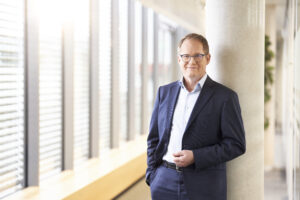
Image: SMA Solar Technologies
What are the key existing and emerging challenges in the Australian market, and what can be done to alleviate them?
JR: One of the most pressing challenges is maintaining grid stability. As renewable penetration increases, the system is losing the inertia traditionally provided by synchronous generation. Managing frequency, voltage and system strength in this environment is technically complex—and Australia is navigating this transition faster than almost any other market globally. At the same time, there is an ongoing industry discussion around the role of synchronous machines versus inverter-based resources in providing these services. While synchronous condensers continue to play an important role today, grid-forming inverter technology is rapidly advancing and increasingly demonstrating its capability to deliver system strength and stability services.
Battery integration presents both a major opportunity and a challenge. While deployment is accelerating rapidly, the real value lies in integrating storage in a way that delivers essential grid services—not just energy shifting or backup capacity. This requires advanced inverter capabilities and sophisticated plant control.
Grid connection complexity is another key challenge. The requirements in Australia are among the most stringent in the world, which adds time and cost to project delivery. While these high standards are critical to maintaining system security – and something we have strong experience navigating—it’s important to recognise that the regulators and industry stakeholders are continuously evolving technical frameworks and requirements, particularly as grid-forming capabilities become more relevant.
At the same time, Australia is ahead of many other markets in addressing these challenges. The experience and learnings gained here provide a strong foundation that can be applied globally, as other regions move towards higher shares of renewable and inverter-based generation. Underlying all of this is an energy security imperative. Supply chain resilience, the origin of critical components, and sovereign capability in infrastructure are increasingly front of mind. The answer isn’t protectionism, but it does require a more strategic approach to where critical technology comes from and who controls it over the long term.
Addressing these challenges will require continued investment in grid-forming technologies, smarter hybrid system integration, and deeper collaboration between technology providers, network operators and government. Australia is already leading in many of these areas, the key now is to maintain momentum and scale these solutions effectively.
3. Where is the potential for growth in the Australian renewable energy transition and why?
JR: The greatest growth potential sits at the intersection of scale and complexity, which is where SMA’s Large Scale division operates.
Utility-scale solar and storage are still in an expansive phase in Australia, and the pipeline remains strong. But the more interesting growth is in hybrid systems, solar paired with battery storage and grid-forming capability, which are becoming essential as the grid evolves. Australia commissioned its first solar and storage hybrid with a single point of connection in the National Electricity Market at Quorn Park last year, and that model is expected to become increasingly common.
Beyond individual projects, there is significant growth potential in the services and intelligence layer, the software, controls and integration capability that make large-scale renewable assets perform reliably within a complex grid. As penetration increases, project developers and utilities will increasingly value technology partners who can deliver that intelligence, not just hardware.
Australia also has a strong pipeline in sectors adjacent to traditional solar, such as green hydrogen, industrial decarbonisation, and behind-the-meter solutions at an industrial scale. These are areas where SMA’s expertise in power conversion and system integration is directly relevant.
4. Battery energy storage is emerging as essential infrastructure in Australia, what does that mean for SMA?
JR: The greatest growth potential sits at the intersection of scale and complexity – this is exactly where SMA’s large-scale division operates.
Utility-scale solar and storage continue to see strong growth in Australia, supported by a robust project pipeline. However, the more meaningful shift is towards hybrid systems – combining solar, battery storage, and increasingly grid-forming capability. As the grid evolves, these types of systems are moving from optional to essential, enabling stability, system strength, and more flexible operation.
Beyond individual assets, a significant area of growth lies in the intelligence layer – plant controls, system integration, and advanced inverter capabilities. As renewable penetration increases, the ability to actively manage and support the grid becomes a key differentiator. Utilities and developers are placing greater value on partners who can deliver not just hardware, but fully integrated, grid-supporting solutions.
This is where SMA is strongly positioned, with proven expertise in power conversion, grid-forming technologies, and large-scale system integration
across global markets.
In addition, there is growing momentum in adjacent areas such as green hydrogen, industrial decarbonisation, and large-scale behind-the-meter applications. These segments further expand the role of renewable generation and storage – and align closely with SMA’s capabilities in delivering flexible, high-performance energy systems.
5. What lessons does Australia’s energy transition provide for other markets?
JR: Australia has consistently been ahead of the curve, and other markets are watching closely.
One of the key lessons is that high renewable penetration—particularly in relatively weak grid environments—fundamentally changes how power systems need to operate. System strength, frequency response, voltage management and overall resilience cannot be addressed by generation capacity alone – they require advanced inverter capabilities, sophisticated controls, and intelligent system integration.
Australia has also highlighted the importance of robust grid connection frameworks. While the requirements are among the most advanced globally, they have driven a high level of technical rigor and capability across the industry, supporting long-term system stability.
The growing focus on energy security is another important lesson. Themes such as grid resilience, supply chain transparency and sovereign capability are becoming more prominent in Australia and are now emerging across other major markets, including the US, the UK and Europe.
What happens in Australia today often plays out in other high-penetration markets – such as Chile, Texas, the UK and parts of Europe – within a few years. This is why Australia is such an important market for SMA. It is where solutions are refined and proven in practice, particularly in areas like grid-forming and hybrid system integration, before being applied more broadly across global markets.
This content is protected by copyright and may not be reused. If you want to cooperate with us and would like to reuse some of our content, please contact: [email protected].

Please login to comment