




In the first quarter of 2026, renewables responded to the new demand record across the National Electricity Market (NEM), hitting 47% of generation, easily outstripping coal. Grid scale and home battery capacity surged to new highs; and wind generation in Queensland hit a new peak.
But if we need another reminder of how fast the energy transition is moving, take a quick look at the latest Global Transmission Report on Australia’s energy transmission.
Grid scale solar and wind triples by 2035 – just under a decade from now. Over the same period energy storage increases 10-fold, and an extra 5,000 kilometres of transmission network will be built.
By 2050, thermal coal generation in Australia will have disappeared. Electricity consumption will double, driven by an electrified transport network, data centre growth and other increasing industrial loads.
That’s a very large increase in megawatts being pushed through our transmission lines. The key question is, will a transmission network essentially built for last century’s be up to the challenge?
My answer is, yes – if we treat grid resilience as a new national strategic priority.
Geography defines a long, thin, stringy grid
Australia’s grid is long and relatively weak – stringy if you like.
Unlike Europe’s deeply meshed, redundantly interconnected systems, our networks stretch across vast distances and challenging landscapes, connecting distant load centres with centralised baseload generation.
Australia’s electricity system reflects the times in which it was built. State-based planning with relatively weak interconnectivity, differing voltage levels, and separate grids for the east and west.
It reflects a federation that pursued energy independence state by state.

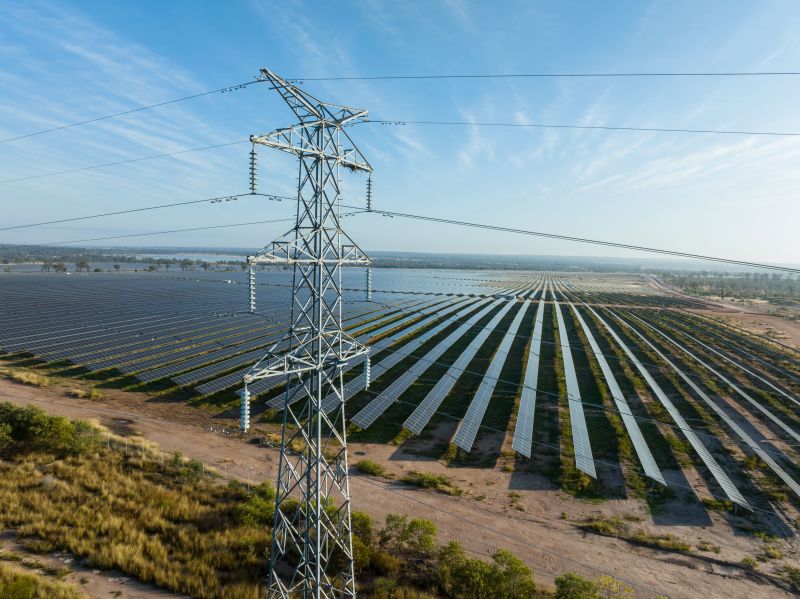
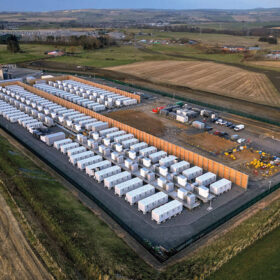
Image: Hitachi Energy Australia
That history made sense in a coal-era, vertically integrated world.
But given today’s demand patterns and the penetration of rooftop solar, intermittent and firmed renewables require a grid that is flexible, resilient and digitalised.
Load centres hug the coastline predominantly in Sydney, Melbourne, Brisbane, Perth, while the best renewable resources sit inland, often hundreds of kilometers away.
Renewable Energy Zones (REZ) have emerged where the sun is brightest and the wind strongest, not necessarily where most people live or data flows concentrate.
Industrial electrification, green metals, hydrogen, and data centres will continue to drive demand to levels few planners seriously contemplated even a decade ago.
We are asking our twenthieth-centry grid to support a 21st century economy.
A modern resilient grid is a national strategic asset
Energy resilience is the foundation of energy security – and a modern, secure and resilient energy system delivers more than just electricity.
We are now building that resilient grid.
Not just steel towers and cables connected by large substations. It’s transmission and utility scale generation supported by grid-forming inverters, advanced power electronics, digital control systems capable of sophisticated orchestration.
Distribution networks are also evolving. With the world’s highest penetration of rooftop solar, and electric vehicle (EV) adoption and home battery storage soaring to new heights, distribution networks are stepping up to manage massive two‑way power flows for distributed energy resources (DER).
A modern grid like this can ride through shocks, adapt to volatility, and recover quickly from disruption. A modern resilient gid is flexible and can sense, respond, island, reconnect, and optimise in real time. It’s no longer passive infrastructure – it’s a dynamic system, balancing volatility on both sides of the meter.
On the supply side, variable renewables replace predictable thermal generation. On the demand side, electrified industry, transport, and data-driven services for a digital economy introduce new peaks, new sensitivities, and new interdependencies.
A resilient electricity grid will be a national strategic asset that helps us move beyond old boundaries that defined last century’s electricity system. It will be the foundation of new industry and transport systems, supporting jobs and underpinning a more productive, smarter economy.
Policy and procurement are key
The build out of Australia’s transmission network has already begun. However, it needs to gather pace and stay the course.
The scale of the transition being undertaken globally is immense. With 585 GW of new generation capacity added in 2024 we are well on the way to 50% renewables by 2030.
The addition of hyperscale data centres and the electrification of other heavy industry is only adding to the demand for specialised electrical equipment. Australia needs to stay awake to the challenges of this global market, with more forward looking procurement, bundled demand and strategic partnerships.
Lastly, critical transmission or generation infrastructure shouldn’t face a near decade of uncertainty, assessments and approvals before dirt is dug.
Uncertainty causes delay, negatively impacts on costs, ferments community opposition and moves the focus from where it needs to be.
We need to maintain policy reform momentum and certainty to help improve the pace and efficiency of approvals.
Recent reforms and reviews are welcome on this front. The Nelson Review should deliver price and longer-term investment certainty for project financiers, while recently enacted reforms to EPBC Act should strengthen environmental protections and streamline approvals.
Work on connection reform and access standards is moving. Firming, system strength, inertia, all of which are key elements for a stable and resilient grid are focus areas of the work being done by our energy market operator and rule makers.
If we maintain momentum, focus on policy certainty and strategic procurement, capital will flow and will help deliver a fit for purpose electricity grid – both resilient and secure.
A strategic asset for the nation that drives national prosperity and is both economically and environmentally sustainable.
*
Author: Bernard Norton, Managing Director, Hitachi Energy Australia.
The views and opinions expressed in this article are the author’s own, and do not necessarily reflect those held by pv magazine.
This content is protected by copyright and may not be reused. If you want to cooperate with us and would like to reuse some of our content, please contact: editors@pv-magazine.com.



By submitting this form you agree to pv magazine using your data for the purposes of publishing your comment.
Your personal data will only be disclosed or otherwise transmitted to third parties for the purposes of spam filtering or if this is necessary for technical maintenance of the website. Any other transfer to third parties will not take place unless this is justified on the basis of applicable data protection regulations or if pv magazine is legally obliged to do so.
You may revoke this consent at any time with effect for the future, in which case your personal data will be deleted immediately. Otherwise, your data will be deleted if pv magazine has processed your request or the purpose of data storage is fulfilled.
Further information on data privacy can be found in our Data Protection Policy.