David Carroll

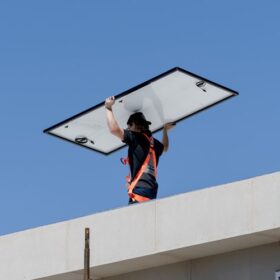
ARENA tips $5.4 million into community electrification trial
The federal government has committed $5.4 million in funding to support the creation of a fully electrified community on the New South Wales south coast with the pilot project to provide crucial insights on the shape of Australia’s future energy system.
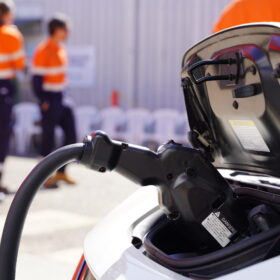
CSIRO and Essential Energy to trial vehicle-to-grid tech
New South Wales distributed network service provider Essential Energy and Australia’s national science agency CSIRO have partnered to investigate how vehicle-to-grid technology can be best integrated as part of a wider home energy management system and support the energy system of the future.

Curtin finding tipped to boost solar cell performance
A group of researchers in Western Australia has discovered how to make more molecules stick to the surface of tiny semiconductor nanocrystals, in a finding they say could revolutionise the efficiency and performance of solar panels.
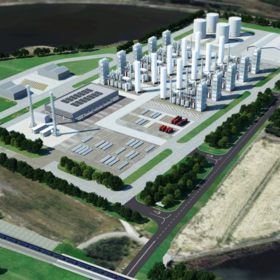
Newcastle port progresses clean energy precinct plans
Port of Newcastle, one of the largest coal ports in the world, is pushing ahead with its Clean Energy Precinct development, signing agreements for key design work and environmental impact studies.
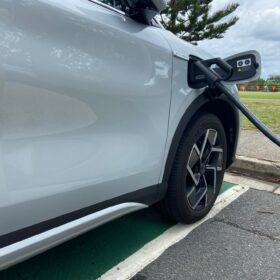
Electric vehicle sales slump blamed on misinformation
Battery electric vehicle sales in Australia have flattened in recent months. The latest data reveal a sharp 27.2% year-on-year decline (overall new vehicle sales were down 9.7%) in September. Tesla Model Y and Model 3 cars had an even steeper drop of nearly 50%.
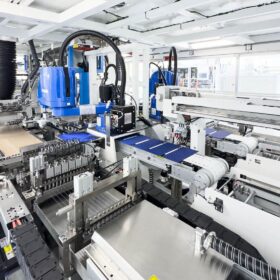
SunDrive teams with Trina on solar tech development
Solar cell technology innovator SunDrive Solar will join forces with Chinese PV manufacturing giant Trinasolar to develop “cutting-edge” manufacturing facilities and bring Australian-made solar panels to market at scale.
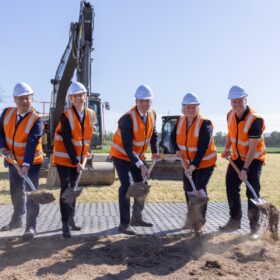
AGIG project provides boost for green hydrogen ambitions
Australia’s renewable hydrogen ambitions have received a boost with construction officially starting on a 10 MW green hydrogen project being developed on the border between New South Wales and Victoria.
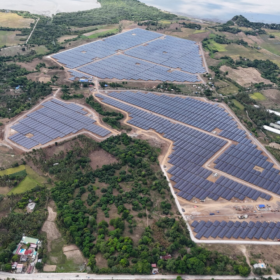
NRE presses go on 145 MW Philippines project
Nexif Ratch Energy, a renewable energy-focused platform in Southeast Asia and Australia, has reached financial close on the 145 MWp solar farm being developed in the Philippines.
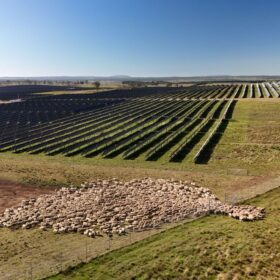
Key to unlocking Australia’s renewable energy potential
Critics of renewable energy projects are quick to argue that building solar and wind farms on productive farming and grazing land has a deleterious effect on Australia’s agricultural production.
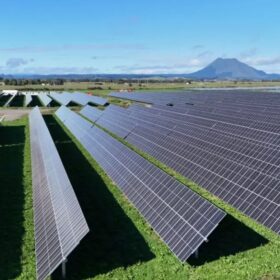
NZ to step up approvals process for large-scale PV projects
Ten large-scale solar farms planned for New Zealand’s North and South islands are among 22 renewable energy projects with a combined capacity of 3 GW that have been listed for inclusion in the government’s “one-stop shop” fast-track approvals process.