Discounts don’t buy home battery trust in rebate landscape: study
A new study out of Curtin University in Perth has found that despite growing affordability from government rebates, Australian households hesitate to adopt home batteries due to significant non-financial barriers.
Western Australia warns solar traders against bogus battery rebate activity
Western Australia’s solar industry is on notice after a trader unlawfully used the state government logo and falsely claimed WA Battery Scheme registrations are open in a deliberate act to mislead consumers.
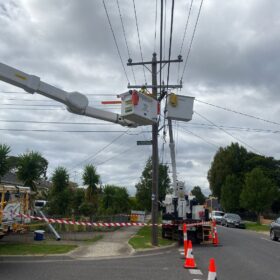
Smart data unlocks solutions for network challenges
As Australia’s distribution network service providers grapple with challenges sparked by the rise of distributed energy resources, EA Technology says leveraging insights from grid-edge intelligence can unleash the full potential of their networks.
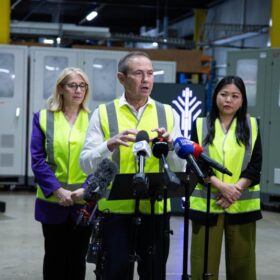
WA Budget measures designed to bolster local battery manufacturing
The Western Australian government has committed $50 million to scale up the local battery manufacturing industry to take advantage of an expected surge in demand for household energy storage systems.
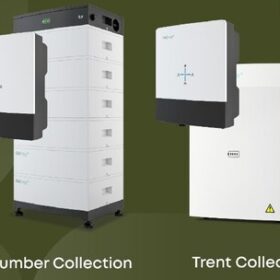
UK energy company launches hybrid home inverter battery storage systems
Energy storage solutions company GivEnergy has launched single and three-phase hybrid inverter and modular battery storage systems in Australia, to coincide with the 1 July 2025 kick-off of the federal government’s Cheaper Home Batteries Program.
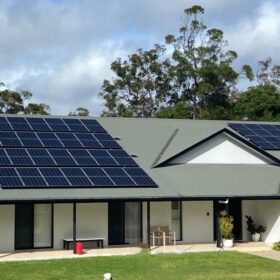
Cost-of-living and government rebates accelerate solar and battery booms
Recent studies forecast Australia is on the precipice of a rooftop solar and household battery boom, predicting record breaking installation numbers driven by falling battery and solar module prices, government rebates and cost-of-living pressures.

Advocacy group calls for national CER body to boost participation in the NEM
A new report commissioned by Energy Consumers Australia is calling for the establishment of an independent national consumer energy resources body with adequate powers to boost participation in the national electricity market.

Report reveals Sydney potential for 21 GW renewable energy zone
A new report calls for mandated solar installations on all new residential and industrial buildings in Sydney to help transform the city into an urban renewable energy zone capable of generating three quarters of its annual energy needs.
NSW pairs increased VPP incentive with national battery rebate
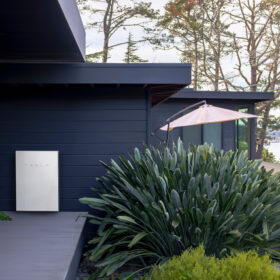
The New South Wales government has ended its home battery installation rebate, announcing it will instead provide up to $1,500 to households and small businesses that install a battery energy storage system and connect it to a virtual power plant.

Deakin puts peer-to-peer trading of excess solar to test
Researchers at Deakin University have launched a first-of-its-kind project exploring how Australian households and small businesses with solar and or battery systems can sell their excess clean energy to others without the technology.