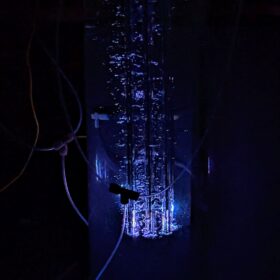
UNSW researchers claim to have developed method for viable, decentralised green ammonia production
Researchers from UNSW say they have found a commercially viable pathway to the decentralised production of green, renewable ammonia. An alternative to the traditional Haber-Bosch method, the researchers used nanosecond pulsed plasma bubbles coupled with electrocatalysis.
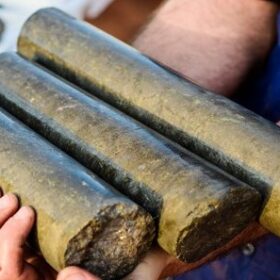
Global battery giant boosts share in WA lithium explorer
Australian lithium explorer St George Mining’s critical minerals strategy has received a significant boost with global battery industry giant Shanghai Jayson New Energy Materials tipping a further $3 million into the Perth-based company.
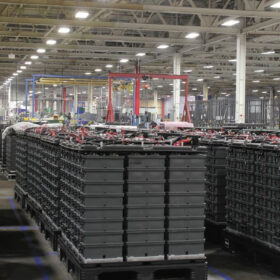
Weekend read: BESS lessons learned
Taking a rigorous approach to inspection is crucial across the energy storage supply chain. Chi Zhang and George Touloupas, of Clean Energy Associates, explore common manufacturing defects in battery energy storage systems (BESS) and how quality-assurance regimes can detect them.
Solar-plus-storage outperforms diesel in US military survival analysis
The US Department of Energy’s National Renewable Energy Laboratory (NREL) has determined that Antora Energy’s solar-plus-storage system meets the US military’s stringent standards, as it significantly outperforms emergency diesel generators in survivability probabilities.
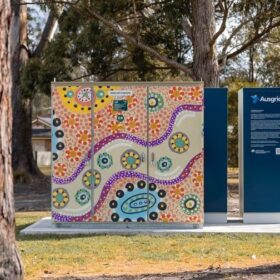
Ausgrid turns on community battery as ARENA reveals ‘overwhelming’ demand
New South Wales network operator Ausgrid has switched on the second community battery rolled out under an Australian government national funding program that has sparked an “overwhelming” response with more than $3.5 billion (USD 2.28 billion) of projects seeking funding.
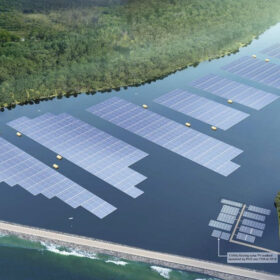
Weekend read: the ‘next big thing’
The PV industry in Southeast Asia has come a long way since guest author Ragna Schmidt-Haupt, partner at Everoze, reported on solar financing innovation in the region more than a decade ago. In this article, she outlines five factors for success, the newest of which has the potential to become a game changer, and not only in Southeast Asia.
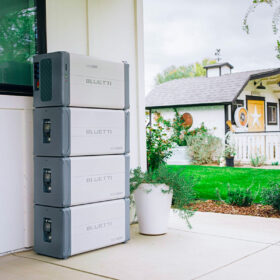
Bluetti launches modular residential battery system
United States solar and energy storage solutions manufacturer Bluetti has launched a modular 7,600 W lithium iron phosphate battery system for residential settings with a flexible energy storage capacity ranging from 9.9 kWh to 19.8 kWh.

LAVO pivots to new model, offering households renewable ecosystems via subscriptions at no upfront cost
LAVO, which entered the market with its hydrogen battery in 2021, has soft launched a new Energy-as-a-Service model. Partnering with Yingli Solar, LAVO says it can install and maintain solar, battery and EV charging systems at no upfront cost to Australian households, who will then pay off the systems via a 10-year subscription.

AIKO showcases ABC modules ahead of Australian launch
Chinese solar panel manufacturer AIKO unveiled its solar cell technology at Melbourne’s All-Energy event last week ahead of an impending entry into the Australian market.
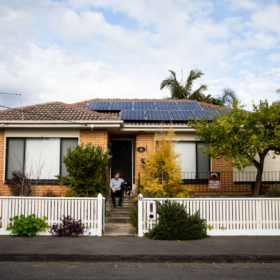
Commbank launches interest-free loans for solar and battery systems
One of Australia’s “big four” banks, the Commonwealth Bank, will begin offering interest-free finance up to $30,000 to install rooftop solar and home batteries with select merchants. The program will also allow customers to split repayments into instalments over one to five years.