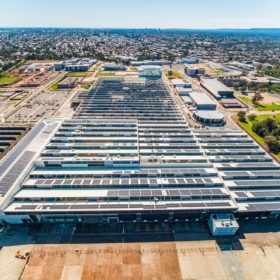
Massive commercial PV install ‘practically’ completed at former car manufacturing plant in Adelaide
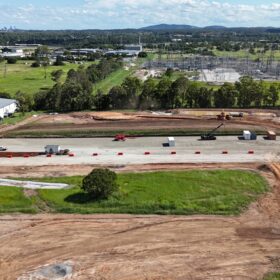
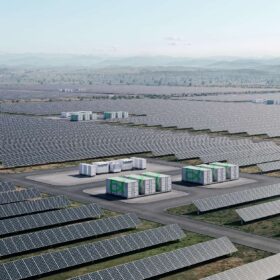
A former car manufacturing site turn “innovation precinct” in Tonsely Adelaide is now home to one of Australia’s largest rooftop arrays at 4.83 MW. Completed by CleanPeak Energy, the system will supply around 75% of the energy needs of the 56 hectare site, with batteries set to arrive before summer.
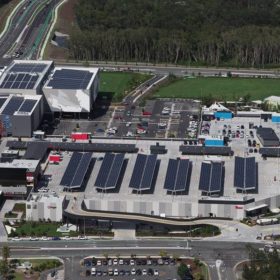
Researchers explore rooftop PV for pre-cooling of residential, commercial buildings
A team of Australian researchers have developed a way to use rooftop solar PV to run air conditioners to pre-cool residential and commercial buildings. They have identified several factors that could help reduce a building’s energy costs.
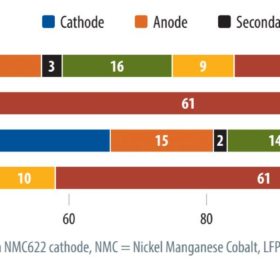
Weekend read: Strong case for energy storage, despite rising costs
Unprecedented volatility in global commodity markets, disruption to logistics and supply chains, and unrelenting growth has driven up the cost of Li-ion batteries since the middle of 2021. Sam Wilkinson and Oliver Forsyth of IHS Markit expect to see rapid manufacturing expansion that will still struggle to keep up with demand, and ultimately lead to the establishment of a smaller group of battery-makers specialized in supplying stationary energy storage systems.
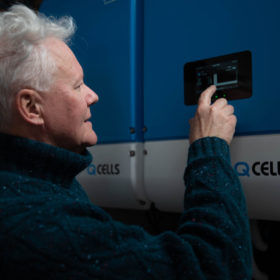
Qcells Australia reports 194% jump in battery sales in July
South Korean solar and battery manufacturer Qcells says its Australian arm has seen 194% growth in energy storage system (ESS) sales in July 2022 compared to the first quarter of the calendar year.

Melbourne startup to forecast entire region’s solar output using real-time satellite data
Combining satellite images of Australian rooftops with those of real-time cloud cover to create accurate forecasts of distributed solar output for suburbs and perhaps even whole regions and states is the focus of a new Australian startup, Solstice AI. “We’re kind of at a point now where there’s so much solar that it’s causing all these issues but, if we can forecast it, many of these issues can be alleviated or managed much better,” the company’s cofounder and CEO, Julian de Hoog, tellspv magazine Australia.
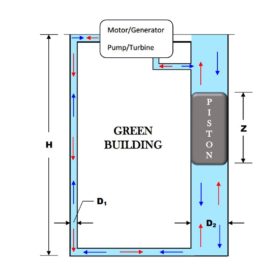
PV with gravity storage, redox flow batteries in buildings
Indian researchers have developed a new hybrid system featuring a conventional rooftop PV system, a solar tree, two gravity power modules for building (GPMBs), and a vanadium redox flow battery (VRFB), with power exclusively provided by the two solar installations.
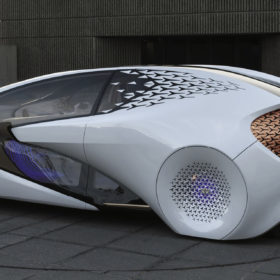
Weekend read: Hype and hope for solid-state batteries
Hype and hope for solid-state batteries (SSBs) continues to grow as industries from automotive to storage bet big on the technology. Leading battery manufacturers and a roll call of start-ups are jostling to get from lab to fab. The reality of SSBs is in question though. As Marija Maisch reports, the window of opportunity for the decades-old technology to make the next big step toward commercialisation is now.
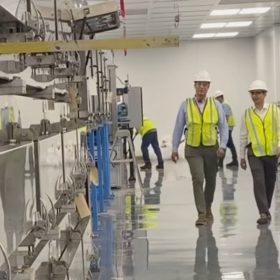
Magnis Energy begins production at US battery ‘gigafactory’
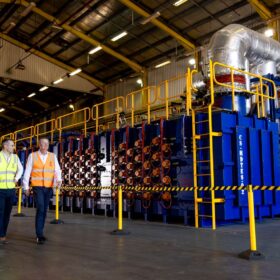
Sydney-based lithium-ion battery specialist Magnis Energy Technologies has begun commercial production of full-sized cells at its manufacturing plant in the United States with plans to increase production to 38 GWh of battery cell capacity per year by the end of the decade.
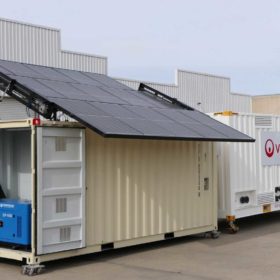
The growing demand for off-grid leads to compact, pre-wired systems
With headlines dominated by spiking electricity prices and energy security, the demand for off grid solutions in Australia is booming. “It’s starting to make financial sense, that’s significant,” Matt Miller, the marketing manager for Victorian company Commodore tells pv magazine Australia.
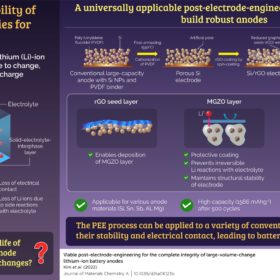
Universal method to improve lifespan of lithium-ion batteries
Researchers at the Gwangju Institute of Science and Technology (GIST) have developed a broadly applicable and versatile post-electrode-engineering process. It can be applied to a range of conventional anodes to improve their stability.