Queensland budget to gift a record $26 billion to accelerate energy transition
The Queensland state budget will deliver the nation’s largest yet green energy investment with a record $26 billion outlay over the next four years, with $8.6 billion ready to go in the next financial year.
3D digital site lifts lid on clean energy projects landscape
Self-described wizards behind the curtain, immersive tech company, Spatial Media, have paved the way for better clean energy community engagement with its 3D interactive map, and a birds-eye view of Australia’s energy transition projects.
Queensland targets solar and battery waste stream with $45 million commitment
Queensland businesses can now apply for up to $10 million funding for large-scale recycling projects that tackle commercial and industrial waste and provide recovery solutions for renewable energy technologies, including end-of-life solar panels and batteries.
UK developer seeks go-ahead for upsized Queensland solar and storage project
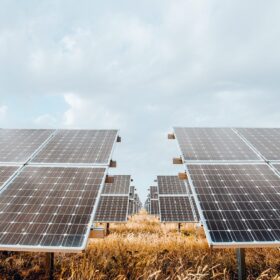
United Kingdom-based solar and energy storage developer Elements Green is seeking to develop one of Australia’s largest renewables projects with its application for a 696 MW solar farm and 1,332 MWh battery energy storage system lodged with the federal government for assessment.
Australia’s first large-scale solar and storage plant up for sale
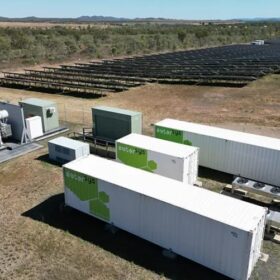
Australia’s first large-scale solar and big battery storage installation – the Lakeland project in far north Queensland – has been placed on the sales block with MPower announcing it will use the proceeds to further expand its portfolio of PV and battery storage projects.
Tasmanian shipbuilder inks European partnerships to build all-electric ferries
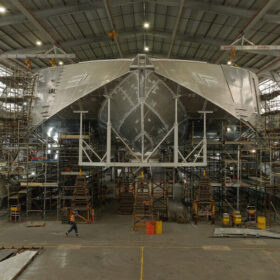
Tasmanian shipbuilder Incat will team with two European companies to test the waters on building 100% battery-electric powered passenger and car ferries as part of a push to help decarbonise the maritime transport sector.
National renewables tender design emphasises social licence factors
Social licence commitments have been prioritised over commercial operation dates in the guidelines for Australia’s first national renewable electricity generation tender that is seeking to deliver 6 GW of renewable capacity across the National Electricity Market.
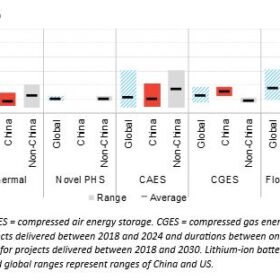
Long-duration energy storage poised to outcompete lithium-ion batteries
While most long-duration energy storage (LDES) technologies are still early stage and costly compared to lithium-ion batteries, some have already, or are, set to achieve lower costs for longer durations, finds BloombergNEF.
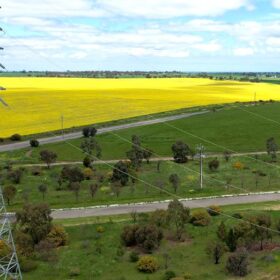
Zen breaks ground on 290 MWh Templers battery project
Australian renewable gen-tailer Zen Energy has officially broken ground on its first utility-scale battery project, the 111 MW / 290 MWh Templers energy storage system being built near Gawler in South Australia.
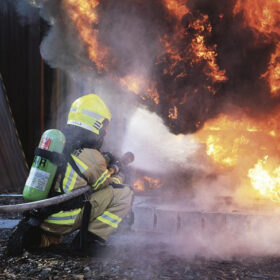
Weekend read: Enhancing safety in lithium-ion batteries
Lithium-ion batteries are generally safe and unlikely to fail but they can catch fire if they are damaged or stored or operated incorrectly. There is a tremendous amount of research and engineering effort going into making batteries safer but are technological advancements being rolled out quickly enough?