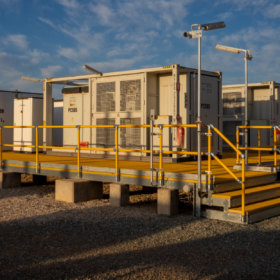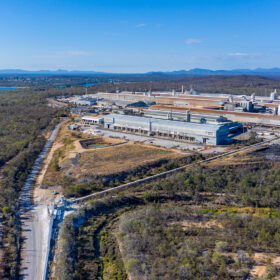
Rio Tinto deal to deliver $7.5 billion renewables investment in Queensland
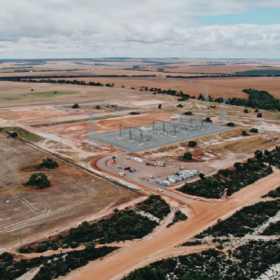
Mining giant Rio Tinto will underwrite $7.5 billion of investment in new renewable energy generation and storage in Queensland after inking a deal with the federal and state governments to secure a long-term future for one of Australia’s largest aluminium smelters.
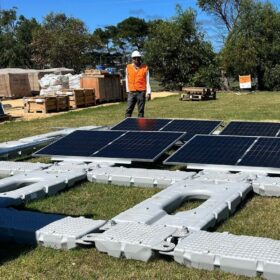
Enervest begins building Australia’s biggest floating solar system
Construction of Australia’s largest floating solar array has commenced with the first panels and pontoons assembled for a 500 kW system being installed on a water storage reservoir at Warrnambool in Victoria’s southwest.
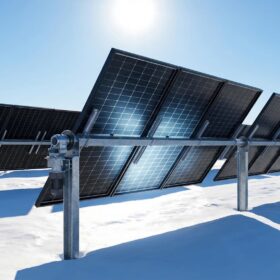
JinkoSolar launches new module targeting data-centre demand
JinkoSolar has announced the launch of a new solar module tailored specifically to meet the power density and extreme reliability needs of data centres and AI-driven computing.
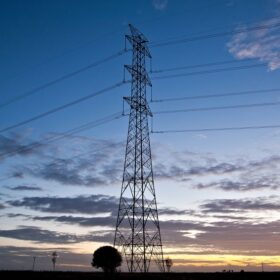
Queensland launches $200 million fund to partner on private sector renewable solutions
The Queensland government has launched a $200 million fund to support the private sector in delivering “bespoke” renewable energy generation, battery and microgrid projects across the state’s northwest.
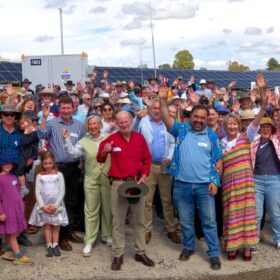
Community solar and battery project highlights single-source approach
The Goulburn Community Solar Farm and battery project in New South Wales has been commissioned with Chinese manufacturing giant Trinasolar saying the milestone highlights key shifts in large-scale project delivery.
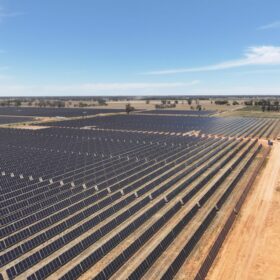
European Energy brings 108 MW Victorian solar plant online
Another large-scale solar farm has joined Australia’s main electricity market with European Energy confirming that the 108 MW Lancaster Solar Farm in northern Victoria is now up and running.

What happens when malware hits PV systems
A random malware variant affected about 800 remote monitoring devices at ground-mounted PV plants in Japan in May 2024. Tokyo-based cybersecurity firm Girasol Energy has told pv magazine what happened and how PV asset owners can protect themselves against such incidents.
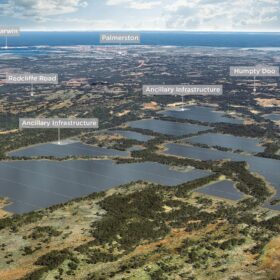
French developer seeks green tick for one of Australia’s largest solar and battery projects
French renewables developer TE H2 has filed an application with the Australian government seeking approval for a 2.7 GW solar farm and 6 GWh battery energy storage project to be built in the Northern Territory.
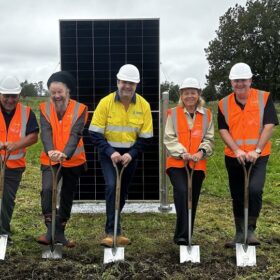
Genesis begins building 117 MW solar plant in New Zealand’s north
New Zealand power company Genesis Energy has broken ground on a 117 MW solar project on the nation’s North Island with the facility expected to start generating power in 2027.
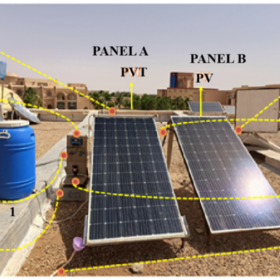
Water-spray cooling system improves PV module efficiency by 28% in arid setting
Researchers have developed a smart water-spray cooling system for PV panels that activates only when temperatures exceed a set threshold, boosting efficiency while minimising water use in arid conditions. The system raised power output and reduced module temperatures, offering similar efficiency to continuous cooling but with far lower water consumption, pump operation, and costs.