Solar manufacturers warn of 12-18 months disruption for standalone products
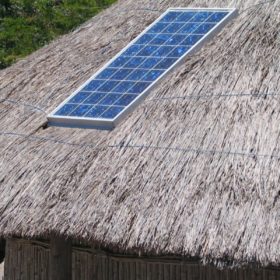
Potential price rises of 14% for the solar home systems that are driving access to electricity in the world’s under-served regions could signal further arrested progress towards the UN goal of universal access by 2030.
Aussie startup invents breakthrough non-toxic battery electrolyte that’s cheaper ‘by factor of 100’
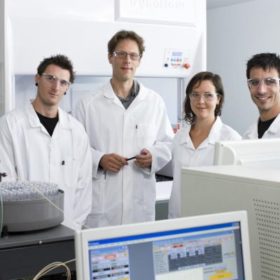
It’s a breakthrough so staggeringly simple the patent office needed convincing it counted as an invention. In what Professor Thomas Nann jokingly told pv magazine Australia basically equates to adding dishwashing liquid and oil to water, he and two of his former PhD students have unlocked the potential of water-based electrolytes for batteries, promising a solution that is cheaper, easier to manufacture and non-toxic. The startup plans to initially use the formula in supercapacitors before exploring it in conjunction with redox flow batteries.
Sunday read: Europe’s gigafactory boom – 25 by ‘25
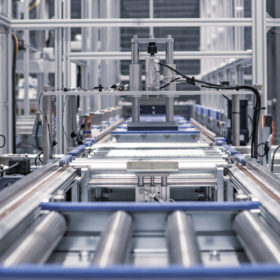
A gigafactory, as the name indicates, is a facility that aims to produce Li-ion cells at a gigawatt-hours scale of total capacity, so they can then be used in electric vehicles or stationary storage applications. The global production capacity of Li-ion cells is expected to reach 740 GWh by the end of 2021 – almost a threefold increase from 2017 – and Europe will account for 8% of the total. João Coelho, an analyst at Delta-EE, looks at how Europe plans to catch up.
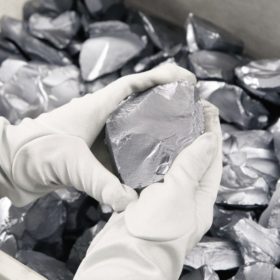
‘Polysilicon shortage will continue through 2021’
The latest global PV industry outlook published by trade group SolarPower Europe, has indicated tight supply of the solar panel raw material is expected to persist this year but the trade body said it would be unlikely to drive further price rises.
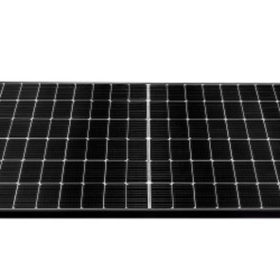
REC unveils second generation of its N-Peak solar module
The manufacturer plans to start production of the performance-enhanced solar modules in August. The first customers should then receive the products in October.

Australia’s first lithium-ion battery manufacturing facility attracts additional federal funding
Australia’s first lithium-ion battery manufacturer, Energy Renaissance, has received a half million dollar grant to develop its pilot manufacturing facility in the state’s Hunter region.
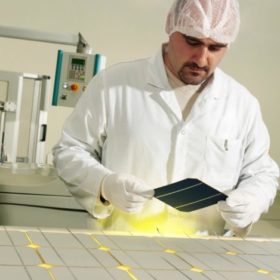
Serial inventor aims to change PV value chain by addressing heat
Kent Kernahan has set out to take the heat out of solar cells. He and his partners may end up bringing solar manufacturing jobs to disadvantaged communities, while making low-cost rooftop solar more widely available.
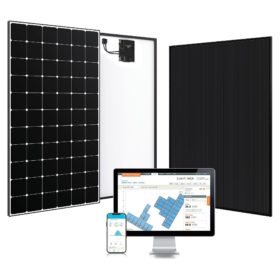
Maxeon adds another solar module to AC series
Singapore-headquartered solar manufacturer Maxeon has added another module to its AC range with the unveiling of the new Performance 3 AC panel.
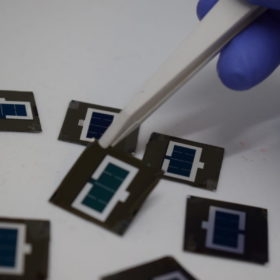
n-type perovskite tandem cell hits 27% efficiency
Scientists demonstrated a perovskite-silicon tandem cell that reached 27% conversion efficiency. Though higher tandem cell efficiencies have been achieved, this represents a big jump in efficiency for those utilising n-i-p architecture, which previously had not surpassed 22%.
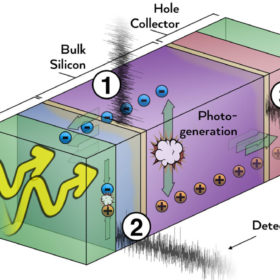
Bringing the noise for better solar cell efficiency
An international team of scientists developed a technique to isolate individual sources of electrical ‘noise’ within a solar cell. Comparing the technique to being able to pick out a single voice within a 200-person choir, they say the technique will help to improve understanding of where efficiency losses occur within a cell, and effective ways to mitigate them.