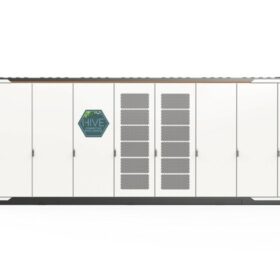
CETF counters long lead times with 200 MWh battery ‘hives’
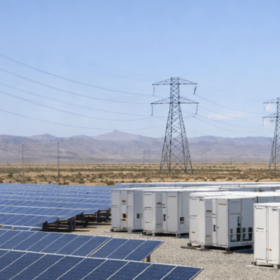
Queensland-based investment platform Clean Energy Transfer Fund intends to circumvent lengthy lead times and major capital outlays associated with grid-scale renewables projects by deploying hundreds of sub 5 MW energy storage units throughout Australia to create coordinated battery ‘hives’ of up to 200 MWh each.
Council calls for regulatory reform as electric car sales accelerate
Australia’s shift to zero-emissions vehicles is accelerating with a new report revealing that electric vehicles sales more doubled in the first half of 2023 with battery-powered vehicles accounting for more than 8% of all new car sales.
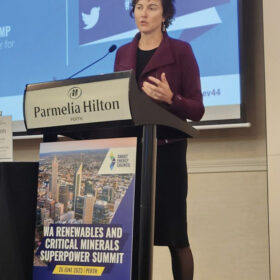
Weekend read: Not such a lucky country
With its critical-mineral riches, Australia is seeking to process and manufacture materials to capture more of the energy transition value chain. While logical, the path is already proving onerous and is hampered by the nation’s apparent allergy to boldness.
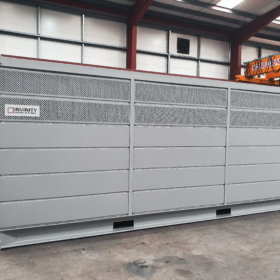
Horizon sets sights on vanadium flow batteries to solve energy storage challenges
Horizon Power, Western Australia’s regional power provider, will deploy a 78 kW/220 kWh vanadium flow battery in the state’s north as it seeks to increase its understanding of how the Australian-born technology can be best utilised to support long periods of 100% renewable energy supply in regional and remote areas.
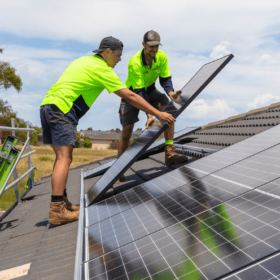
Victoria pushes switch from gas to all electric
The Victorian government has announced a new $10 million (USD 6.7 million) grants program to provide bulk rebates for the installation of solar panels, solar hot water systems and heat pumps as part of plans for all new homes in the state to be 100% electric from 2024.
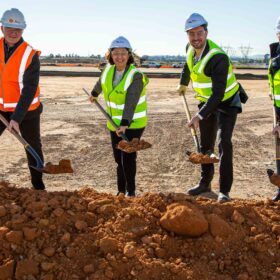
Eku begins work on 400 MWh battery to support Victorian storage targets
Energy storage specialist Eku Energy says the 200 MW/400 MWh Rangebank Battery being developed on the outskirts of Melbourne will be operational by the end of next year with early site works having now commenced on the grid-scale project.
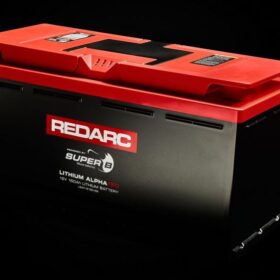
Redarc unveils 150 Ah lithium battery
The Alpha 150 battery, produced in the Netherlands by Adelaide-headquarted electronics manufacturer Redarc, has a lifespan of more than 5,000 cycles and a continuous discharge rating of 200 A.
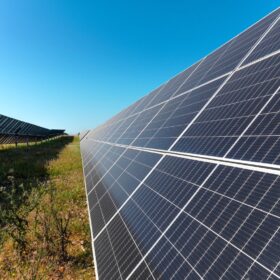
Solar generation climbs to new highs in NEM
Solar generation in Australia’s main electricity grid has surged to record highs with the latest data from the Australian Energy Market Operator revealing that rooftop solar generation increased 30% in the second quarter of 2023 while grid-scale solar output rose by 37%.
Melbourne researchers target MW scale with proton battery technology
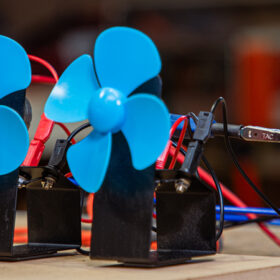
A team of engineers at Melbourne’s RMIT University have developed a rechargeable ‘proton battery’, claiming the technology has the potential, with further development, to store more energy than currently available lithium-ion batteries.
Atco shelves Western Australia green hydrogen project
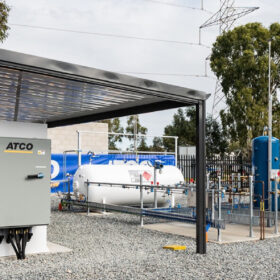
Gas major Atco has ditched its plans for a commercial-scale green hydrogen manufacturing facility proposed for Western Australia’s remote midwest, saying the distance between the production facility and end use undermined the commercial viability of the project.