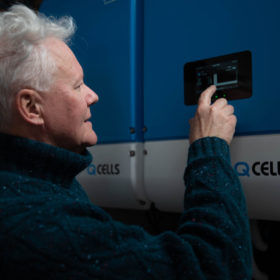
Qcells Australia reports 194% jump in battery sales in July
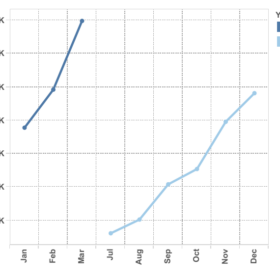
South Korean solar and battery manufacturer Qcells says its Australian arm has seen 194% growth in energy storage system (ESS) sales in July 2022 compared to the first quarter of the calendar year.
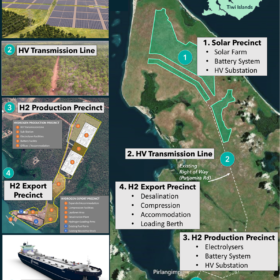
2.8 GW Tiwi Island green hydrogen proposal granted Major Project Status
Australia’s Provaris Energy, formerly known as Global Energy Ventures, has had its 2.8 GW Tiwi Island’s green hydrogen project awarded Major Project Status by the Northern Territory government.

New Zealand hydrogen R&D blossoms with German backing
New Zealand and Germany have partnered up to provide NZ$2 million (AU$1.8m) each to three green hydrogen research projects, including one to develop more efficient anion exchange membrane electrolysers which promise to be cheaper and more sustainable to manufacture.

Melbourne startup to forecast entire region’s solar output using real-time satellite data
Combining satellite images of Australian rooftops with those of real-time cloud cover to create accurate forecasts of distributed solar output for suburbs and perhaps even whole regions and states is the focus of a new Australian startup, Solstice AI. “We’re kind of at a point now where there’s so much solar that it’s causing all these issues but, if we can forecast it, many of these issues can be alleviated or managed much better,” the company’s cofounder and CEO, Julian de Hoog, tellspv magazine Australia.
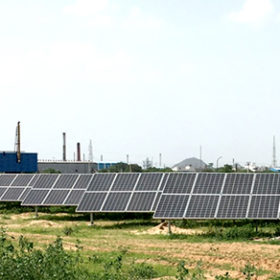
India installed 1.9 GW of ‘open-access’ renewables in FY 2021-22
India has surpassed 10 GW of overall renewables capacity installed for offtake through open access.
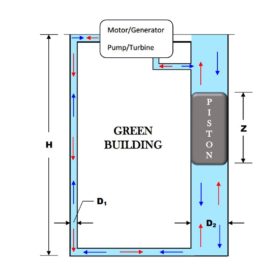
PV with gravity storage, redox flow batteries in buildings
Indian researchers have developed a new hybrid system featuring a conventional rooftop PV system, a solar tree, two gravity power modules for building (GPMBs), and a vanadium redox flow battery (VRFB), with power exclusively provided by the two solar installations.
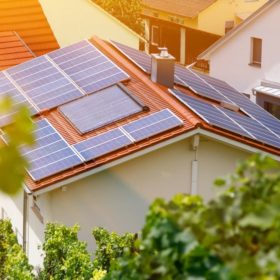
Solar eclipses coal as primary fuel source in Australian grid
Australia has been provided with a glimpse of its renewable energy future with solar displacing coal as the number-one fuel source in the national electricity market for extended periods in recent days.
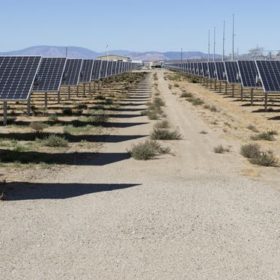
New Energy Solar to wind up after sale of US assets
Australian solar energy investor New Energy Solar is to be wound up after the company reached an agreement to sell its entire portfolio of 14 solar farms in the United States in a deal worth $352 million.
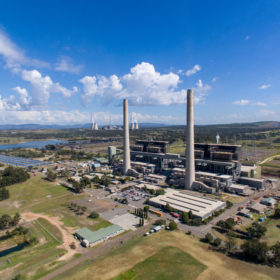
Unions call for energy authority to manage transition
Australia’s peak union body has called for the federal government to establish a national energy transition authority to help manage the shift from coal to a grid dominated by renewables.
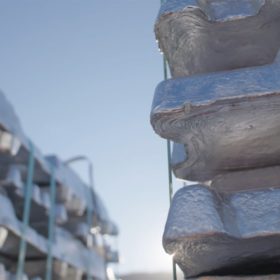
Long-term, heat-based energy storage in aluminium
Nine partners from seven European countries are involved in the €3.6 million (AU$5.25 million) “Reveal” research project, which says buildings could be heated in the future by storing energy from PV, wind and water in aluminium.