NSW seeks proposals for renewables rollout across 2,200 public schools
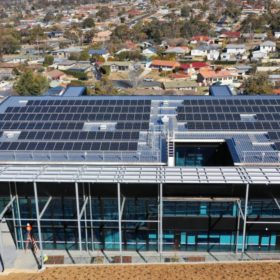
After a productive pilot project that saw solar, batteries and VPP technology installed at 60 public schools in New South Wales, the state government is now seeking proposals to finance, deliver and operate such renewable energy solutions across 2,200 public schools.
Forced labour concerns prompt U.S. ports to block over 1,000 shipments of solar components
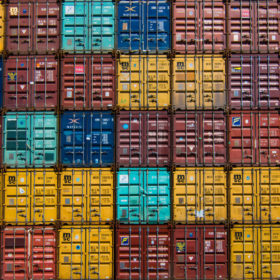
Panel shipments collectively worth hundreds of millions of dollars are blocked from entering the United States market as they have failed scrutiny under the Uyghur Forced Labor Prevention Act, said Reuters.
Ross Garnaut thinks Australia can become a low-carbon superpower; Clive Hamilton is not convinced
Economist Ross Garnaut’s latest book, the Superpower Transformation, is promoted as a “practical plan” to put the vision of in his earlier Superpower into effect. Clive Hamilton, Professor of Public Ethics at Charles Sturt University, questions if the vision is premised on an imperfect logic.
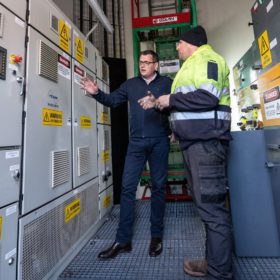
Victorian neighbourhood battery plan to maximise benefits of ‘solar boom’
The Victorian government has unveiled an ambitious plan to install 100 battery energy storage systems in neighbourhoods across the state by the end of 2026 as part of a broader strategy to support the rollout of more rooftop solar PV as it targets 95% renewables by 2035.
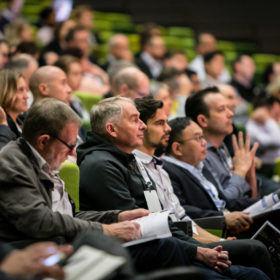
Shirked question: COP27, All Energy and a long avoided issue
Australia has paid just 38% of its “fair share” towards the internationally agreed climate finance target. The revelation speaks to the issue of fairness – a key topic at COP27, currently underway in Egypt. But Australia’s premier renewable energy event offered little hope that questions of equity and deep sustainability are being considered here, even by the architects of our own transition.
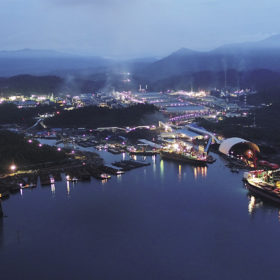
Indonesia may add 66 GW of solar by 2030, says IRENA
The International Renewable Energy Agency (IRENA) says that solar could become the backbone of Indonesia’s energy system by 2030. However, the nation’s own expectations are still far off from IRENA’s scenarios.
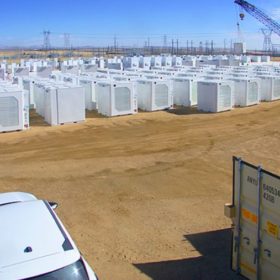
NSW tender targets 600 MW of storage and 380 MW of firming capacity
The New South Wales government will stage a competitive tender to secure at least 600 MW of long duration storage as well as 380 MW of firming capacity as the state looks to fill the gap created by the impending closure of the country’s biggest coal generator.
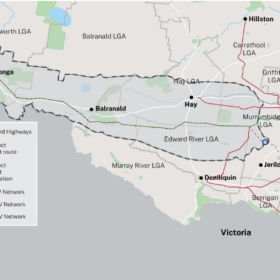
NSW officially declares its third Renewable Energy Zone
The New South Wales government has formally declared the state’s third Renewable Energy Zone (REZ). The South West REZ, as its called, is centred around the towns of Hay and Balranald in the state’s western Riverina region, with initial expressions of interest in the zone attracting up to 34 GW of generation proposals – more than 13 times the intended capacity of 2.5 GW.

What to expect from COP27: the horns of the energy trilemma
While not one of the big five-year-cycle COPs like Paris or Glasgow, COP27 is still hugely important, write Wood Mackenzie analysts. The fallout from the conflict in Ukraine has tilted the precarious balance of the energy trilemma – sustainability; affordability; security – towards the latter. But despite this temporary setback, some progress should still be possible.
‘Just not going to happen’: big fails from hydrogen in Australia
If the hydrogen economy was fuelled by announcements, it would be booming. In reality, little has come to operational fruition yet. More alarmingly, there is a complete “void of activity” in the Australia’s crucial early stage industry development, BayWa r.e. Australia’s Dr James Hamilton tells pv magazine Australia. “We’ve got a lot of ground to make up and if we don’t acknowledge that, we’re not going to make that ground.”