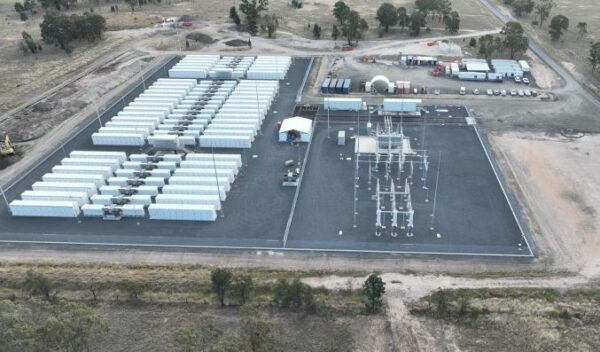





One of the bigger dogs in the Australian energy storage market, Akaysha Energy, has set its sights on further international expansion by linking up with Danish renewable energy company Copenhagen Energy to press go on a parternship to build a “multigigawatt development pipeline” in Germany.
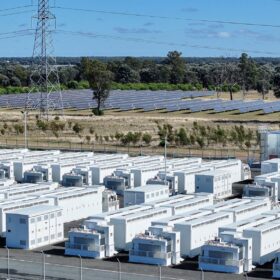
Akaysha is a Blackrock-backed full-cycle developer and operator of projects and has been building significant battery energy storage projects across Australia. These include, just days ago, the company officially commencing construction on its 311 MW / 1,244 MWh Elaine BESS in Victoria, some months after securing $460 million in construction financing from a consortium of banks and setting it up with a 15-year virtual toll agreement with Snowy Hydro.
In 2026, it also entered commercial operations with its grid-forming 205 MW / 410 MWh Brendale BESS in Queensland, amid a host of other projects in 2025 including Ulinda Park. It also has a pipeline of projects in the United States and Japan.
Here in Australia, a strong association for Akaysha is its 850 MW Waratah Super Battery, a true flagship project for the company, and one that was on track to come online on time and on schedule.
In a well-known spanner in the works in the industry, the Waratah Super Battery project suffered a “catastrophic failure” of a high-voltage transformer during very late-stage testing, delaying the 850 MW / 1,680 MWh facility and taking offline two transformers, one a write-off.
In better news for the facility, the Australian grid-focused website WattClarity noted that in addition to one transformer being in operation, the second transformer at the Waratah is operational for testing and has been ramping up its test cycling.
Germany expansion
The announcement didn’t reveal specifics about the focus on the German market in terms of other partners, project locations, timelines, or size concepts. It did mention a project pipeline of 2.6 GW as of 30 March 2026, while noting a key person working in Germany as Tom Franks as the Senior Commercial Manager and Country Head, Germany.
The scale of the pipeline options suggests multiple large-scale facilities distributed across Germany’s grid infrastructure could be built.
The utility-sized German energy storage market faces troubles with government policy and regulation, as grid-fee reform threatens viability for investment, not because of potential fees, but because of continuing uncertainty making bankability harder to achieve due to regulatory risk.
This content is protected by copyright and may not be reused. If you want to cooperate with us and would like to reuse some of our content, please contact: editors@pv-magazine.com.


By submitting this form you agree to pv magazine using your data for the purposes of publishing your comment.
Your personal data will only be disclosed or otherwise transmitted to third parties for the purposes of spam filtering or if this is necessary for technical maintenance of the website. Any other transfer to third parties will not take place unless this is justified on the basis of applicable data protection regulations or if pv magazine is legally obliged to do so.
You may revoke this consent at any time with effect for the future, in which case your personal data will be deleted immediately. Otherwise, your data will be deleted if pv magazine has processed your request or the purpose of data storage is fulfilled.
Further information on data privacy can be found in our Data Protection Policy.