Stanwell powers ahead with 1,200 MWh battery project
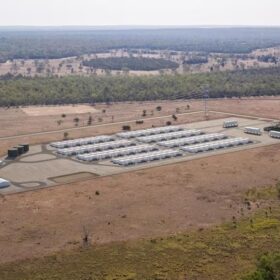
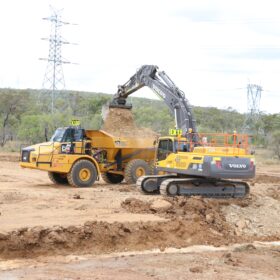
Construction has commenced on a 300 MW / 1,200 MWh battery energy storage system being built alongside the coal-fired Stanwell Power Station in central Queensland as the state government looks to scale up energy storage capacity to support the transition to renewables.
New solar project gives momentum to South Australia’s 2027 renewables target
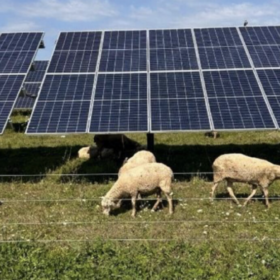
A proposed 300 MW solar farm northeast of Adelaide is on public exhibition with the South Australian planning authority and will complete the approved Robertstown solar and battery storage project, playing its role in the state’s 100% renewables by 2027 target.
Rooftop solar reaches 81% high as demand hits record low
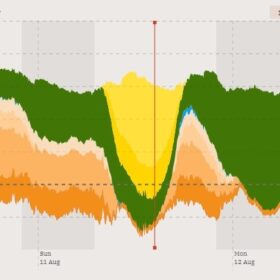
Power production from rooftop solar continues to reach new milestones, meeting more than 80% of South Australia’s electricity demand at the weekend – the highest yet share in winter.
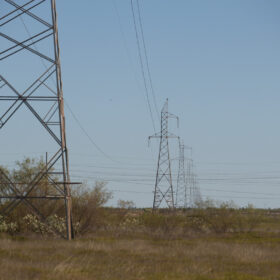
The Pilbara urgently needs common use transmission infrastructure: report
Urgently decarbonising and electrifying Australia’s iron ore industry in the Western Australia Pilbara region with common-user transmission infrastructure, is highly recommended by a new Climate Energy Finance report.
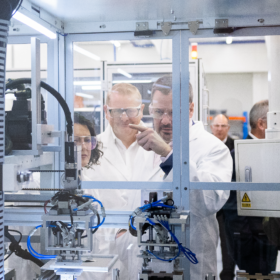
Li-S Energy to build on battery plant with lithium foil facility
Queensland lithium-sulphur battery company Li-S Energy has capped the official opening of a 2 MWh cell production line in Victoria by announcing it has secured a $1.7 million federal government grant to develop Australia’s first lithium foil manufacturing facility.
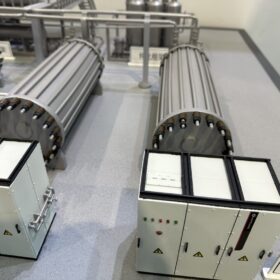
Griffith team reveals new method to calculate levelised cost of hydrogen
A team of researchers based in Queensland has incorporated overload capacity and power-dependent efficiency of the electrolyser in a novel techno-economic model to calculate the levelised cost of hydrogen.
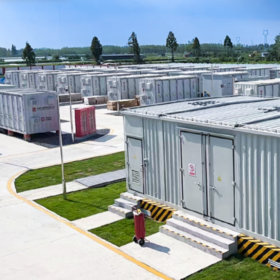
Sineng Electric launches world’s largest sodium-ion battery storage project
Sineng Electric’s 50 MW / 100 MWh sodium-ion battery energy storage system project in China’s Hubei province is the first phase of a larger plan that will eventually reach 100 MW / 200 MWh. The initial capacity has already been connected to the grid and can power around 12,000 households for an entire day.
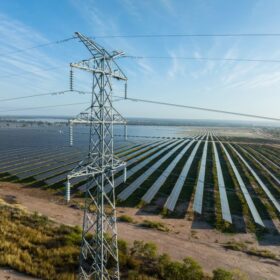
Transmission service providers must toe the line on community engagement
Local communities and landholders can expect a high level of engagement from organisations that plan, build and operate transmission lines following the release of a new community engagement guide from the Australian government.
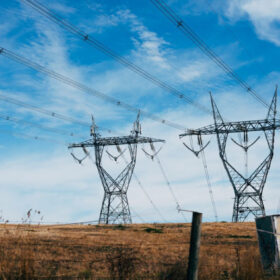
Commonwealth greenlights renewable energy zone transmission project
The Central-West Orana Renewable Energy Zone transmission project has secured federal government planning approval greenlighting construction of infrastructure essential to bridging renewable energy projects to the grid.
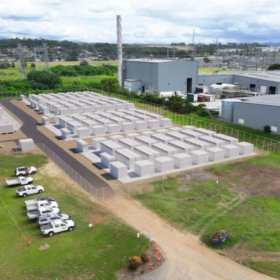
Sods turn on 205 MW / 410 MWh Brendale battery energy storage system site
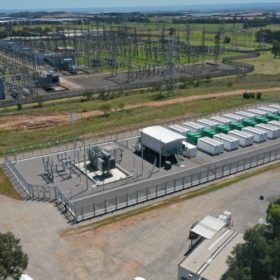
American investment firm Blackrock’s portfolio company Akaysha Energy has begun construction of the 205 MW / 410 MWh Brendale battery energy storage system, 20 kilometres north of Brisbane in Queensland.