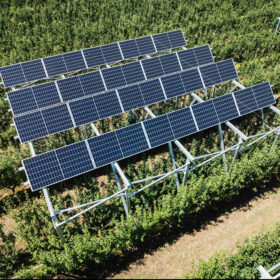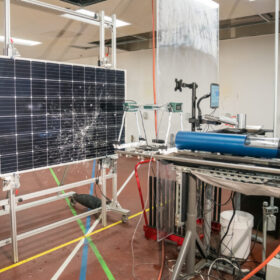
Module reliability scorecard reveals widespread quality risk
Independent testing laboratory Kiwa-PVEL has published the 11th edition of its PV Module Reliability Scorecard, having extensively tested PV modules from 50 different manufacturers. The scorecard reveals improvements in energy yield per watt-peak and resistance to potential-induced degradation, but an increase in breakage under mechanical stress and hail simulations, and an overall higher failure rate are cause for concern to many.
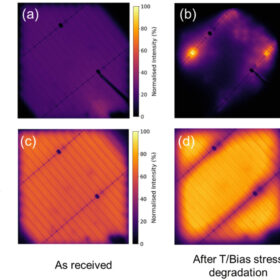
Scientists discover new failure mode in LECO-treated TOPCon solar cells
An international research team has observed a significant increase in series resistance in LECO-treated TOPCon solar cells after temperature and bias treatment. The scientists said they now need to conduct further investigations into its impact on cell efficiency, reliability, and bankability.
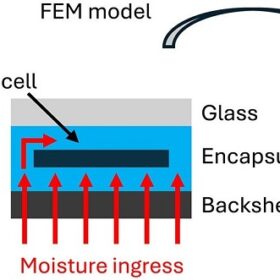
New model to predict moisture ingress in photovoltaic modules
Researchers in Netherlands and Belgium have created a numerical model to simulate the moisture ingress in PV modules. Their research work showed that climate in which a PV module is installed has a much higher impact on the moisture ingress than the choice of materials for the encapsulant of the backsheet.
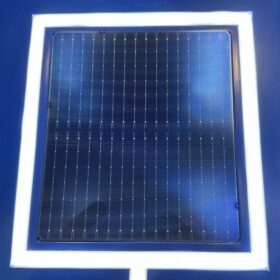
All solar cell efficiencies at a glance – updated
The research group led by Professor Martin Green has published Version 66 of the solar cell efficiency tables. There are 21 new results reported in the new version.
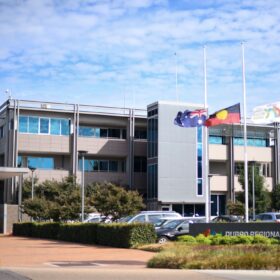
UNSW targets energy efficiency with real-world trial of management system
Researchers in New South Wales have teamed with the Dubbo Regional Council to trial a hybrid energy management system that aims to revolutionise how buildings consume, store, and distribute energy to improve efficiency while lowering costs and reducing reliance on fossil fuels.
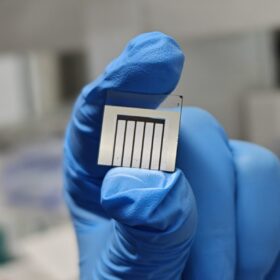
Perovksite-TOPCon tandem solar cell based on self-assembled monolayer achieves 31.1% efficiency
Researchers in China have fabricated a perovskite-TOPCon solar cell with a top perovskite device utilising a self-assembled monolayer aimed to improved cell stability. The tandem cell achieved a high fill factor and a certified efficiency of 30.9%.
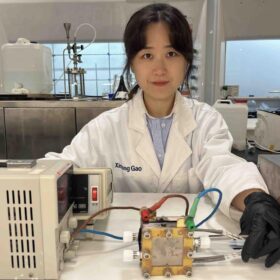
Australian researchers turn to urine to cut hydrogen costs
Australian researchers have developed electrolysis systems that use urea sourced from urine and wastewater to generate hydrogen at “significantly lower” energy costs than traditional water-splitting methods.
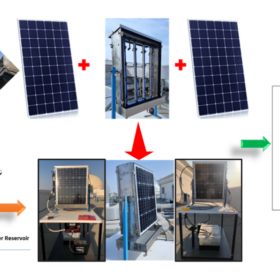
Mist system boosts efficiency of bifacial PV modules
Scientists have placed mist nozzles inside a bifacial PV module and measured it under an extremely hot climate. The module was found to generate up to 37% more electricity on sunny days and up to 46% more on cloudy days compared to standard monofacial panels.
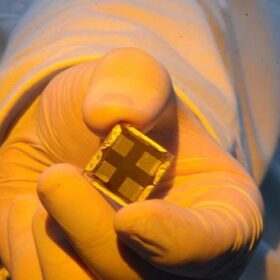
Improving perovskite solar cell durability via formamidinium cations
A team of São Paulo-based researchers have found incorporating formamidinium cations into methylammonium-based lead iodide perovskite films increases the durability of perovskite solar cells when fabricated and measured under ambient conditions.
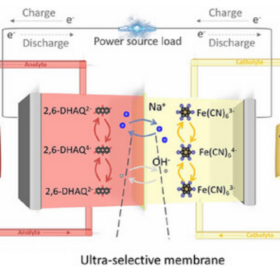
Researchers develop stable, high-current density water-based flow battery
Engineers at Monash University have a developed a next-generation water-based battery suitable for application in residential use and compatible with rooftop solar in real time.