Atlassian funded research reveals new Social Contract with business
New research commissioned by Atlassian suggests a burgeoning Social Contract whereby employees want business to take more of a leadership role on societal issues to make up for perceived government lack. The research feels the pulse of the Australian workforce but also raises some interesting questions.
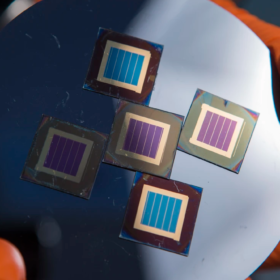
ANU researchers push boundaries on tandem solar cells
The researchers have achieved 27.7% efficiency for mechanically-stacked perovskite-silicon tandem cells.
$68.5 million in Federal funding awarded to clean-energy research cooperative
A consortium of partners led by the University of Technology Sydney has been successful in its bid for funding of a Cooperative Research Centre dedicated to enhancing energy consumers’ access to and efficient deployment of distributed renewable resources — primarily rooftop PV.

Government funding for Energy Transition Hub redirected …
The Federal Government Government on Friday told participants in the research engine, known as the Energy Transition Hub, that funding of the five-year initiative had been curtailed.
Organic pigments for stretchable solar cells
Researchers at the Queensland University of Technology have compiled a detailed overview of the use of diketopyrrolopyrrole organic pigments in driving the future of electronic devices, including wearable technology and solar cells that could be made at a fraction of the current costs.
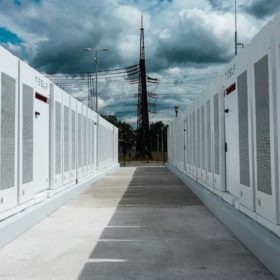
Evaluating battery chemistries for grid-level storage
Researchers in China have ranked some of the most commonly used battery chemistries according to parameters deemed important for grid-level storage. The team gave a score in each category and determined a winner – and it wasn’t lithium-ion.
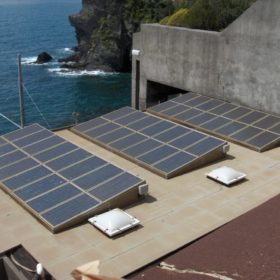
Why go solar? We can think of at least 333 reasons
Australian researchers have compiled data from 173 studies which examined homeowner behavior when buying rooftop PV and identified 333 predictors related to the attitude, knowledge, tendency, awareness, willingness and intent of householders.
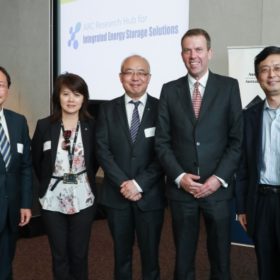
Energy storage research hub launched at UNSW
The ARC Research Hub for Integrated Energy Storage Solutions has a broad research mandate as it looks for innovative energy storage solutions for the energy transition, but some of the nation’s finest minds are now working on them together.

Queensland supercomputer to test seamless integration of renewables on and off the grid
A world-class research and development hub planned for Cairns will be home to a supercomputer that will be used to simulate and model intricate networks in order to enable renewable energy and energy storage to form a greater part of microgrids and isolated systems for remote communities.
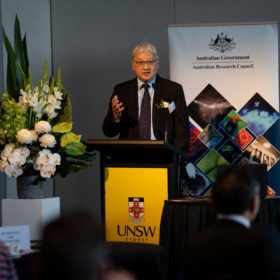
Slip-Slop and Slap it on everything, the ‘Solar Skin’ that doesn’t burn
Professor Guan Yeoh is an essential part of a project to commercialise a solar polymer membrane called ‘Solar Skin’, which can generate energy from both direct and indirect sunlight and off both vertical and horizontal surfaces. The technology has the potential to transform every CBD and local government area into a solar farm. pv magazine Australia sat down with Professor Yeoh for a Q&A.