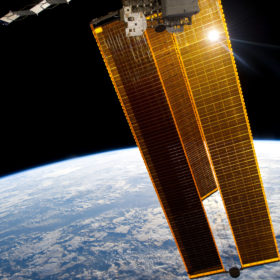
UNSW teams with Airbus to develop high-efficiency solar cells for space
Researchers from the University of New South Wales have been tapped to work with European space enterprise Airbus Defence and Space on a strategic research program to fast track the development of high-efficiency solar cells to be used in space.

BIPV shading estimation methods key for uptake, says IEA-PVPS
A recently published report from the International Energy Agency’s Photovoltaic Power Systems Programme on building integrated photovoltaics (BIPV) digitalisation found many industry professionals are unsure of a suitable method for estimating shading in BIPV projects.
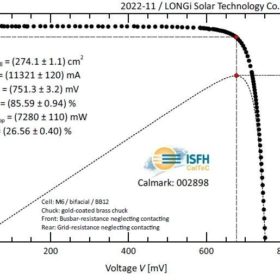
Longi claims world’s highest efficiency for p-type, indium-free HJT solar cells
Longi said it has achieved a 26.56% efficiency rating for a gallium-doped, p-type heterojunction solar cell and a 26.09% efficiency rating for an indium-free HJT cell, both based on M6 wafers. Germany’s Institute for Solar Energy Research in Hamelin has confirmed the results.
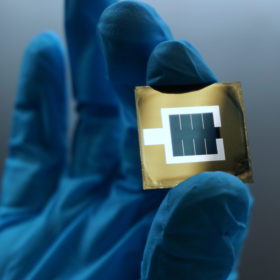
Researchers achieved world record 32.5% efficiency for a perovskite tandem solar cell
A group of researchers from Helmholtz-Zentrum Berlin (HZB) has achieved a new world efficiency record for a silicon-perovskite tandem solar cell, with a certified efficiency of 32.5%.
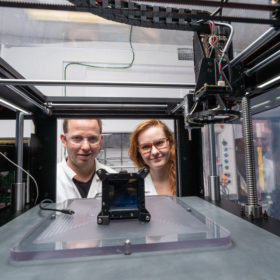
Aussie startup develops 3D electronics printer with potential to reshape solar and storage
Canberra-based startup Syenta has developed a 3D printer capable of printing highly complex and functional electronics like photovoltaics, batteries, sensors and more, promising to do so in ways that are faster, cheaper and using less energy. The technology, which saw an the Australian startup reach the global grand-finals of the global ClimateLaunchpad program, has the potential to reshape both how renewable technologies are manufactured, and their actual performance, the team tells pv magazine Australia.
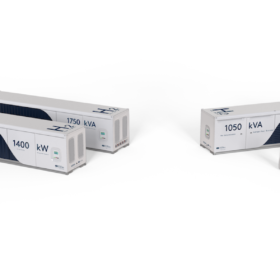
Packaged hydrogen generators for land, sea applications
EODev will start delivering hydrogen generators by the end of 2024 to countries in the US, Europe, Australia and the Middle East, with a focus on regions with public incentive policies. German companies, meanwhile, have agreed to convert a gas pipeline network into a hydrogen pipeline network.
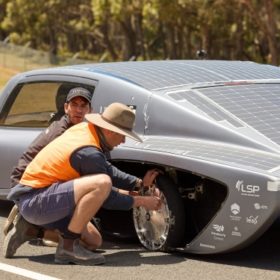
UNSW claims provisional record for fastest single-charge EV over 1,000 km
A solar-powered electric vehicle, designed and built by students of the University of New South Wales (UNSW), has claimed a provisional Guinness World Record by going 1,000 kilometres on a single charge. The researchers managed the feat in under 12 hours.
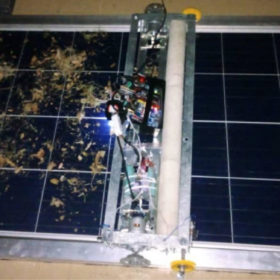
Colour-sensing tech to remove dirt from solar panels
Researchers in South African have developed a new cleaning system for solar panels that uses a colour-sensing light-to-frequency converter to detect dirt. It can reportedly remove about 95% of the dust from a PV panel in less than a minute, at a lower cost than other systems.
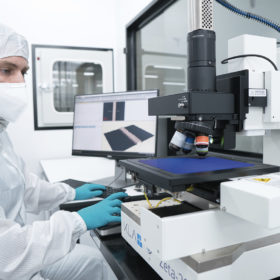
Weekend read: Plating up
A reduction of silver consumption in PV production is required on the way to terawatt scale. Given this, the time may have come for the commercialisation of new copper plating technologies – doing away with the need for silver in cell metallisation altogether. However, the history of plating technology is littered with cautionary tales.
Australian researchers reveal new pathways for perovskite cells
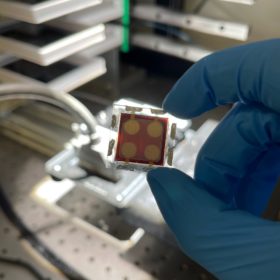
Controlling the crystallisation process of perovskite thin films is one of the most challenging aspects for upscaling the solar technology but a team of Australian researchers claims to have made a breakthrough, creating next-generation PV cells that have the potential to rival the durability of silicon alternatives.