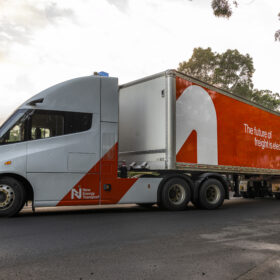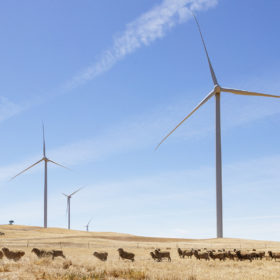
Neoen’s 204MW/34MWh Bulgana project points to co-located renewables future
French renewable developer IPP Neoen announced the completion of its Bulgana wind-plus-storage project in the Australian state of Victoria. Having now installed more than 650MW of large-scale solar, wind, and battery storage in the state, the developer has pointed to its “well balanced” renewable portfolio in Victoria including an additional 2GW of projects in the pipeline.
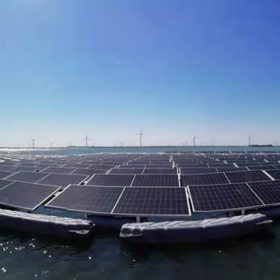
World’s largest floating PV plant goes online in China
Huaneng Power International has switched on a 320 MW floating PV array in China’s Shandong province. It deployed the plant in two phases on a reservoir near its 2.65 GW Dezhou thermal power station.
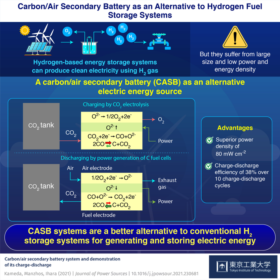
Carbon-air batteries vs hydrogen storage
Researchers from Tokyo Tech have developed an alternative to hydrogen energy storage which is smaller in size and more efficient. The system utilises carbon as an energy source and demonstrates superior power density and charge-discharge efficiency of 38% over 10 cycles.
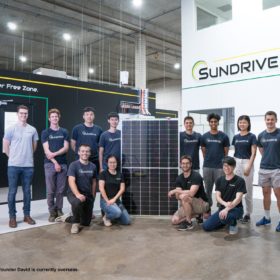
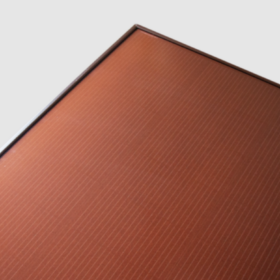
Promising Sydney startup SunDrive fabricates its first full-sized panel
World beating Sydney-based startup SunDrive has given itself an early Christmas present in the form of the fabrication of its first full-sized panel. This panel marks the most recent milestone on the road to commercialisation for SunDrive, which set a new world record for commercial-sized silicon solar cell efficiency in September.
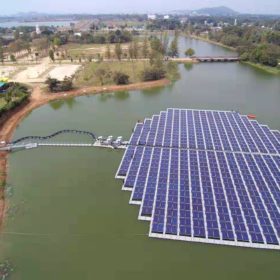
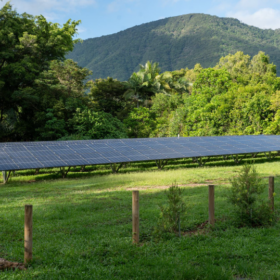
Floating solar array powering recreational park in Vietnam
The 600 kW array was built by Sungrow with 540 W solar panels and its own floating structures.
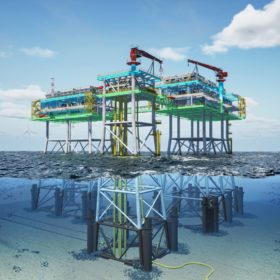
Three major WA hydrogen projects granted lead status & storing hydrogen in offshore caverns
Engie unit Tractebel is developing an offshore concept for the storage of hydrogen in caverns. Meanwhile, three major hydrogen projects in WA are set to receive support from the state government’s lead agency services, including Province Resources’ HyEnergy Project, The Murchison Hydrogen Renewables facility, and InterContinental Energy’s Western Green Energy Hub.
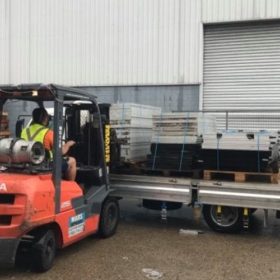
Australia prepares for first solar ‘upcycling’ facility while recycling operations expand
As Australia stares down a deluge of worn out solar panels, recycling – and indeed upcycling – programs are grinding into gear. In Victoria, a site has been found for Australia’s first facility to recover and reuse solar module materials, while Reclaim PV has extended its manufacturer partner and pickup location lists.
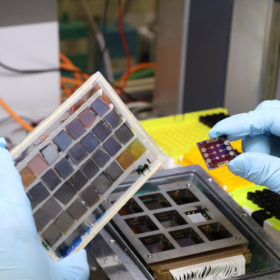
Perovskite solar cell retains 99% of initial efficiency after 1,450 hours
Developed by German researchers, the 20.9%-efficient device was built with an architecture avoiding the use of the ionic dopants or metal oxide nanoparticles that are commonly used to contact the cell, as these can be subject to secondary reactions at higher temperatures.
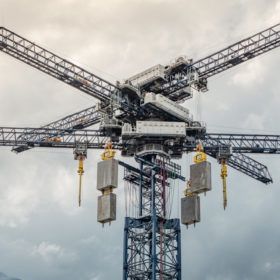
BHP looks to use 35-tonne blocks to store renewable energy for its WA operations
An agreement with Energy Vault may see resource company BHP stack 35-tonne blocks to store wind and solar energy in the Pilbara, northern Western Australia.
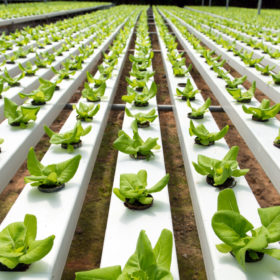
Solar for hydroponics
An international research team has examined combining solar power generation with energy-intensive hydroponic horticulture and has found that this may be a viable solution depending on project size and available incentive policies. Their approach considered various factors impacting PV system efficiency, including environmental factors, the type of solar array, and the electricity demand from the hydroponic farm.