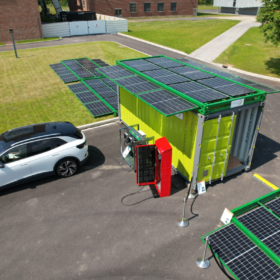
Solar+storage kits for construction sites, one-off events
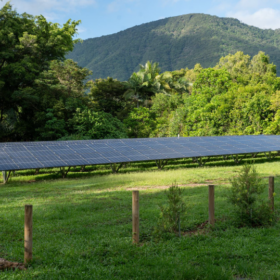
France’s Revolt Energy Green has developed a flexible solar+storage solution for one-off events, construction sites, and different kinds of off-grid applications. It has also developed a mobile hydrogen solution.

Evergen selected for Queensland’s 100% solar + battery neighbourhood
Smart energy software company Evergen will provide an energy management platform as part of a net-zero energy emission terrace homes pilot at Carseldine Village, north of Brisbane.

Nanoparticles enable completely clear, industry-sized solar windows (yes, they’re finally here and targeting 5% efficiency)
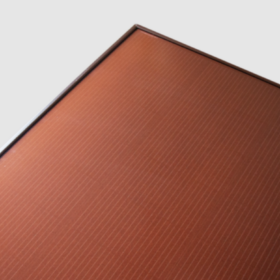
The promise of solar windows have captivated scientists and engineers for decades. Now, West Australian company ClearVue says it not only has a fully transparent, scalable, industry-ready solar window in production, but it’s just 18 months away from cracking 5% efficiency, thanks to a research partnership.
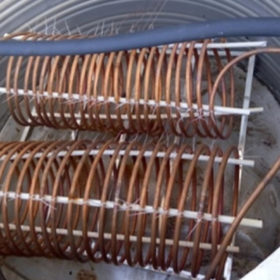
PV-driven air conditioner coupled with ice thermal storage
Researchers in China have built a PV-powered air conditioner that can store power through ice thermal storage. The performance of the system was evaluated considering operating efficiency and stability and the scientists found that a device relying on a variable-speed compressor and an MPPT controller showed very good ice-making capability.
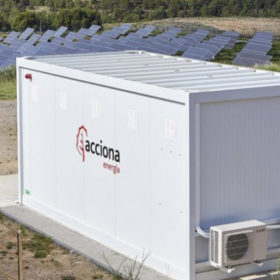
Storing solar power with recycled batteries from Nissan
Spanish renewable energy company Acciona is testing four second-life batteries with a combined capacity of 130 kWh at its 1.2 MW experimental solar park in Tudela, in the Spanish region of Navarra.

Solar energy collectors… grown from seeds!
Rice University engineers produced “near-perfect” 2D perovskite crystals for photovoltaic applications, grown from seeds.
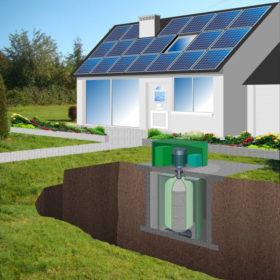
Concrete flywheel storage system for residential PV
A French start-up has developed a concrete flywheel to store solar energy in an innovative way. Currently being tested in France, the storage solution will be initially offered in France’s overseas territories and Africa.
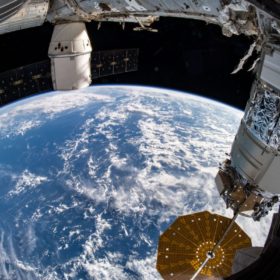
Roll-out solar arrays installed in successful NASA spacewalk
The first new ISS Roll-Out Solar Array (iROSA) has been installed on the International Space Station.

Demand, policies, investment key to green hydrogen development
Ruchi Gupta is a research fellow at the University of Geneva’s Institute for Environmental Sciences. She focuses on how flexibility options, such as sector coupling with hydrogen production, can support renewable energy integration and decarbonise a wide range of sectors.
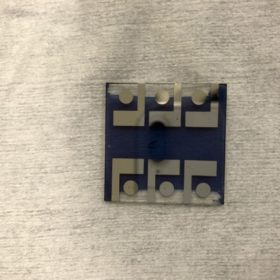
Organic solar cell with 18.4% efficiency via new electrode coating
Saudi scientists built the cell’s electrode with a hole-transporting molecule called Br-2PACz and not with the commonly used PEDOT:PSS. It helped improve the photovoltaic cell efficiency by around 0.9%.