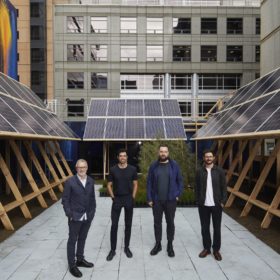
Solar steals the show at Melbourne Design Week
An independent exhibition brought to Melbourne Design Week by a group of 15 of the city’s top architectural firms demonstrates the blueprint for Melbourne’s transformation to “A New Normal”. “A New Normal” is a plan to transform Greater Melbourne into a self-sufficient city by 2030.
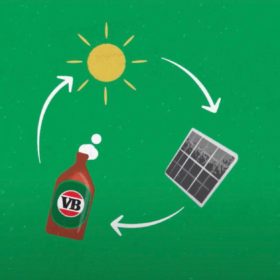
Solar earns the thirst, you drink the beer – new platform lets you trade PV for VB
Iconic Australian beer Victoria Bitter has partnered with Diamond Energy and Power Ledger to develop Solar Exchange, a blockchain-enabled platform that allows residential PV owners to exchange their excess solar for cases of beer. This is not an April Fool’s prank, miracles do happen, stay calm and exchange your excess solar for slabs!
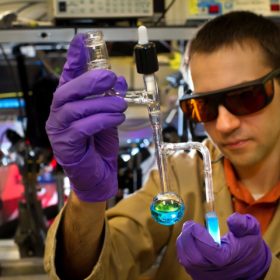
Australian cleantech startup competition draws $50,000 grant for winner
A $50,000 development grant will be awarded to the winner of this year’s national ClimateLaunchpad competition, which aims launch early-stage cleantech startups into the market.
The Hydrogen Stream: Siemens targets $1.50/kg by 2025, BP and Saudi Aramco bet on blue hydrogen
The German company expects to roll out its in-house proton exchange membrane (PEM) electrolysis technology to implement a gigawatt production of electrolyzers. BP partners with UK gas distributor Northern Gas Networks (NGN) to develop blue hydrogen and Saudi Aramco teams up with Hyundai Heavy Industries to do the same. Italy’s Snam wants to build hydrogen projects in the United Arab Emirates.
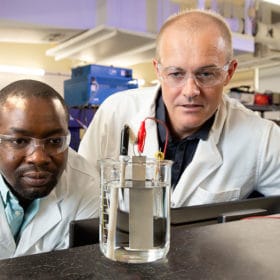
Queensland scientists’ remarkable renewably powered carbon capture breakthrough
Scientists from the Queensland University of Technology have made a remarkable breakthrough in carbon capture and storage with a novel electrochemical process which can not only store carbon dioxide in water non-toxically with the power of solar or wind, but also produces by-products including green hydrogen and calcium carbonate, perhaps the key to decarbonising the cement industry.
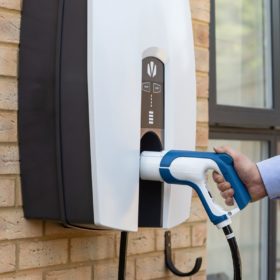
AGL teams up with Ovo to digitise energy management in Australian households
AGL has announced a joint venture with the UK’s Ovo Energy for exclusive Australian rights to its Kaluza smart energy platform. The partnership comes at a time when grid stability is a hot topic and energy management systems are a key tool for owners of rooftop solar to optimise their investment.
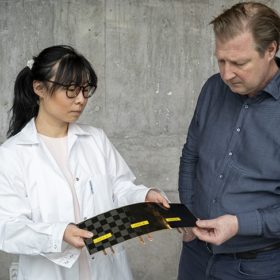
‘Massless’ battery breakthrough for lightweight EVs
A new type of carbon fibre and electrolyte matrix stunned scientists when they tested its properties. Their ‘structural’ battery could be used in electric vehicles and could even address the weight problems that bedevil devices planned for electric-powered flight.
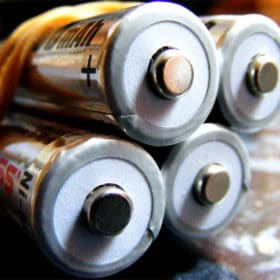
Battery costs have fallen 97% since 1991, claim MIT researchers
Academics reviewed the historic price development of lithium-ion batteries and found the accepted model does not accurately reflect the full cost decline and technological improvement which has taken place. With more data points to compare, the team found batteries had improved even more than previously assumed.
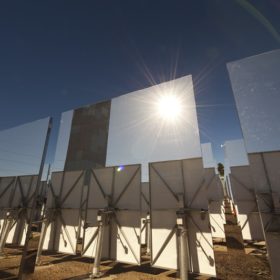
Australian solar thermal technology funded by US government for major demonstration project
Concentrated solar thermal technology developed with input from CSIRO, the Australian National University and the University of Adelaide, has been funded for a commercial-scale test by the United States Department of Energy.
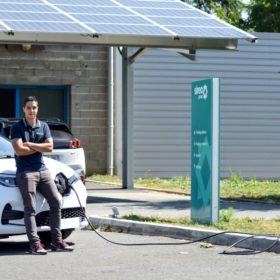
EV recharging station powered by solar, hydrogen
The recharging station was designed by French automation group Sirea. It is powered by a solar carport and a small electrolyser.