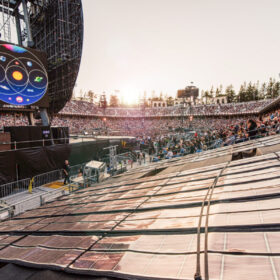
Kardinia Energy rolls out printed solar for Coldplay concert
Australian printed solar tech company Kardinia Energy and globally acclaimed rock band Coldplay have together delivered one of the largest live-event deployments of mobile solar while providing a high-profile test for organic, ink-based photovoltaics.

Deakin puts peer-to-peer trading of excess solar to test
Researchers at Deakin University have launched a first-of-its-kind project exploring how Australian households and small businesses with solar and or battery systems can sell their excess clean energy to others without the technology.
Project mapping platform adds high-res imagery to mix
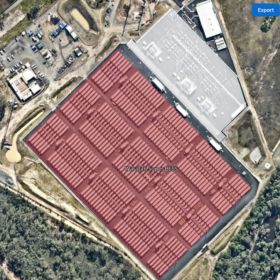
Australian renewable energy market intelligence and mapping tool provder RenewMap has partnered with aerial imagery platform Nearmap in a move that provides users with access to the tech company’s high-resolution digitised content.
Scientists discover new failure mode in LECO-treated TOPCon solar cells
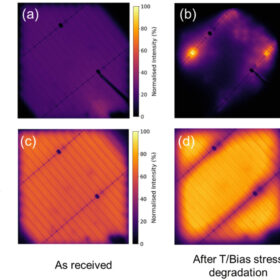
An international research team has observed a significant increase in series resistance in LECO-treated TOPCon solar cells after temperature and bias treatment. The scientists said they now need to conduct further investigations into its impact on cell efficiency, reliability, and bankability.
RedEarth teams with global partners to build microgrid-in-a-box system
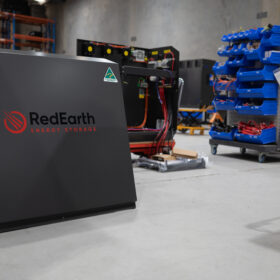
Queensland battery solutions provider RedEarth Energy Storage has announced an international partnership that will see it jointly develop a ‘world first’ integrated hardware and energy management system that combines solar, storage, and bidirectional electric vehicle charging capabilities in a single unit.
New model to predict moisture ingress in photovoltaic modules
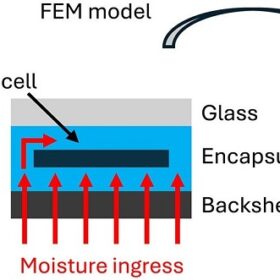
Researchers in Netherlands and Belgium have created a numerical model to simulate the moisture ingress in PV modules. Their research work showed that climate in which a PV module is installed has a much higher impact on the moisture ingress than the choice of materials for the encapsulant of the backsheet.
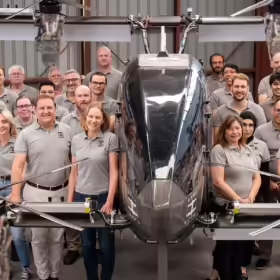
First year hydrogen powertrain tests eVTOL for emission-free flight
AMSL Aero has released hydrogen fuel cell test results for its vertical takeoff and landing aircraft which is under development at Bankstown Airport in New South Wales for the purpose of decarbonising essential air services such as medical transfers.
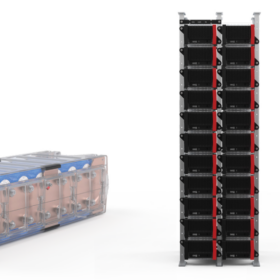
Zenaji launches global licensing model for LTO battery technology
Australian battery manufacturer Zenaji has launched a global licensing model that allows international partners to manufacture and rebrand its proprietary Aeon and Eternity lithium titanate oxide energy storage systems.
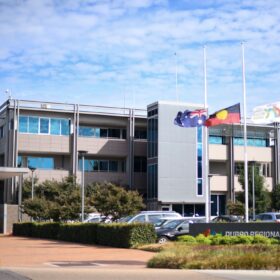
UNSW targets energy efficiency with real-world trial of management system
Researchers in New South Wales have teamed with the Dubbo Regional Council to trial a hybrid energy management system that aims to revolutionise how buildings consume, store, and distribute energy to improve efficiency while lowering costs and reducing reliance on fossil fuels.
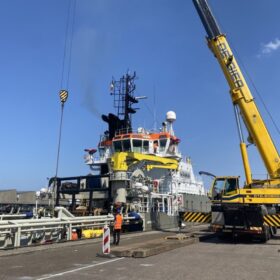
World’s first offshore solar-wind project moves forward
An offshore solar farm is being deployed close to an existing wind farm as part of a project in the Dutch North Sea. The developers have recently installed an anchoring system that will hold the solar farm in place while an electrical cable connects the array to a nearby wind turbine foundation.