Rooftop solar hits all-time output high of 4,407 MW in Q4 2025: report
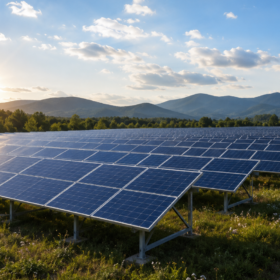
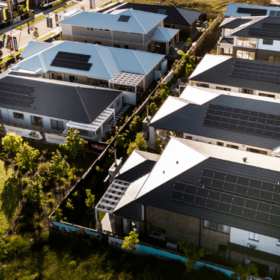
Rooftop solar generation hit an all-time high in Q4 2025, up 8.7% with an output of 4,407 MW, while also reducing daytime operational demand, contributing to battery charging, and an overall new renewable energy generation record for the National Electricity Market of 51%.
NEM welcomes 1.8 GW of new generation and storage in last quarter
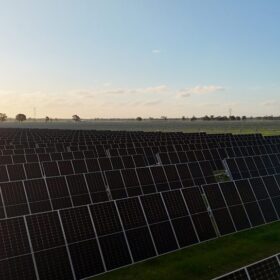
A surge of new generation and storage capacity reached full output in Australia’s main grid in the last quarter with nine projects totalling 1.8 GW of new capacity progressing through commissioning and entering operation.
UNSW research reveals self-repair mechanism in solar cells
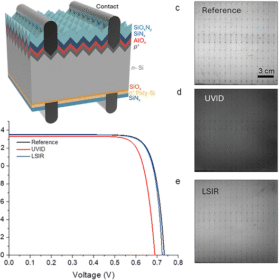
Engineers at the University of New South Wales have developed a real-time monitoring technique that reveals how silicon solar cells can self-repair following ultraviolet-induced damage, offering new insights into solar panel degradation and lifetime performance.
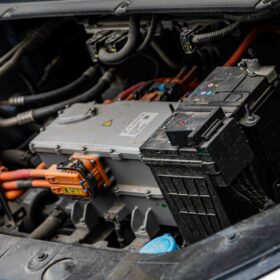
APAC can lead charge on repurposing and recycling EV batteries
For the last decade, the global conversation around electric vehicles (EVs) has focused almost entirely on adoption. Targets, incentives, charging stations and sales figures have dominated headlines. The EV transition is happening daily, at street level, across the Asia-Pacific region and beyond. Yet a far less glamorous question is now becoming just as important as how many EVs we sell: what happens when their batteries are no longer good enough for the road?
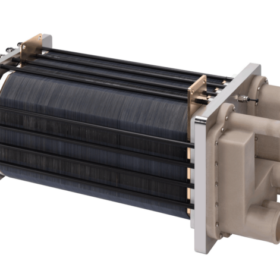
Siltrax secures TUV certification for hydrogen fuel cell stacks
Australian manufacturer Siltrax will push forward with the commercialisation of its silicon-based hydrogen fuel cell technology after securing the tick of approval from international testing, inspection, and certification body TÜV Rheinland.
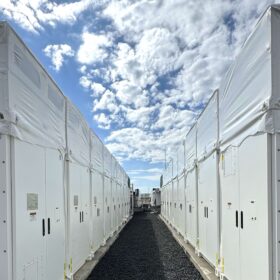
Five trends for energy storage as global market passes 100 GW
A new report from Wood Mackenzie identifies five key trends the global research and consultancy group expects will define the energy storage industry in 2026, including supply chain restructuring and the rise of non-lithium batteries.
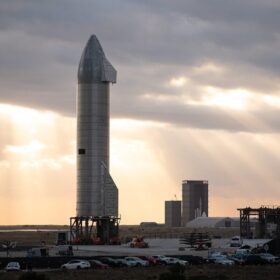
Musk says solar space-based AI data centres possible in two to three years
Space-based solar could power AI more efficiently than on Earth, with full-scale deployment possible in two to three years, Elon Musk says SpaceX’s Starship launch vehicle and its reusable rockets aim to sharply reduce space access costs, enabling solar-powered AI satellites and potentially large-scale extraterrestrial energy infrastructure.
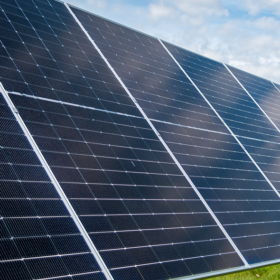
Pacific seeks federal tick for Queensland solar and battery project
Plans for a 250 MW solar and 350 MWh battery energy storage project proposed for Queensland’s Western Downs region are now available for public comment as developer Pacific Partnerships seeks a green tick from the federal government.
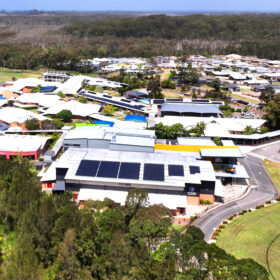
Wireless system shares rooftop solar across school campus
A new wireless, Wi-Fi-connected solar solution featuring three Sungrow 100 kW inverters is now allowing more than 300 kW of solar generation to be dynamically balanced across distribution boards throughout a school on the mid-north coast of New South Wales, significantly offsetting grid electricity use.

‘Immediate transition to copper is technically and economically feasible’
With silver prices rising, more large solar manufacturers are expected to switch to copper for cell metallization. Radovan Kopecek of ISC Konstanz tells pv magazine that he expects the entire industry to follow. Ning Song of the University of New South Wales says a small efficiency tradeoff may be acceptable if the cost savings are significant and do not introduce new reliability risks.