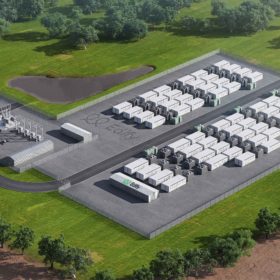
Edify secures financing for series of grid forming batteries in NSW
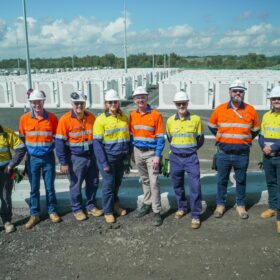
Edify Energy has completed the financing for its grid forming 150 MW / 300 MWh battery energy storage system. The system will be made up of three separate batteries in the Riverina region of NSW which have gained approval to operate in ‘virtual synchronous generator’ mode.

South Korea kicks off 2 GW PV tender
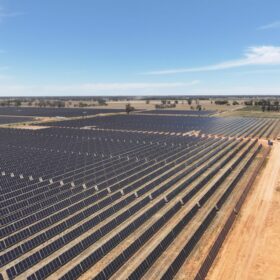
Selected projects will be awarded a fixed rate under a 20-year contract under the country’s renewable energy certificate (REC) scheme and will sell electricity to local power distributors.
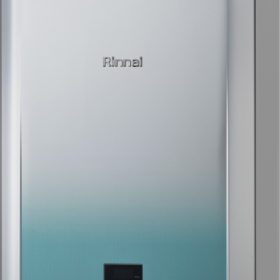
Hydrogen combustion tech for residential water heaters, trials in Australia
Japan’s Rinnai has unveiled what it claims is the world’s first 100% hydrogen combustion technology for residential water heaters. It is currently using the hydrogen water heater in demonstration projects in Australia, prior to commercialisation.
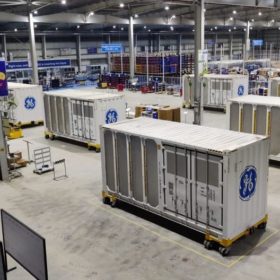
General Electric to triple solar, battery production capacity in India
The US multinational will expand the solar and battery energy storage manufacturing capacity at its factory in Tamil Nadu to 9 GW per annum by the end of 2022. The factory manufactures the FlexInverter power conversion solution and the FlexReservoir utility-scale energy storage systems.
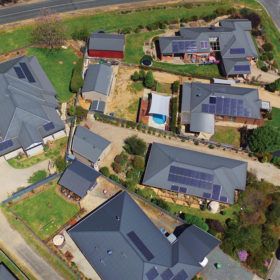
Regulator reveals rooftop solar installation rate on the slide
Australia’s uptake of rooftop solar is one of the highest in the world with more than 30% of free-standing households across the nation now fitted with a PV system but the Clean Energy Regulator has revealed a “steep decline” in the number of installations in early 2022 with deteriorating economics playing a major part.
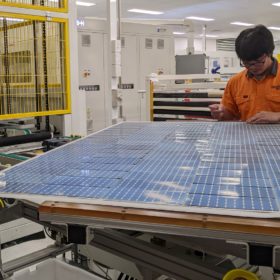
Tindo Solar offers working-capital solution for installers
Solar installers and resellers can now access up to $250,000 on interest-free terms to increase their stocks of Australian-made solar panels after PV module manufacturer Tindo Solar teamed with business financer Moula Pay.
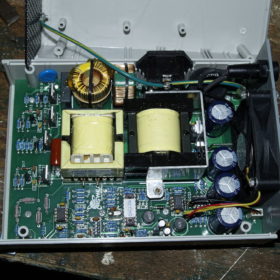
New model for grid-forming inverter operation
Scientists in the United States have developed a new model to allow utilities to use grid-forming inverters in order to better manage renewable energy intermittency. They describe the inverter main circuit representation, the droop control, and the fault current limiting function.
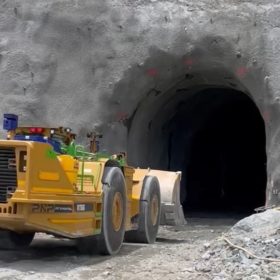
Queensland pours $48 million into two pumped hydro projects
The Queensland government has committed $48 million to progress two pumped hydro projects in the state, declaring energy storage will play a critical role in its push towards a renewable energy future.
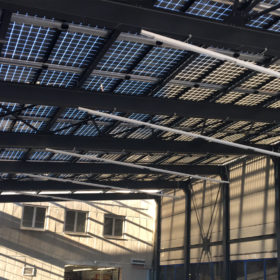
Megasol reveals new solar PV in-roof system
Swiss module manufacturer Megasol has unveiled a novel rooftop PV system in two variants — full-black and translucent. The installation consists of vertical supports, a ridge profile, and solar modules.
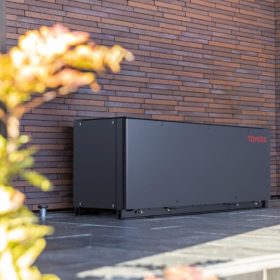
Toyota unveils 8.7 kWh battery for residential applications
The battery has a rated output of 5.5 kW and can be installed in outdoor environments. It is equipped with a hybrid power conditioner, a DC-to-DC converter, and a vehicle power supply adapter with a maximum output of 1.1 kWh.