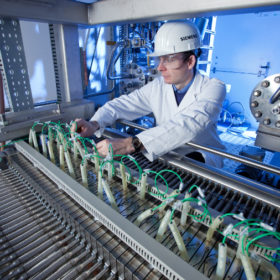
ARENA launches $70 million hydrogen funding round
To achieve the goal of ‘H2 under $2’, ARENA has opened the $70 million Renewable Hydrogen Deployment Funding Round for expression of interest from large scale renewable hydrogen projects.

Ultrathin, flexible solar cell could revolutionise wearable tech
Monash University researchers, as part of an international team, have managed to develop a solar cell so ultralight and flexible that it could revolutionise the future of wearable tech.
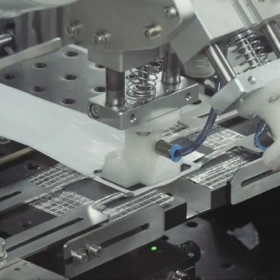
Deakin University pilots non-flammable lithium metal battery
Researchers from Deakin’s Institute for Frontier Materials claim the battery chemistry based on a new class of electrolyte material carries no risk of uncontrolled thermal events and represents a viable alternative to the popular rechargeable lithium-ion batteries.
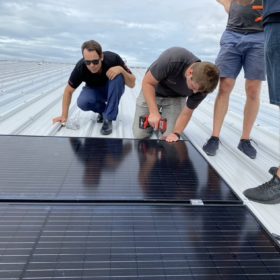
Shift to quality leaves metal roofs primed for ‘direct attach’ solar installs
With its abundance of metal rooftops and an increasing appetite for quality components and installations, the Australian rooftop solar segment is primed for the adoption of “direct- attach” mounting systems. U.S.-based S-5! believes this is the case and is working with installers and EPCs to increase awareness of its PVKIT 2.0 – which it claims allows for faster and less complicated installations.
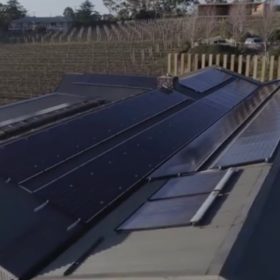
Sustainable Australia Fund announces special terms to support the solar industry
The Sustainable Australia Fund is launching special financing terms for the solar industry to mediate the impact of Covid-19. The terms seek to put immediate cash savings in the hands of businesses.

ClearVue’s luminescent solar concentrators create clear PV windows
The lure of building integrated photovoltaics continues to attract entrepreneurs and startups.
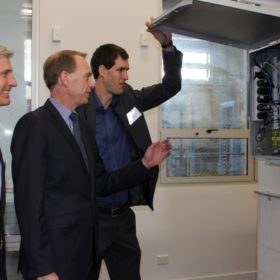
Testing reveals what matters in batteries
An independent testing program for battery systems has revealed what failures can occur, and the key factors that underpin reliable battery operation and supply. Canberra-based ITP Renewables is carrying out the testing program and reports on its first two phases.
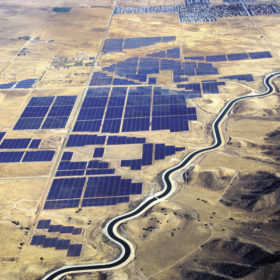
JinkoSolar says US authorities see no violation of Hanwha Q-Cells patent
The patentability of Korean company Hanwha’s technology is being examined by a U.S. commission, according to Jinko. The Chinese manufacturer said it expects a final decision by December.
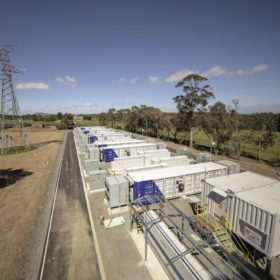
‘Super-peak’ firming contracts open up new opportunities for battery storage
What makes this contract different is it covers only the high-demand hours when rooftop PV output is low, opening new markets for on-demand energy resources, such as battery storage. This and other standardized hedge contracts designed for clean energy technologies are hosted on Renewable Energy Hub’s digital firming marketplace.
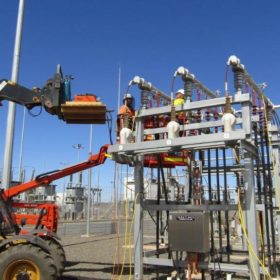
Tesla big battery expansion reaches milestone
Network connection works have been completed on Neoen’s upgraded Hornsdale Power Reserve in South Australia. The 50MW/64.5 MWh expansion will provide an Australian-first large-scale demonstration of the potential for battery storage to provide the stabilizing inertia services that are critical to the future integration of renewable energy.