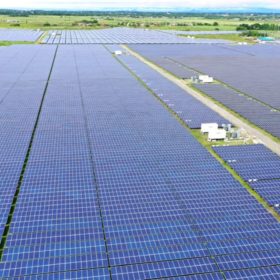
Philippines approves 24 bidders for 2 GW renewables auction
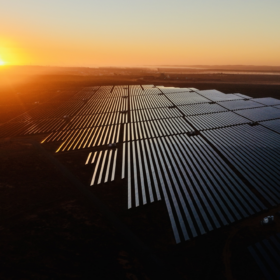
Eight of the 24 bidders in the latest renewables auction in the Philippines are focusing on solar, along with eight bidders looking at wind, seven linked to run-of-river hydro, and one connected to biomass.

Solar auctions in India to attract large developers
A new report shows that renewable energy companies will continue to compete in upcoming auctions in India, undeterred by challenges such as rising materials costs and surging interest rates.
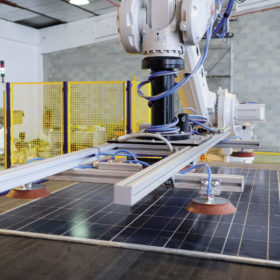
Recycling process promises ‘better than new’ silicon wafers
Scientists in China have developed a new recycling process for PV modules that can recover intact silicon cells from end-of-life products, and process them back into wafers. As part of the recycling process, the wafers are purified and surface-treated, making them suitable for integration into new, high-efficiency cells and modules.
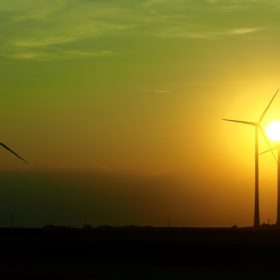
Tenders for floating PV, storage, hybrid wind-solar projects in India
Solar developers have until July 15 to express interest in developing 105 MW of grid-connected floating solar in the Indian state of Maharashtra.
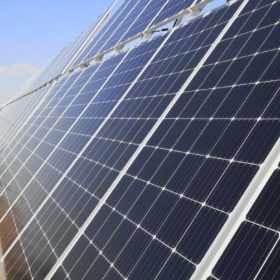
Jolywood scraps solar plans in Indonesia
Jolywood has cancelled a plan to invest in solar cell and panel production in Indonesia, while Hangzhou First Applied Material has said that it will invest US$226 million (AU$324 million) in the expansion of its EVA film output capacity.
Longi signs 1 GW of orders in Bangladesh
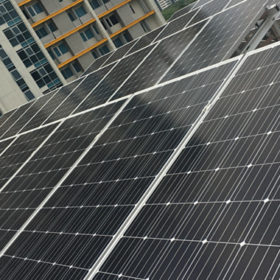
Longi Solar has secured about 1 GW of new PV module supply orders in Bangladesh.

South Korea kicks off 2 GW PV tender
Selected projects will be awarded a fixed rate under a 20-year contract under the country’s renewable energy certificate (REC) scheme and will sell electricity to local power distributors.
Hydrogen combustion tech for residential water heaters, trials in Australia
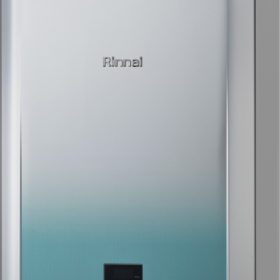
Japan’s Rinnai has unveiled what it claims is the world’s first 100% hydrogen combustion technology for residential water heaters. It is currently using the hydrogen water heater in demonstration projects in Australia, prior to commercialisation.
General Electric to triple solar, battery production capacity in India
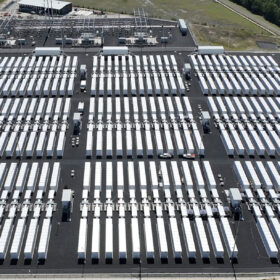
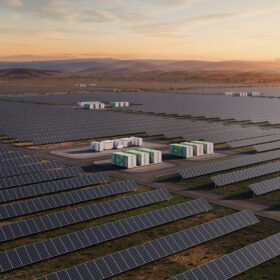
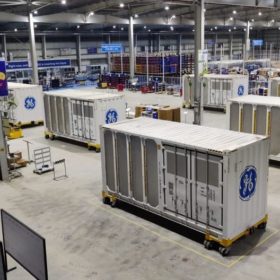
The US multinational will expand the solar and battery energy storage manufacturing capacity at its factory in Tamil Nadu to 9 GW per annum by the end of 2022. The factory manufactures the FlexInverter power conversion solution and the FlexReservoir utility-scale energy storage systems.
Toyota unveils 8.7 kWh battery for residential applications
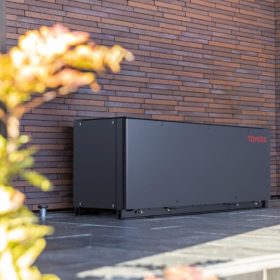
The battery has a rated output of 5.5 kW and can be installed in outdoor environments. It is equipped with a hybrid power conditioner, a DC-to-DC converter, and a vehicle power supply adapter with a maximum output of 1.1 kWh.