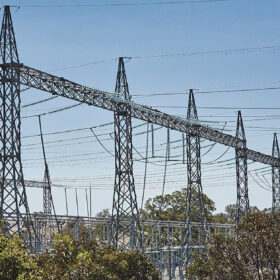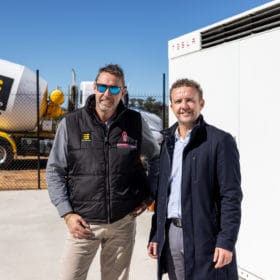
New ACT big battery to pull off hydrogen, solar and VPP storage trifecta!
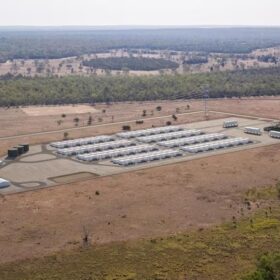
Elvin Group Renewables has constructed a 5 MWh Tesla Megapack to help ensure stability of energy supply in Canberra’s new northern suburbs and the wider grid. Its plans to proliferate the model are audacious.
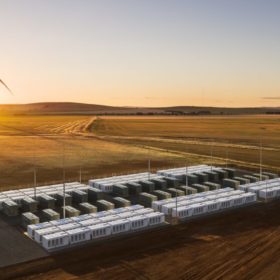
ACT faces ‘substantial’ electricity bill increase, Evoenergy blames renewable energy targets
Evoenergy has blamed the Australian Capital Territory’s renewable energy targets for its proposed price hike, which would see average residential customers pay around 40% more for network charges, amounting to around $280 per year.
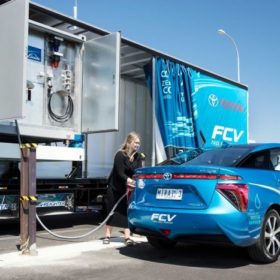
Australia’s first hydrogen refuelling station opens in Canberra
Delivered by Neoen and ActewAGL, Australia’s first hydrogen vehicle refuelling station today opened in Canberra, catering to the state government’s new fleet of Hyundai Nexo hydrogen cars.
Australia’s biggest community solar farm starts feeding into the grid
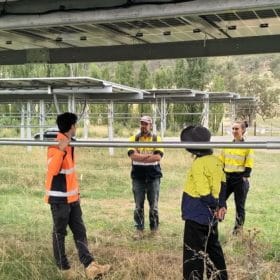
This annual 1.8 GWh of green power came out of a long-nurtured passion project, and can now provide a successful template for other community groups to think big in their renewable energy aspirations.
Electricity networks to manage EV charging in ARENA funded trial
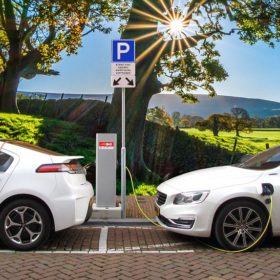
The Australian Renewable Energy Agency is funding Jemena to the tune of $1.6 million toward a new trial in which various electricity networks in Victoria, ACT, and Tasmania will manage residential EV charging to better prepare the grid for a time when mass charging will take place at peak periods.
120 MW agrivoltaic Wallaroo Solar Farm set for 2021 construction
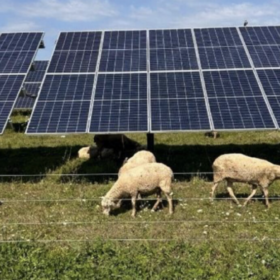
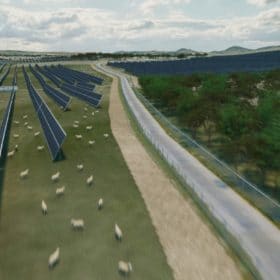
Spanish-Japanese renewable energy company Univergy Solar and local partner New Energy Developments are set to begin construction on the 120 MW Wallaroo Solar Farm on the NSW/ACT border by the end of 2021. The agrivoltaic installation will operate symbiotically as a generator of clean energy, grazing land, and a thriving habitat for native vegetation and pollinators.
ACT includes 250 MW big battery in $307m budget announcement
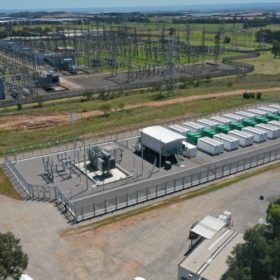
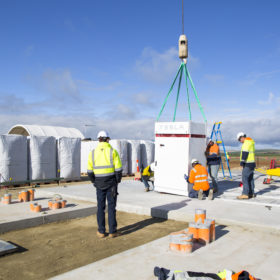
The Australian Capital Territory Government continues its charge towards delivering big battery storage for Canberra’s energy grid with $100 million dedicated to provide at least 250 MW of large-scale battery storage.
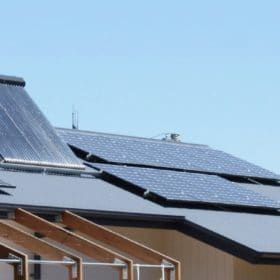
ACT’s rooftop solar boomed in 2020
The Australian Capital Territory’s latest Feed-in Tarrif report found that Canberrans are increasingly contributing to their territory’s 100% renewable energy supply thanks to the increasing uptake of rooftop solar.
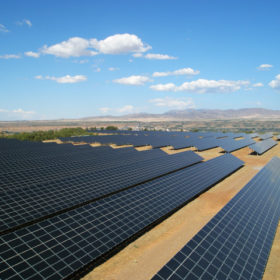
Growing renewable capacity drives energy bills down to 2022/23
The Australian Energy Market Commission’s latest annual Residential Electricity Price Trends report shows costs reducing as renewable build out replaces inefficient coal-fired generation, and more lowest-cost renewable supply is on the way.
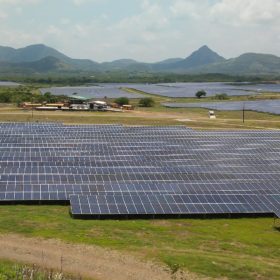
Improving PV-based hydrogen generation with loss‐mitigation techniques
Australian scientists have demonstrated two loss-mitigation techniques that could improve solar‐to‐hydrogen (STH) conversion efficiencies and may lay the ground for cheaper PV-powered hydrogen generation. By combining the two techniques, they were able to achieve an STH efficiency of around 19.4% at realistic operating temperatures.