Spark secures state approval for massive solar and battery project
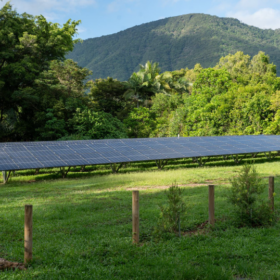
Spark Renewables has secured final state planning approval for a solar and battery project that will add 800 MW of PV and 356 MW / 1,574 MW of energy storage capacity to the grid in the New South Wales Riverina region.

Malaysia restricts non-AI data centres, citing energy concerns
Malaysia’s prime minister Anwar Ibrahim said future policy will ensure domestic consumers and the electricity grid are protected amid the country’s data centre expansion. This could include leveraging the ASEAN Power Grid project to cover any supply shortfalls.
CSIRO puts battery chemistries to test in tropical conditions
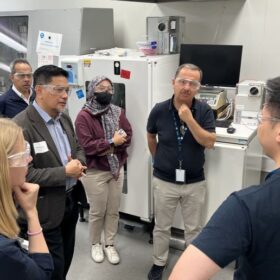
Researchers from Australia’s national science agency have teamed with Malaysian authorities to explore how different battery chemistries perform under tropical stressors like heat, humidity and corrosion, and what this means for durability, safety and cost-effectiveness.
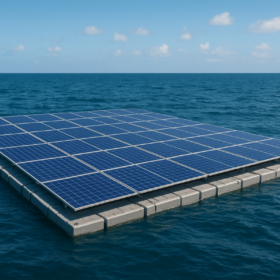
Research provides cost benchmarking for offshore floating solar
An international team of researchers led by engineering consultancy RINA Australia has completed a preliminary techno-economic study on the global potential for offshore floating PV. The results provide project cost benchmarking, country-specific economic assumptions, and a global assessment of offshore solar’s levelised cost of electricity.

Singapore approves 1 GW hydropower import project from Malaysia
Singapore has conditionally approved a 1 GW hydropower import project from Malaysia’s Sarawak state, with first deliveries expected around 2035.
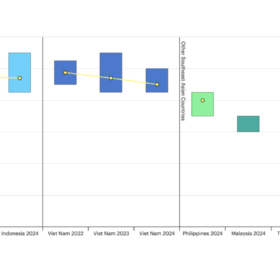
IEA says cost of capital for solar remains high in Southeast Asia
The International Energy Agency says the cost of capital for solar remains higher in Southeast Asian countries than it does in other emerging and developing economies.

Malaysian partners to develop 1.5 GW of solar
Subsidiaries of Gentari and Gamuda will develop 1.5 GW of solar with battery storage in Malaysia to supply hyperscale data centres under the Corporate Renewable Energy Supply Scheme, supporting the country’s push to expand clean energy and meet rising tech-sector demand.
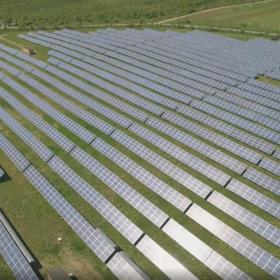
Macquarie-backed Blueleaf progresses 3 GW solar and storage plan for Malaysia
Macquarie-owned renewables platform Blueleaf Energy will explore the potential development of 3 GW of solar PV and battery energy storage projects in Malaysia after striking a deal with a local advisory firm.
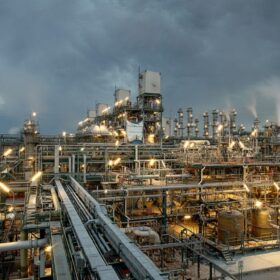
Construction begins on 10,000 MT polysilicon factory in Malaysia
Japanese chemical company Tokuyama Corporation and South Korea-based polysilicon producer OCI have begun construction of a 10,000 metric tons polysilicon factory in Malaysia.

Malaysian utility unveils hydro-floating solar, hydrogen hubs
Tenaga Nasional Berhad says the newly-announced hybrid hydro floating solar hub and green hydrogen hub will position Malaysia as a regional leader in the green hydrogen value chain.