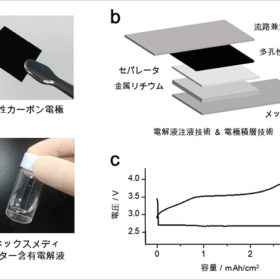
Japanese consortium builds lithium-air battery with energy density of 500 Wh/kg
A Japanese group has developed a storage system with potential applications in residential storage, electric vehicles, drones and Internet-of-Things devices.
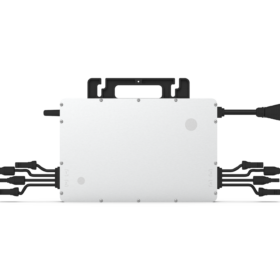
Micro-inverter for high-power solar panels from Hoymiles
The device has a 4-in-1 design, which means it can be connected with four solar panels with a power output of up to 625 W each, through four independent connections. The output of each panel is tracked and converted individually. According to the Chinese manufacturer, the micro-inverter can ensure savings of up to 50% due to the lower number of devices and cables needed.
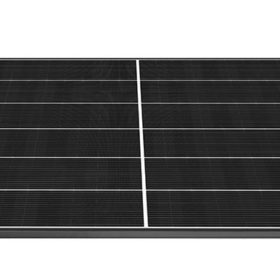
Panasonic unveils 410 W solar panel with 22.2% efficiency
The new heterojunction module series is compatible with Panasonic’s Evervolt battery and has a power output ranging from 400 to 410 W. It also features a temperature coefficient of -0.26% per degree Celsius.

‘Don’t Look Up’: Hollywood’s primer on climate denial illustrates 5 myths that fuel rejection of science
Every disaster movie seems to open with a scientist being ignored. ‘Don’t Look Up’ is no exception – in fact, people ignoring or flat out denying scientific evidence is the point.
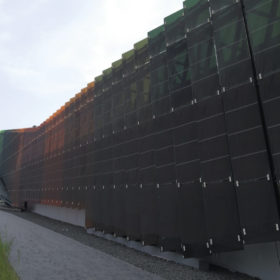
Weekend read: BIPV no refuge
Deployment in the building integrated PV segment is accelerating, and so too are the number of solar products available to architects and developers. And while BIPV had long been the segment in which an array of thin-film technologies could shine, they are now in increasingly stiff competition with crystalline silicon rivals.
Rystad: Residential solar soars past C&I in 2021
Renewable energy and battery storage has racked up another banner year in 2021, according to end-of-year analysis from Rystad Energy. While there was growth across segments, residential solar has seen the most impressive gains, surpassing the commercial and industrial (C&I) segment for the year.
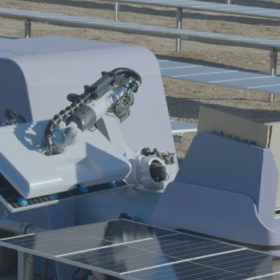
New robot for solar plant construction
The AI-enabled robot is claimed to ensure faster and more efficient deployment of solar modules in utility scale projects.
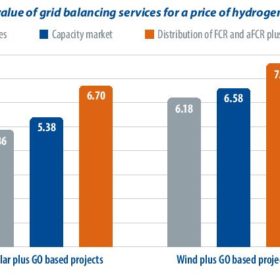
Sunday read: The new entrant to the energy sector
Green hydrogen can play a vital role in decarbonising the economy and enabling countries to reach net-zero emissions. The economics of producing green hydrogen from electrolysis are maturing as developers scramble to meet expected future demand. Everoze partner Nicolas Chouleur and Neoen hydrogen expert Sacha Lepoutre discuss a case study that shows how stacking different revenue streams could improve the economics of renewable energy projects.

Saturday read: Shining future of transport
Urban transportation is key to modern civilization. It has enabled humans to travel long distances and is one of the building blocks of industry and leisure. But it has come at a cost. In the first quarter of 2022, pv magazine’s UP Initiative will focus on the rise of e-mobility. We will examine urban transportation and the role electric vehicles, trains, and two- and three-wheelers can play in greening the electricity grid. In addition to technological innovation, we will also investigate market projections, the policies and infrastructure required, and the role solar and storage will play in taking this nascent industry full throttle.

Longi wants to reach electrolyser capacity of 2 GW by 2023; investor enthusiasm for Port Anthony hydrogen project
Australian green energy company Port Anthony Renewables’ oversubscribed capital raising exercise has put a fresh $3 million directly into its commercial scale hydrogen precinct ahead of a planned Australian Securities Exchange (ASX) listing next year. Meanwhile, Longi reportedly plans to build 1.5 GW of production capacity of electrolysers next year, up from 500 MW today.