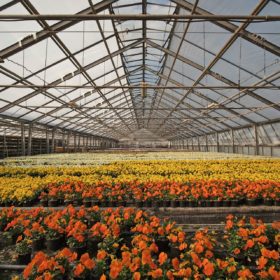
Adaptive solar shade system means horticulturalists can smell the roses
Researchers have modelled the effects of various PV module arrangements on a greenhouse used for rose growing in Iran’s Shiraz region. The team determined a ‘sweet spot’ where modules produced the most energy and provided optimal growth conditions for the crop.
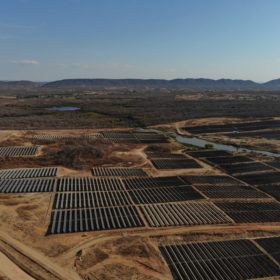
Spanish tracker giant STI Norland expands to Australia with a keenness to compete
Spanish tracker giant STI Norland has expanded to Australia with a new subsidiary office in Melbourne. The company is arriving on our shores with a keenness to compete with tracker suppliers who already have their foot in the door. With no solar farm too big or too small, STI Norland Australia CEO Alan Atchison sat down with pv magazine Australia to talk about how the company plans to make tracks Down Under.
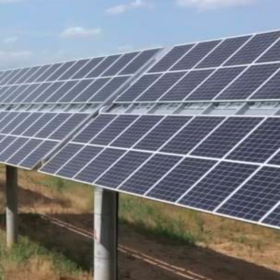
Utility scale agrivoltaic proposal for NSW opens for public exhibition
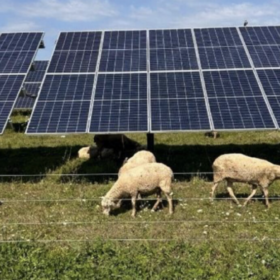
A utility-scale “integrated agri-solar” farm proposed in southern New South Wales has begun its public exhibition period.
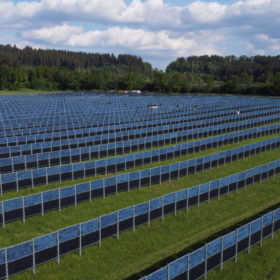
Agrivoltaic project with vertically mounted bifacial panels goes online in Germany
German developer Next2Sun has completed a 4.1 MW solar plant built with roughly 11,000 bifacial panels provided by Chinese manufacturer Jolywood.
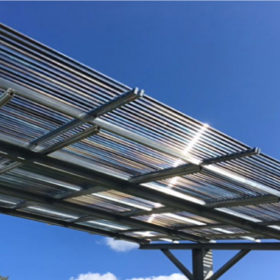
Thin-film agrivoltaic solar tubes
German tech company Tube Solar AG has secured €10.8 million to develop its cylindrical agrivoltaic modules. The lightweight devices could also be used on roofs until now considered unsuitable for PV.
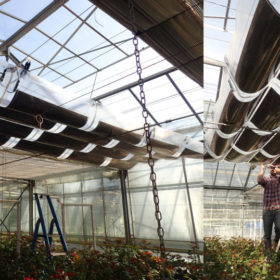
Photovoltaic shade for greenhouses
French start-up Solar Cloth has secured a patent for a PV shade screen for solar greenhouses.
Legislative fix provides a little array of regional sunshine
The best laid plans can go awry, as a recent well-intended amendment to laws governing small-scale solar installations in NSW demonstrated. Action by the NSW Department of Planning Industry and Environment, spurred by a determined solar entrepreneur, have saved developers of ground-mounted solar a stack of time and money.
Code red! Agricultural solar hit by NSW Environmental Planning Policy Amendment
The New South Wales solar industry hailed last week’s amendment to the state planning laws, which allows installation of larger rooftop solar systems on households and businesses without council approvals. But omission of a previous enabling clause from the legislation will add cost and delays to ground-mounted solar developments of more than 30 kW.
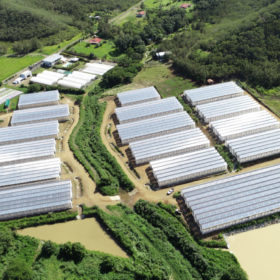
Agrivoltaics in New Caledonia
The 16-greenhouse Focola project has been developed by French renewables developer Akuo and local utility company Enercal Energies Nouvelles on the Pacific Ocean territory.
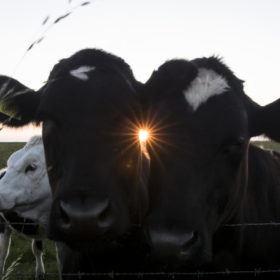
Ambitious 1 GW agrivoltaic livestock farming project announced in Malaysia
The Malaysia Automotive, Robotics and IoT Institute is planning a huge solar power project which will integrate agriculture and livestock farming in the Sabah region. The research institute claims to have already secured $50 million for the project’s first, 200 MW phase. The 25,000ha required for the projects will host up to 150,000 cattle as well as cultivation of forage crops such as kenaf, corn, wheat and hay.