Solar sheep grazing delivers margins up to 40% in new study
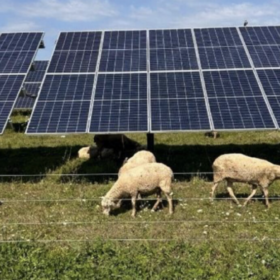
Agrivoltaic sheep grazing models outperform traditional farming, with higher margins and dual revenue streams from livestock and solar site services, according to a new study out of Canada.
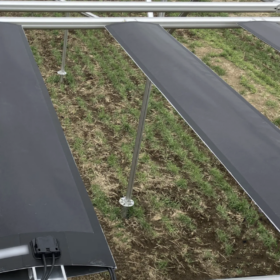
Sekisui-led consortium testing film-type perovskite solar for agrivoltaics
A Japanese consortium is piloting agrivoltaics using film-type perovskite solar cells over rice paddies to study energy generation alongside crop production. The three-year project will assess impacts on rice yield, land use, and emissions while testing the technology’s performance and commercial viability.
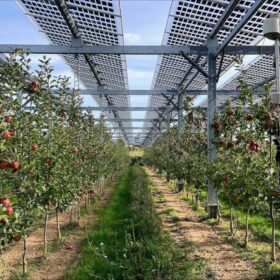
New solar tracking strategies aim to maximise crop yield in agrivoltaics
Swedish researchers developed two novel single-axis solar tracking strategies that dynamically adjust panel tilt based on crop light requirements, balancing photosynthesis and energy production. One strategy prioritises daily light integral targets before shifting to energy capture, while the other uses the light-response curve to optimise photosynthesis, offering improved dual-use efficiency compared with conventional tracking methods.
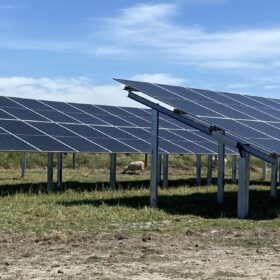
Research reveals impact of agrivoltaics on soil properties
New research shows how agrivoltaic systems can reshape soil by altering moisture, temperature, and microbial activity, creating heterogeneous zones under and between panels. Proper design and management can boost soil health and crop resilience, especially in degraded or arid regions, though long-term effects remain uncertain.
Chemitek offers solution for drone-based cleaning of agrivoltaics
The Portuguese company said its new Drone AgroPV Cleaning Agent is scheduled for release in June. It has a safe formulation for crops and soil.
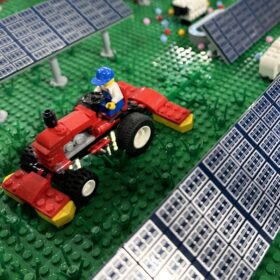
How to combine mechanised farming with agrivoltaics
An international study finds that successful agrivoltaic projects require farm-specific, holistic co-design that integrates solar layout with agricultural mechanisation from the earliest planning stages. Without proper alignment between machinery, crops, and solar systems, agrivoltaics risk major land loss, lower field efficiency, and higher operating costs, undermining farm profitability.
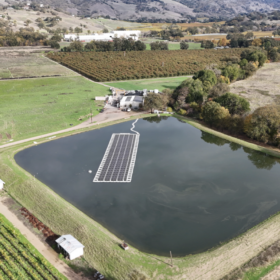
California winery runs all operations on floating and rooftop solar
A family-owned California winery has replaced grid electricity with onsite solar generation, reducing power costs and providing a live test site for floating photovoltaic research.
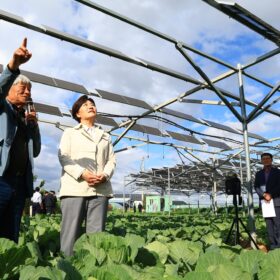
South Korean government developing agrivoltaic legislation
South Korea has announced plans to introduce legislation by 2026 to expand the deployment of agrivoltaics, enabling broader use of solar panels on agricultural land.
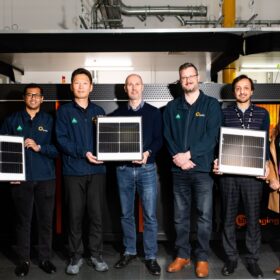
Tindo teams with UNSW to boost TOPCon cell performance
South Australia-headquartered solar panel manufacturer Tindo Solar will work with the University of New South Wales to accelerate the development of TOPCon solar cell technologies, targeting improvements in reliability and performance.
New guide to help harness benefits of agrivoltaics
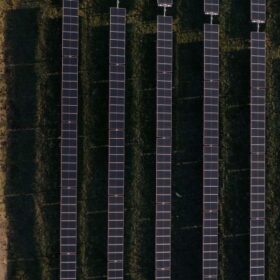
EnergyCo, the authority charged with the rollout of the New South Wales government’s renewable energy zones and associated infrastructure, has launched a new guide to help developers of solar projects and landowners blend renewables with agriculture.