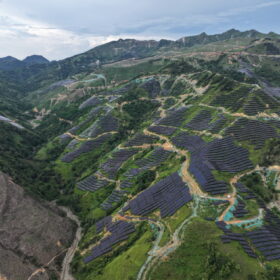
Adjudication: Windlab to bear costs of delays at Kennedy solar-wind-battery park
The developers of the Kennedy Energy Park will have to pay more than $7.5 million in variation claims and delay costs pursuant to an adjudication decision which is likely to raise concerns in the Australian renewable energy sector.
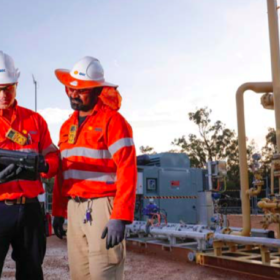
Shell breaks ground on 120 MW PV project to power onshore gas operations
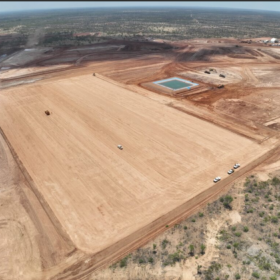
Construction has begun on Royal Dutch Shell’s 120 MW solar farm which will generate clean energy for QGC’s natural gas processing plants near Wandoan in South West Queensland. The project is the oil major’s first global investment in an industrial-scale solar farm.
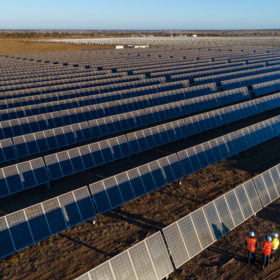
Total to buy 50% stake in Adani Group’s 2.1 GW solar portfolio
The French oil and gas giant—which is already a partner in Adani’s natural gas business—will now invest US$ 510 million to buy 50% stake in 2,148 MWac operating solar power projects owned by Adani Green Energy Limited.
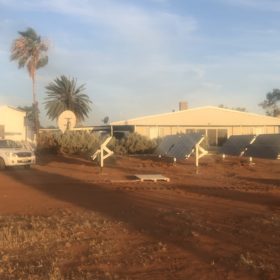
Solar and batteries slash costs at off-grid WA cattle station
With the help of solar PV and zinc-bromine batteries, a cattle station located in the dry Murchison region northeast of Geraldton will save as much as $10,000 a year in diesel costs.
Coronavirus could cause solar panel price spike
The coronavirus outbreak in China could raise solar module prices in the near term as manufacturers have already begun experiencing wafer and solar glass shortages. Production rates are also being affected by an extended new year holiday introduced by the authorities as a measure to deal with the virus, and the requirement workers from infected areas quarantine themselves for two weeks.
Neoen’s Culcairn Solar Farm nearing construction
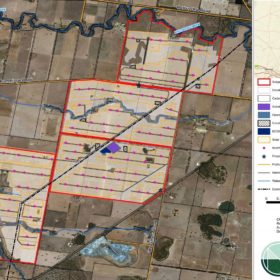
Neoen’s 400 MW Culcairn Solar Farm and energy storage facility in NSW has now entered the open exhibition stage and released its EIS. The French company, Australia’s top independent renewable energy producer, hopes to commence construction mid-2020.
Queensland requests $1 billion in renewable energy funding
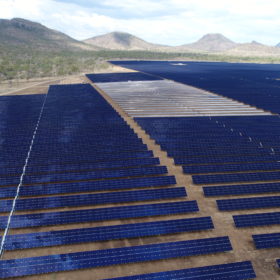
In a letter addressed to Prime Minister Scott Morrison, Queensland Deputy Premier Jackie Trad has called for more renewable investment and Federal government backing to help create and support more jobs in more industries, but gas is not out of the picture.
Ona Coffee roasting in 100% solar
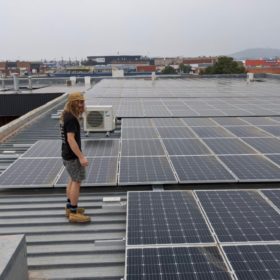
Ona Coffee, founded by former World Barista Champion Sasa Sestic, has made the switch to 100% solar at both its roastery and its head office. The solar PV installation, made gradually throughout 2019, is part of the company’s long-term plan to reduce its carbon footprint and become more sustainable.
Renewables investment collapses due to network woes and policy uncertainty
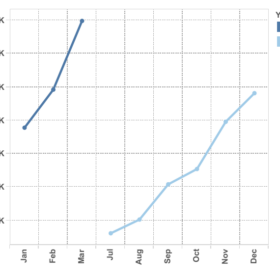
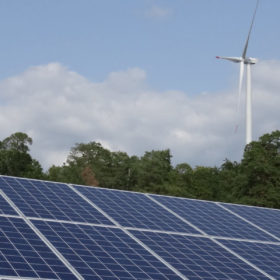
In yet another confirmation of a dramatic drop in spending on large-scale renewables in Australia, a new analysis by the Clean Energy Council reveals a fall from 51 projects worth $10.7 billion in 2018 down to 28 projects worth $4.5 billion in 2019. Mounting regulatory risks, under-investment in transmission and policy uncertainty are the main reasons behind investment slow-down, which is set to put greater pressure on reliability and power prices as Australia’s old coal-fired power stations continue to close.
For a bigger battery, just add manganese
Scientists at the University of Southern Denmark working with sodium-ion batteries found that a new electrode material incorporating iron, manganese and phosphorous could increase both the power and capacity of the batteries.