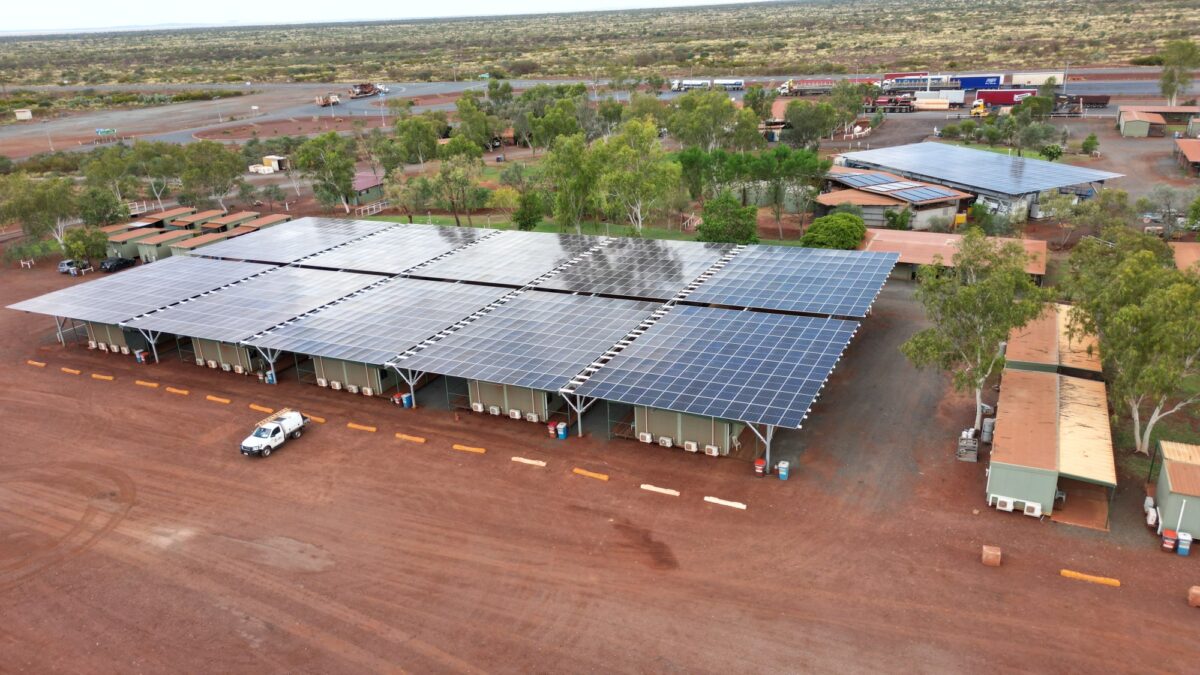





Darwin-headquartered energy solutions company Generators and Off Grid Energy (GenOffGrid) has completed a solar, lithium, diesel microgrid for the Ashburton Aboriginal Corporation’s (AACs) Auski Munjina Village roadhouse, located in the Pilbara region 1,368 kilometres northeast of Perth.
Commissioned in February 2025, the $3 million (USD 1.9 million) microgrid located adjacent east of the Karijini National Park, combines 727 kW of solar, a 500 kW / 1 MWh lithium battery energy storage system (BESS) and a 450 kVA diesel generator to provide resilient power with dramatically lower fuel use and emissions.
With limited land available, the project team designed two custom solar shade canopies that both host solar modules and shade worker accommodation, reducing heat load and lowering air-conditioning demand.
Specialised footing systems were engineered to avoid disruptions to existing services and infrastructure, enabling rapid installation and long-term stability without extensive groundworks.
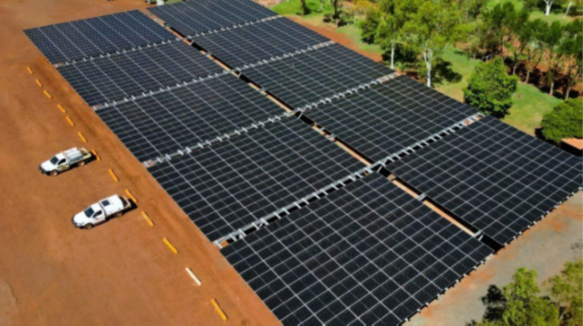
Image: GenOffGrid
GenOffGrid Chief Executive Officer John Davidson said the Auski Munjina Village project demonstrates how innovative engineering can transform remote energy away from fossil fuel.
“By integrating solar, battery storage and intelligent controls, we’ve created a microgrid that doesn’t just reduce costs, it brings energy independence, reliability, and environmental leadership to one of the most iconic parts of the Pilbara,” Davidson said.
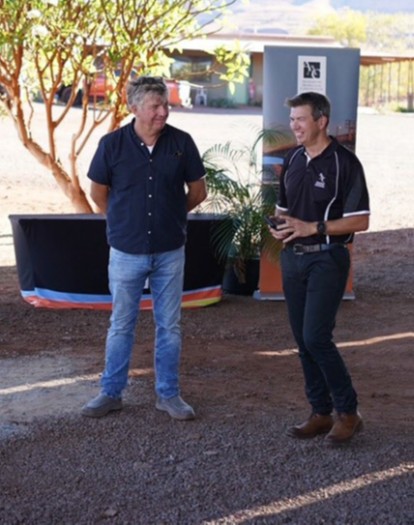
Image: GenOffGrid
AAC Chief Executive Officer Steven Sonneman-Smith said the partnership with GenOffGrid is a strong example of how Aboriginal organisations can lead and deliver tangible sustainability outcomes.
“Beyond the technology, this project is about people, local training, local jobs and empowering communities to be part of Australia’s clean energy future,” Sonneman said.
Early operation shows the system can cut diesel consumption by up to 90%, while maintaining redundancy and power quality for the remote hub.
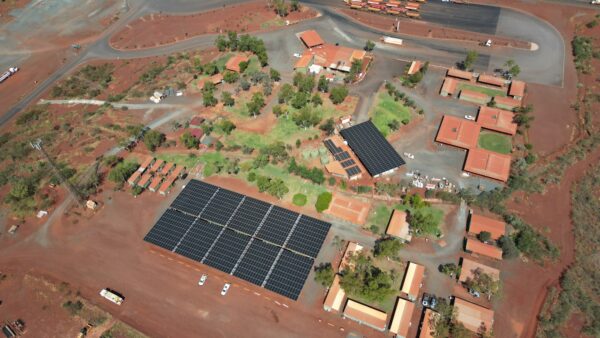
Image: Ashburton Aborigional Corporation Pilbara
This content is protected by copyright and may not be reused. If you want to cooperate with us and would like to reuse some of our content, please contact: editors@pv-magazine.com.




By submitting this form you agree to pv magazine using your data for the purposes of publishing your comment.
Your personal data will only be disclosed or otherwise transmitted to third parties for the purposes of spam filtering or if this is necessary for technical maintenance of the website. Any other transfer to third parties will not take place unless this is justified on the basis of applicable data protection regulations or if pv magazine is legally obliged to do so.
You may revoke this consent at any time with effect for the future, in which case your personal data will be deleted immediately. Otherwise, your data will be deleted if pv magazine has processed your request or the purpose of data storage is fulfilled.
Further information on data privacy can be found in our Data Protection Policy.