




A new report released by technology platform VisNet from United Kingdom (UK)-headquartered smart grid solutions company EA Technology, has found 3 in every 4 consumers across three markets surveyed think they can cut back their energy usage but still expect it to increase by 40% by the end of the decade.
The company says the VisNet Consumer Energy Report 2025 findings flag an urgent need for smarter and more sustainable low voltage (LV) electricity networks.
Data was collated from consumers in Australia, New Zealand, and the UK, which revealed by 2030 household energy loads in Australia are projected to rise 35%, with evening peak usage increasing by 60% in homes with electrical vehicles (EVs).
More than half of Australian respondents to the report research (56%) however think they can cut their energy consumption by shifting to off-peak usage.
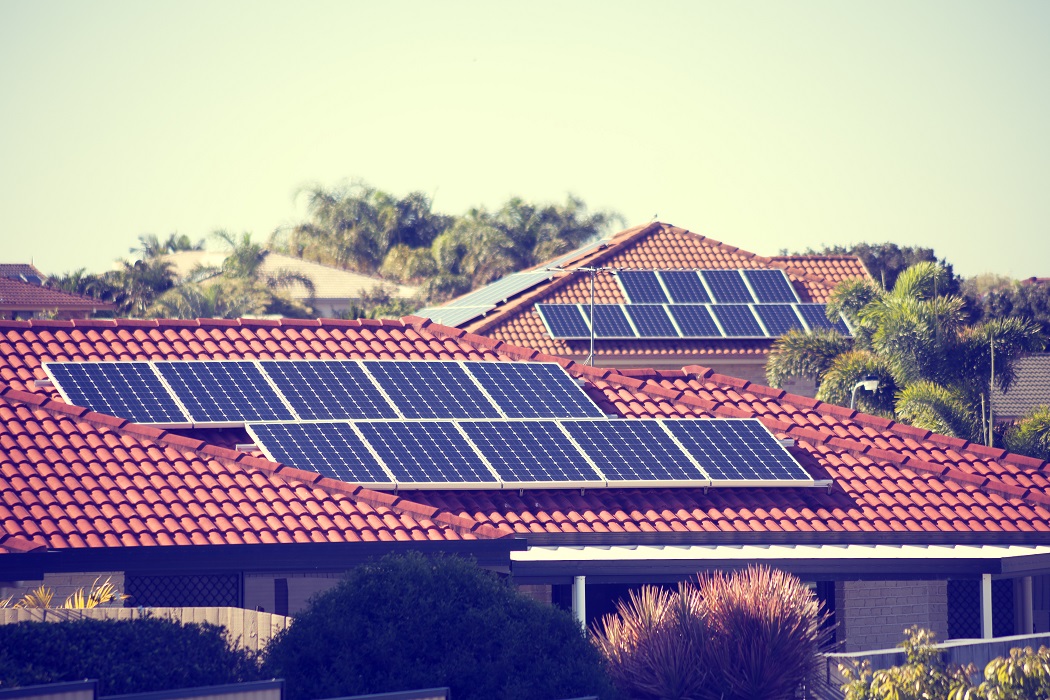
The report says Australian consumers surveyed are the heaviest users of air conditioning and have the highest uptake of rooftop solar compared with the UK and New Zealand highlighting how electrification is reshaping demand on the LV network.
VisNet Product Manager Ana Duran said managing peak loads intelligently, without overinvesting in infrastructure, is the key challenge ahead for electricity operators.
“Predictive analytics and behavioural insight will allow them to plan smarter, invest better, and deliver resilient networks that align with Australia’s net zero ambitions,” Duran said.
“The use of advanced load and behavioural modelling to simulate how consumer flexibility can alleviate peak demand – by integrating real-time data with predictive models – means owners and operators can identify where and when to invest in flexibility services or network reinforcement.”
The report puts a spotlight on how households are moving from being energy consumers to ‘prosumers’, as they take an active role in energy generation and storage by adopting Consumer Energy Resources (CERs) like rooftop solar, home batteries and smart home systems.
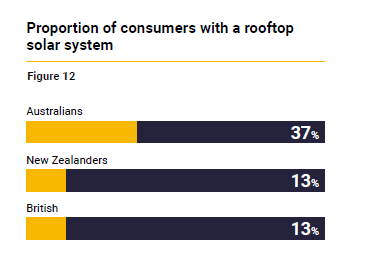
According to VisNet’s research, 73% of rooftop solar owners use energy from their systems daily, creating persistent reverse flows and new operational complexities.
EA Technology Chief Commercial Officer Mark Sprawson said electricity distribution is now about intelligence, adaptability, and responsiveness.
“Owners and operators of electricity networks need actionable intelligence in real time,” Sprawson said.
“Grid-edge intelligence helps bridge perception and reality, whilst grid-access technologies support faster and more accurate network planning. Distributed Network Service Providers (DNSPs) are harnessing grid-edge intelligence to make net zero goals a reality.”
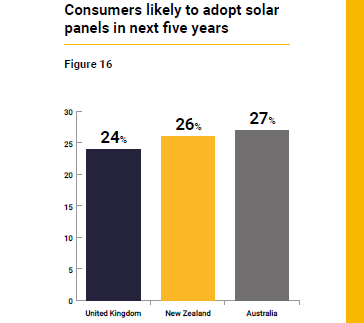
VisNet says though electricity consumption is expected to increase, so is the adoption of renewable energy, where a quarter (25%) of consumers are likely to adopt solar panels in the next five years: 27% in Australia, 26% in New Zealand and 24% in the UK.
The report finding has prompted VisNet to make six key recommendations for network owners and operators including, modernising network monitoring and modelling, with real-time, low-voltage visibility, and embedding behavioural forecasting into network planning and incentivising smart energy consumption.
This content is protected by copyright and may not be reused. If you want to cooperate with us and would like to reuse some of our content, please contact: editors@pv-magazine.com.




By submitting this form you agree to pv magazine using your data for the purposes of publishing your comment.
Your personal data will only be disclosed or otherwise transmitted to third parties for the purposes of spam filtering or if this is necessary for technical maintenance of the website. Any other transfer to third parties will not take place unless this is justified on the basis of applicable data protection regulations or if pv magazine is legally obliged to do so.
You may revoke this consent at any time with effect for the future, in which case your personal data will be deleted immediately. Otherwise, your data will be deleted if pv magazine has processed your request or the purpose of data storage is fulfilled.
Further information on data privacy can be found in our Data Protection Policy.